

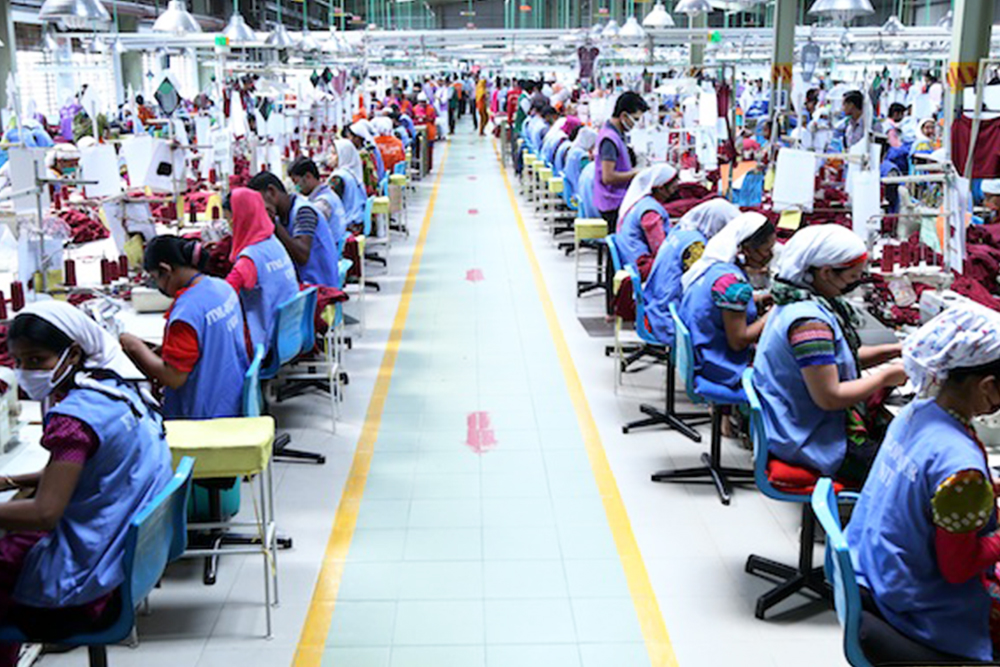
While export orders are on increase in India the Bangladeshi Apparel exporters are facing a 25-40 percent decline in orders as persisting energy crisis, soaring cost of business and shipment delays have forced them to run their factories much below the capacity.
While their production cost shot up by 20-33%, global buyers are offering up to 20% lower prices, forcing many to skip taking export orders.
buy pepcid online https://newleafcounselinggroup.org/wp-content/uploads/2024/08/jpg/pepcid.html no prescription pharmacy
Competitor countries such as India, Pakistan and Sri Lanka are attracting buyers away from Bangladesh as they afford to agree on lower prices due to favourable exchange rates and faster shipments.
The country’s largest export sector fears a 7 percent drop in sales in this year’s peak winter season in the West at a time when the government cut much of incentives and corrected data revealed last 10 months’ export figure was overstated by about $11 billion.
This year’s highest export trophy earner, the green factory pioneer and denim frontrunner are among those who are uncertain about August-September order bookings.
buy aurogra online https://buywithoutprescriptiononlinerx.net/buy-aurogra.html no prescription pharmacy
Kutubuddin Ahmed, chairman of Envoy Textiles, the world’s first LEED platinum-certified denim mill, said, “The textile mill is facing challenges to meet buyer prices.
buy cialis black online https://buywithoutprescriptiononlinerx.net/buy-cialis-black.html no prescription pharmacy
buy nolvadex online https://newleafcounselinggroup.org/wp-content/uploads/2024/08/jpg/nolvadex.html no prescription pharmacy
Sometimes we have to adjust prices, leveraging our spinning unit to manage costs.
buy flagyl online https://newleafcounselinggroup.org/wp-content/uploads/2024/08/jpg/flagyl.html no prescription pharmacy
“
Sayed M Tanvir, managing director of Pacific Jeans, a pioneer in denim export from Bangladesh, said, “We also face challenges in competing with buyer prices. Pakistan and Turkey’s exporters have a competitive advantage due to higher currency devaluation compared to Bangladesh.”
Narayanganj-based MK Knit Fashion proprietor Mohammad Hatem said, “Almost every buyer is reducing apparel prices by 12-15 percent, despite increased production costs. In some cases, they are offering lower prices than a year ago, which puts us in a very tight corner.”
Buyers are moving to India and Sri Lanka as they have more competitive edge than us to offer lower prices thanks to better incentives and favourable exchange rates, said a leading exporter.
Preferring to remain anonymous, a senior official from a European brand said factories have higher capacity installed than the orders they get. Large capacity factories are taking orders at any cost for their survival, while small and medium factories cannot.
