

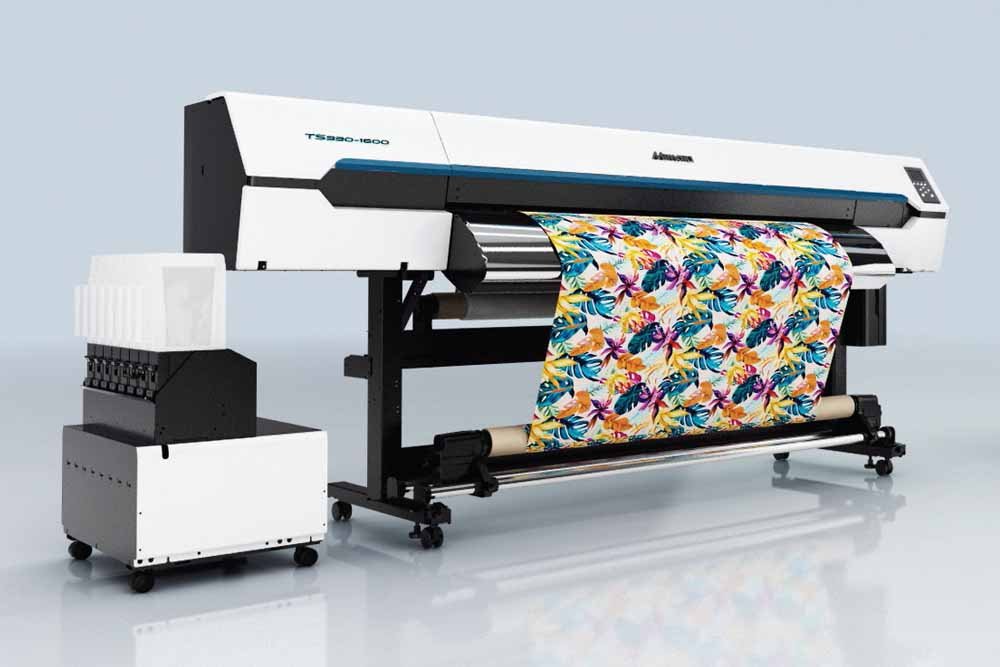
At Heimtextil 2025 in Frankfurt, Mimaki Europe captivated the audience with the unveiling of its groundbreaking textile printing technology, TRAPIS. The world’s largest trade fair for home and contract textiles provided the perfect stage for Mimaki to introduce this innovative system, and the response from industry professionals was nothing short of extraordinary. The TRAPIS system, which had already made waves since its commercial launch earlier in the year, was one of the most talked-about innovations at the event.
Mimaki’s booth quickly became a hotspot for those eager to learn more about this sustainable and cutting-edge technology. As the textile industry increasingly turns its attention toward environmentally friendly solutions, TRAPIS stood out by offering a revolutionary two-step textile pigment transfer printing process. This system eliminates the need for pre-treatment and washing stages, significantly reducing water usage by up to 90%. Compared to traditional methods, TRAPIS saves approximately 14.5 liters of water per square meter. This drastic reduction in water consumption caught the attention of sustainability-focused attendees who are constantly seeking ways to lessen the environmental impact of textile production.
The simplicity of the TRAPIS system was another key highlight. With just an inkjet printer and a high-pressure calender required for operation, the system simplifies production without compromising quality. This ease of use means that high-quality, sustainable textile printing is now accessible to print service providers worldwide, regardless of their size or scale. This breakthrough has the potential to change the way textile manufacturers approach production, particularly when it comes to short multi-material runs.
Mimaki’s focus on sustainability was further emphasized through the certification of the TRAPIS system. The ink used in the system is ZDHC MRSL Lv.3 certified and carries the bluesign® APPROVED label, ensuring both environmental and user safety. This makes the system an ideal choice for industries like home décor, activewear, and fashion—sectors where eco-conscious practices are increasingly in demand. The system not only maintains high standards for colorfastness, stretchability, and breathability but also meets the stringent safety regulations that many textile manufacturers require.
The response from attendees at the exhibition was overwhelmingly positive, with many expressing excitement about the potential for TRAPIS to drive both innovation and sustainability within the textile printing sector. The ability to achieve vibrant, high-quality prints on a wide range of materials, including natural fibres, blends, and synthetics, using a single ink type was a standout feature for many visitors.
For those looking to reduce their environmental footprint without sacrificing print quality, TRAPIS offers a compelling solution.
Mimaki’s presence there also marked a key milestone in the global TRAPIS Roadshow. Following its launch in Amsterdam earlier in the year, the roadshow continued to showcase the system at various open houses and tradeshows around the world. Each stop in the roadshow offered hands-on demonstrations, providing customers with the opportunity to explore the capabilities of TRAPIS and how it could transform their production processes.
Marc Verbeem, Product Management Supervisor at Mimaki Europe, shared his excitement about the success of Heimtextil, stating, “The response we’ve received here has been amazing.
Heimtextil is the ideal platform for introducing such a revolutionary product, and we’re thrilled to see how TRAPIS is being embraced by the textile industry. This technology not only simplifies production but also meets the growing demand for sustainability in textile manufacturing. We’re excited to continue showcasing TRAPIS at future roadshow events around the world.”
As the TRAPIS Roadshow continues into 2025, with upcoming stops in countries like Poland and Spain, it’s clear that Mimaki’s innovative solution is set to make a lasting impact on the global textile industry. For those who missed the demonstration at Heimtextil, more events are planned in the near future, offering further opportunities to experience this remarkable technology firsthand.
How Mimaki’s RasterLink7 is Transforming Print Software
Today’s printing industry is full of innovative and advanced technologies. From high-speed printing capabilities to robotics to sustainable inks, it is an exciting time for the sector. However, for all its advancements, hardware cannot operate on its own. This is why having equally advanced software, such as Mimaki’s RasterLink7, is essential to the modern printing workflow.
What is RasterLink7? RasterLink7 is Mimaki’s latest proprietary RIP (Raster Image Processor) software that bridges the gap between the digital file and the printer, converting the file into a format that the printer can understand and process. If the printer is the body, RasterLink7 acts as the brain, processing and translating digital images into a format the printer can understand and execute.
Designed to work seamlessly with Mimaki printers and cutters, RasterLink7 ensures smooth communication between software and hardware. This tight integration results in a streamlined and efficient printing process, eliminating the challenges associated with coordinating separate systems.
The Crucial Link
Without the brainpower provided by RasterLink7, some areas of the printing workflow would see a significant decrease in efficiency, while others would simply not work. For example, without RasterLink7’s ability to convert and prepare digital files, the printer would not be able to fully understand the design, meaning that details would be lost in the final print. Beyond file conversion, it offers advanced print settings and controls, allowing users to optimise colour management, nesting, and ink usage for maximum efficiency.
Master of the Raster Image: How RasterLink7 is more than just a RIP Software
RasterLink7 boasts several features that elevate it from simple RIP software to a powerful tool that can be used to enhance all aspects of the printing workflow. The software includes ‘New Profile Manager’ that allows users to manage device profiles for different media types, making it easier to achieve the best results for each print job. The ‘Layout Preview’ feature provides a visual representation of print jobs directly on the screen, simplifying final confirmations before printing.
RasterLink7 also supports 2.5D printing, previously exclusive to flatbed printers and now available on roll-to-roll printers, expanding creative possibilities. The software’s ‘Cutter Support’ feature integrates directly with cutting plotters, allowing seamless print-and-cut operations.
By going beyond the traditional functions of RIP software, RasterLink7 offers an array of advanced tools that streamline the entire workflow, from file preparation to the final print. Whether it’s optimising colour management, reducing ink consumption, or enabling new creative possibilities, RasterLink7 ensures that every aspect of the printing process is handled with precision and efficiency. For professionals looking to elevate their print operations, RasterLink7 is more than just software; it’s an essential component in achieving outstanding results consistently.
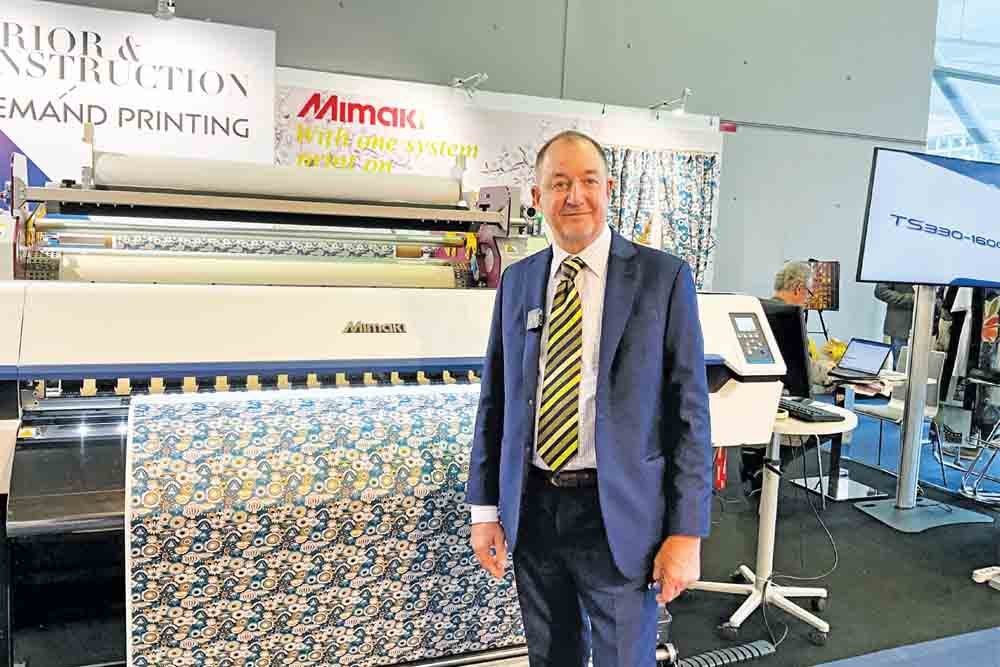
Pushing limits and redefining print: Mimaki’s groundbreaking innovation – TRAPIS
In this exclusive TEXtalks interview, Rodd Harrison, General Manager. Global Brand Engagement. Mimaki Engineering Co. Ltd, pulls back the curtain on the cutting-edge innovations that are setting new standards in digital textile printing. With a pulse on innovation and a heart for sustainability, Harrison discusses how Mimaki’s groundbreaking solutions are empowering designers and manufacturers with the tools to rewrite the rules in fabric printing, thus unlocking new opportunities.
This interview isn’t just about machines and ink; it’s about discovering and redefining what is possible in the textile world. From advanced print technologies to visionary ideas about the industry’s future, this interview offers a rare opportunity to gain first-hand insights into Mimaki’s strategy and its role in reshaping the textile landscape.
TEXtalks: What are the key features of the TRAPIS System, and how does it set itself apart from other printing technologies?
Rodd Harrison: The TRAPIS System offers a range of innovative features that set it apart from traditional printing technologies. It can print on a wide variety of fabrics, including natural fibers, blends, and synthetics, making it ideal especially for fashion and the home textiles. What truly distinguishes TRAPIS is its ability to print without the need for pretreatment or fabric washing, eliminating the need for wastewater purification and reducing water consumption. Additionally, it uses ZDHC MRSL Lv.3 compliant ink, ensuring safety for workers and environmental sustainability, making it suitable for industries like interior design, activewear, and fashion. The compact and user-friendly system, which includes an inkjet printer, dedicated transfer paper, pigment ink, and a transfer machine from a trusted European manufacturer, requires no specialized textile knowledge or extensive maintenance. This makes it an accessible solution for print businesses worldwide, enabling on-demand production in small lots with high-definition results and a strong focus on sustainability and safety.
TEXtalks: How can the TRAPIS system make a positive impact in fast fashion and subsequently the environment?
Rodd Harrison: The TRAPIS system can make a significant positive impact on fast fashion and the environment by offering an eco-friendly alternative to the conventional dye sublimation process, which heavily relies on polyester and contributes to substantial textile waste and water pollution. This waterless printing approach addresses one of the fashion industry’s most pressing environmental challenges—water waste. Moreover, TRAPIS enables the use of fabrics that can be recycled, moving away from the unsustainable reliance on polyester, which is often not recycled and ends up in landfills. By supporting sustainable materials and reducing harmful waste and water consumption, the TRAPIS system offers a pathway for the fashion industry to embrace more environmentally friendly practices, contributing to a cleaner, more circular future for textiles.
TEXtalks: How does Mimaki’s TRAPIS system contribute to sustainability in textile printing, particularly in terms of water conservation?
Rodd Harrison: Mimaki’s TRAPIS system significantly contributes to sustainability in textile printing by offering a waterless printing solution that drastically reduces water consumption. Unlike traditional textile printing processes, which require extensive pretreatment and washing of fabrics, leading to high water usage and wastewater production; TRAPIS eliminates these steps. This reduction in water use is a game-changer, cutting water consumption by approximately 90% compared to conventional methods. By printing without the need for fabric washing and avoiding the wastewater purification process, TRAPIS helps to reduce the strain on water resources, making it a more environmentally responsible choice for the textile industry. This water-efficient approach not only supports sustainable production practices but also helps mitigate the environmental impact of textile manufacturing.
TEXtalks: Could you please share and elaborate on the innovative technologies Mimaki is currently developing?
Rodd Harrison: Mimaki is pioneering a revolutionary innovation known as Neo-Chromato, a process designed to tackle the sustainability challenges associated with polyester fabrics. This cutting-edge technology allows printed polyester to have its dye swiftly removed, restoring the fabric to its original white state. This breakthrough opens up the possibility of re-sublimating and printing new designs onto the fabric, offering substantial environmental benefits. Take flags and banners used in retail spaces, for example—traditionally, these items are printed once and discarded after a campaign ends, with polyester often ending up in landfills due to its non-recyclable nature. Neo-Chromato changes this narrative by enabling the reuse of these materials, allowing the original dye to be stripped and fresh designs to be applied, reducing waste and promoting fabric sustainability. With plans to bring this innovative process to market in the coming years, Mimaki is reinforcing its dedication to shaping a more sustainable future.
TEXtalks: How has the response and demand of visitors been at Heimtextil 2025 for Mimaki?
Rodd Harrison: The response at Heimtextil has been overwhelmingly positive, with a strong interest in Mimaki’s environmentally conscious solutions especially TRAPIS. Many visitors have been eager to explore ways to reduce the environmental impact of their products, and they’ve been particularly intrigued by our sustainable processes. We’ve had a tremendous amount of follow-up with over 100 customers, all of whom appreciated the innovations on display and expressed a desire to learn more about how these processes can be integrated into their own operations. It’s been a rewarding experience connecting with so many customers and discussing how Mimaki can help them move towards more eco-friendly practices in textile printing.
