

The case raises the compliance bar for every exporter claiming that a consignment is reusable clothing rather than waste.
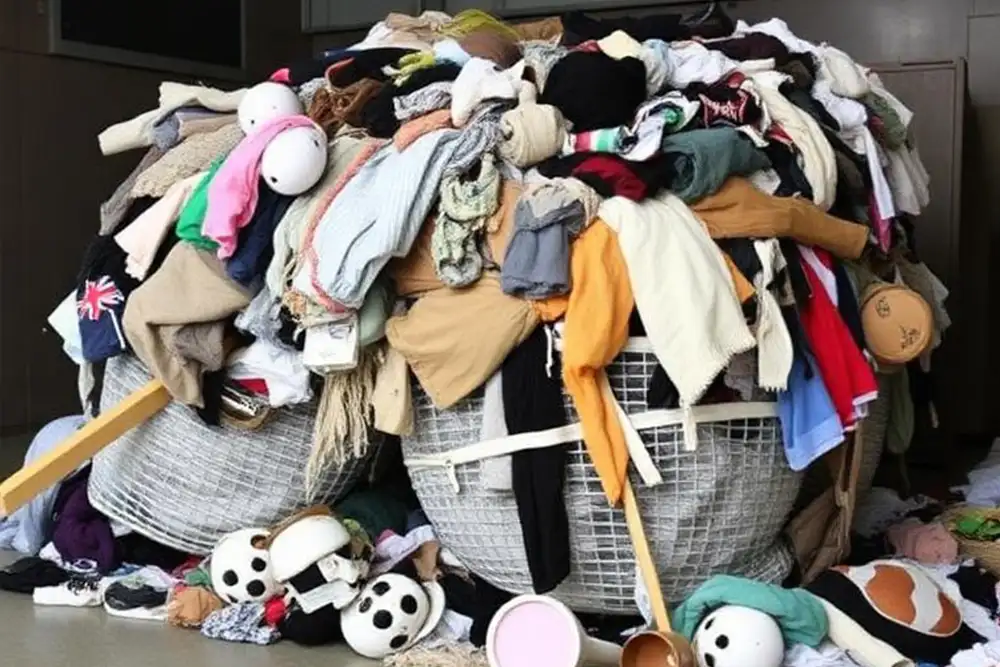
An alleged scheme has been uncovered involving the illegal shipment of around 4,200 tonnes of textile waste from Italy to Türkiye, exposing the financial incentive behind misclassifying difficult-to-recycle materials as legitimate trade. The case is a warning for textile collectors, sorters, exporters and recyclers: weak classification, documentation and destination-facility checks can now carry substantial legal and commercial risk.
Mislabelling to avoid recycling costs
The European Anti-Fraud Office, OLAF, said the shipments contained a high proportion of acrylic fibres, which require specialised recycling technology and are subject to costly waste-management requirements. Working with Italy’s Carabinieri, OLAF used trade-flow, customs and recycling-capacity analysis to identify shipments allegedly mislabelled to avoid these obligations.
Turkish customs subsequently inspected the consignments upon arrival. Authorities identified about 4,200 tonnes of illegally shipped textile waste, while a joint inspection found nearly 2,100 tonnes at a warehouse linked to a Turkish recycling facility that did not meet applicable environmental and permit requirements. A further 768 tonnes, reportedly connected to the same scheme, were found at the port of Mersin.
Italian authorities also raided a business complex in Brescia linked to the operation, seizing operating facilities, transport vehicles and approximately €12 million in financial assets.
The reuse–waste distinction hardens
The commercial significance extends beyond one enforcement action. The EU’s revised textile-waste framework requires separately collected textiles to be sorted before possible shipment and distinguishes goods genuinely assessed as fit for reuse from textile waste. This directly targets a long-standing loophole: low-quality, damaged or contaminated textiles being exported under the label of second-hand clothing.
For legitimate operators, “used clothing” will no longer be a sufficient description. Exporters must be able to demonstrate sorting quality, product condition, origin, destination, responsible operator and suitability for the receiving market. Bale-level traceability, auditable grading specifications and verified downstream facilities are becoming operational necessities.
A compliance issue for circularity claims
Türkiye is the main destination for EU waste exports, making this case particularly significant for regional textile-recycling supply chains. The updated EU Waste Shipment Regulation is designed to strengthen traceability and enforcement, with most export provisions due to apply from May 2027.
The next test is whether this case produces tougher inspection protocols and common evidentiary standards for used-textile exports. For brands and recyclers, circularity claims will increasingly need proof that materials are genuinely reused or responsibly recycled—not simply moved across borders.
