


The broad machine and software portfolio targets Brazilian manufacturers seeking flexible production, larger garment sizing and a faster digital route from design to knitting.
SHIMA SEIKI will present its latest computerised flat-knitting technologies at FEBRATEX 2026 in Blumenau, Brazil, from August 18–21. Exhibiting with local representative Brastema Tecnologia Têxtil, the Japanese manufacturer will show eight knitting machines alongside its APEXFiz design platform and SDS KnitPaint-Online programming software.
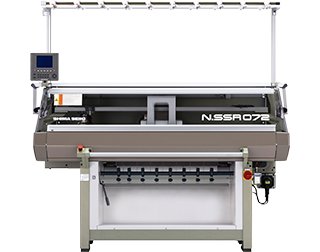
N.SSR range expands
The central launch is the N.SSR132, which will make its Brazilian debut. The shaped-knitting machine provides a 52-inch, or 132-centimetre, knitting width, enabling production of larger garment panels and sizes. The seven-gauge model is positioned as an economical machine combining wider production flexibility with Japanese manufacturing standards.
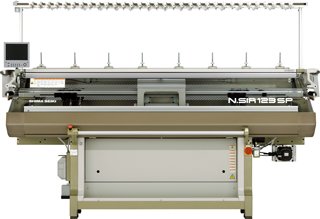
SHIMA SEIKI will also display the N.SSR072, a 16-gauge model specialising in jacquard collars. Its N.SIR123SP includes a loop-presser bed and inlay capability for producing knit-weave hybrid structures and technical textiles.
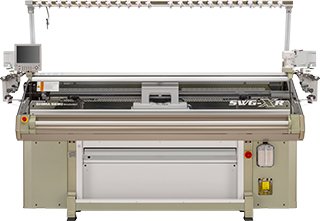
WHOLEGARMENT spans multiple scales
The flagship SWG-XR154 uses four needle beds and SHIMA SEIKI’s SlideNeedle technology to knit complete WHOLEGARMENT products in all needles. The N.SVR183 provides every-other-needle WHOLEGARMENT production on a conventional V-bed configuration, while the compact SWG091N2 “Mini” targets smaller-scale and specialised applications.
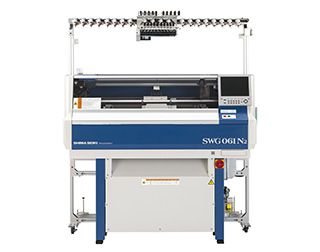
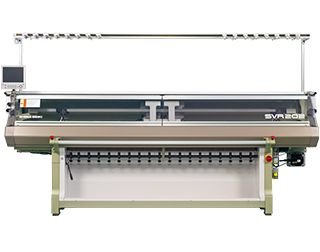
The SVR202 adds tandem capability: its two carriages can operate together for double-system knitting or separately to produce two identical pieces simultaneously. An SFG-I seamless glove machine completes the equipment line-up.
Digital sampling connects to production
APEXFiz supports product planning, realistic textile simulation and three-dimensional virtual sampling. Once a design is approved, automatically generated knitting data can be transferred to SDS KnitPaint-Online and converted into machine instructions. SHIMA SEIKI says this workflow can reduce physical samples, development time, material use and cost, although the release provides no quantified customer results.
FEBRATEX expects about 80,000 visitors at its 2026 edition, reflecting Brazil’s importance as a textile-manufacturing market. The commercial test will be whether manufacturers convert interest into investment despite cautious global apparel demand. Buyers should assess output, style-change time, labour requirements, energy use and sample-to-order speed under their own production conditions.
