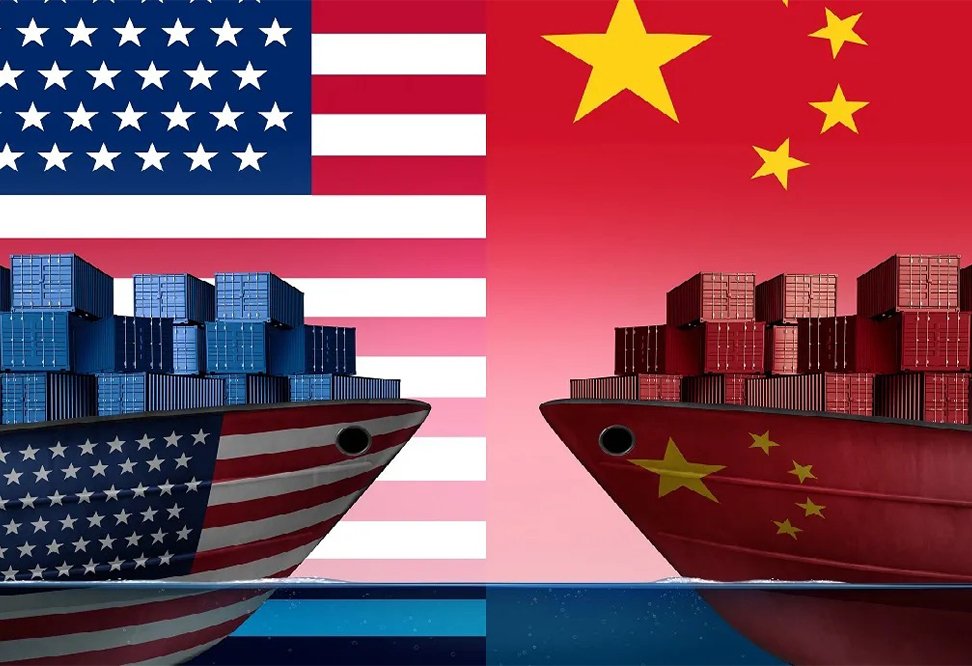
China–US trade is rebounding from 2025’s tariff shock, but apparel and textile exports are recovering much more slowly than the technology products driving China’s wider export boom.
China’s exports to the United States surged 34.4% year on year to $42.5 billion in August 2026, marking the fifth consecutive month of growth and signalling a sharp recovery from last year’s tariff-driven disruption.
The increase partly reflects an unusually weak comparison: Chinese shipments to the US had fallen 33.1% to $31.6 billion in August 2025. Growth nevertheless accelerated from 17.1% in July, when US-bound exports reached about $41.9 billion.
Textiles recover more slowly
China’s overall exports jumped 25% to $401.4 billion in August, supported heavily by demand for semiconductors, computers and AI-related infrastructure.
Textile and apparel exports also increased, but at a markedly slower pace. China exported $15.9 billion of apparel in August, up 12.3%, while exports of textiles, yarns and fabrics rose just 2.4% to $12.7 billion. Footwear exports increased 11.4% to about $3.7 billion.
The numbers show that China remains formidable in fashion sourcing despite brands’ efforts to diversify production toward Vietnam, Bangladesh, Cambodia, India and other markets.
Asia absorbs more Chinese supply
China’s export strength extended well beyond the US. Shipments to ASEAN reached $74.4 billion, while exports to Hong Kong jumped 63.7%, Malaysia 59%, South Korea 49.3%, Vietnam 32.9% and Thailand 33.3%.
Some of this growth may reflect components or finished goods moving through regional manufacturing and re-export hubs, highlighting how deeply China remains embedded in Asian supply chains.
Diversification has limits
For textile and apparel buyers, the August data challenge the assumption that sourcing diversification automatically means rapid displacement of China.
China continues to combine large-scale textile capacity, integrated raw-material supply, fast product development and sophisticated logistics. However, apparel and fabric exports are clearly growing more slowly than China’s high-tech sectors.
The key indicator now is whether the US rebound survives once low-base effects fade. For competing Asian suppliers, the opportunity remains strongest where they can offer genuine advantages in tariffs, lead times, labour costs, compliance or specialised product capability.