

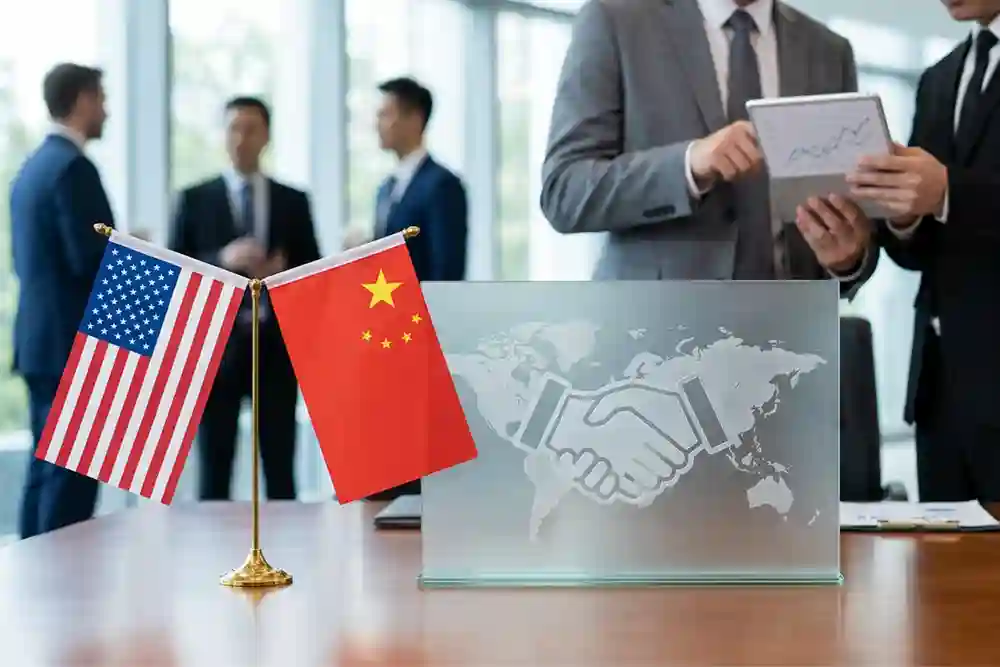
Washington and Beijing are considering reciprocal tariff relief on about $60 billion of bilateral trade, but clothing remains outside the deal—preserving near-term sourcing incentives away from China.
The United States and China have agreed on a “30-for-30” framework under which each side will consider reduced tariffs on roughly $30 billion of imports from the other, following recommendations issued by the new U.S.–China Board of Trade on September 27. No tariff reductions have yet taken effect; rates and implementation dates still require domestic legal procedures.
For fashion sourcing, the most consequential detail is what is not included: finished apparel.
Home textiles make the list
The proposed US list contains 77 Chinese product categories, including several textile household products: electric blankets, wool blankets, selected bed linen, table linen, kitchen and bathroom textiles, curtains and other furnishing articles.
Clothing categories, however, are absent. FashionNetwork reports that US imports of Chinese textiles and apparel fell sharply during the first seven months of 2026, with China losing share as brands continued diversifying sourcing.
China’s proposed concessions cover 1,619 US product categories, spanning agriculture, food, energy, consumer products and medical equipment. The lists are based on 2024 bilateral trade values and can potentially be expanded later.
Apparel sourcing shift remains intact
The exclusion of garments means the initiative does not directly reverse the tariff-driven diversification that has benefited Vietnam, Bangladesh, India and other apparel exporters.
It could, however, create more competition in US home textiles if tariffs are ultimately reduced on Chinese bed linen, table linen and furnishing products.
Implications for Pakistan’s competitiveness
For Pakistan, the distinction matters. Its strongest US categories include bed linen, towels and other home textiles—precisely where selected Chinese products appear on the proposed relief list.
Pakistan therefore retains an opportunity in apparel because Chinese clothing is excluded, but home textiles could face renewed Chinese price competition if tariff relief becomes effective.
a
The strategic response is to compete beyond duty differentials through quality consistency, traceability, rapid replenishment, design capability and higher-value finishing. The next signal to watch is the actual tariff rate granted to listed Chinese textile products; until that is published, the commercial impact remains potential rather than realised.
