

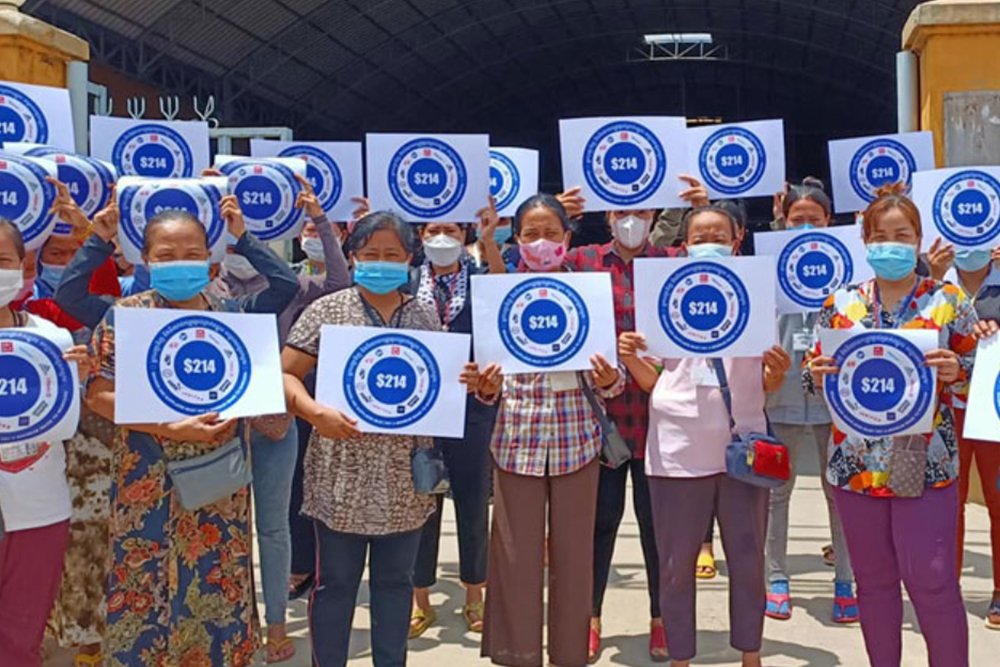
Wage negotiations for Cambodia’s garment sector have commenced, as representatives from the government, labor unions, and industry employers gather to set the minimum wage for 2025. The discussions are crucial for the country’s garment industry, which employs over 700,000 workers and is a key contributor to Cambodia’s economy, generating billions of dollars in export revenue annually.
The talks come amid rising living costs and increasing demands from workers for higher wages. Currently, the minimum wage for garment workers stands at 0 per month, following a increase implemented in 2024.
Labor unions are pushing for a significant wage hike, citing inflation and the need for improved living standards for workers. They argue that current wages are insufficient to cover basic needs, especially as the cost of food, housing, and healthcare continues to rise.
On the other hand, garment manufacturers and industry representatives caution against steep wage increases, warning that higher labor costs could lead to reduced competitiveness in the global market.
They highlight the challenges posed by fluctuating global demand, rising raw material costs, and the need to maintain Cambodia’s attractiveness as a low-cost manufacturing hub. Employers are advocating for a balanced approach that considers the industry’s sustainability and capacity to absorb wage hikes without jeopardizing jobs.
The government, playing a mediating role, aims to reach a consensus that satisfies both workers’ needs and industry viability. As negotiations progress, the outcome will be closely watched, as it will set the tone for labor relations and economic stability in Cambodia’s garment sector in the coming years.
The final decision is expected by the end of the year, with implementation slated for January 2025.

