

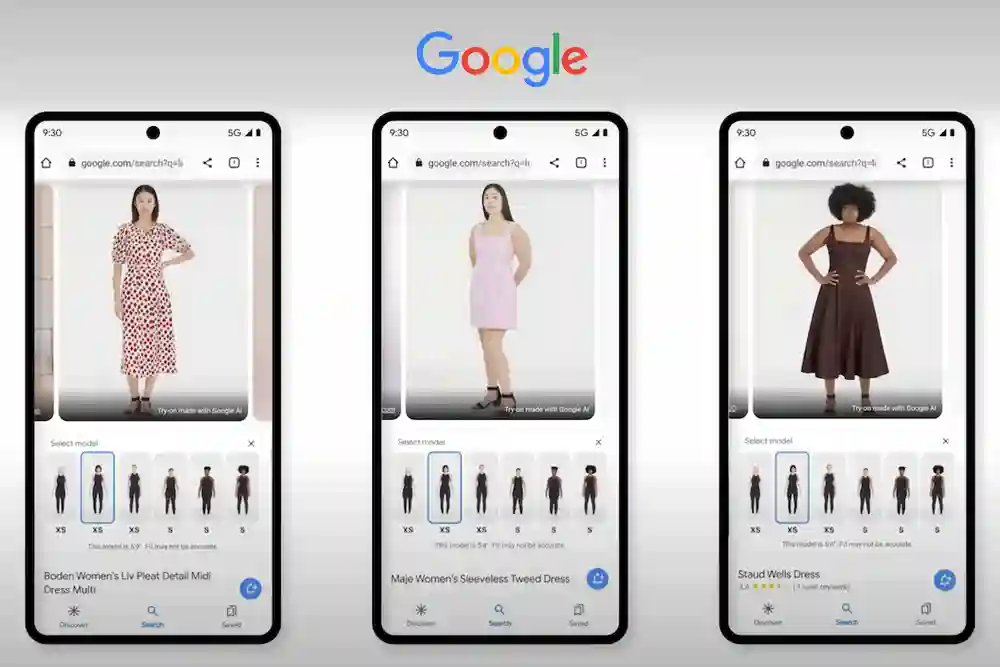
Google has expanded its AI-driven Virtual Apparel Try-On feature across its main platforms — including AI Mode, Google Shopping, and Google Images — offering a more personalized and life-like online shopping experience. The launch represents a major step forward in Google’s wider Shopping Graph strategy to connect consumers with billions of apparel listings.
Initially unveiled at Google I/O and limited to select users, the tool now allows shoppers to upload a full-body photo and instantly visualise how garments look on them. The underlying AI simulates how different fabrics fold, stretch and drape across varying body shapes, offering previews for tops, bottoms, jackets, dresses — and even shoes.
The “try it on” button appears on eligible product listings across Google’s ecosystem, effectively integrating the feature into the everyday search journey for fashion consumers.
Google’s move targets one of online apparel retail’s biggest inefficiencies: high return rates driven by poor fit and unrealistic product imagery. By giving customers accurate, body-specific previews, the tool has the potential to:
• significantly cut return volumes,
• boost conversion rates,
• improve satisfaction, and
• reduce the environmental footprint of reverse logistics.
For fashion brands and retailers, the feature could become a powerful differentiator in customer acquisition and retention — especially as e-commerce competition intensifies and consumers demand greater accuracy and convenience.
It also positions Google more firmly in the fashion tech landscape, competing with Amazon and specialised virtual try-on companies by embedding fit-focused AI directly into search results.
As virtual try-on becomes mainstream, brands may need to optimise product imagery, metadata and sizing information to fully leverage Google’s AI capabilities. For Google, the next phase likely includes:
• expanding supported garment categories,
• improving fabric realism, and
• integrating dynamic fit recommendations.
The feature signals a broader trend: AI is becoming central to the future of online fashion, narrowing the gap between digital browsing and in-store fitting while reducing friction for both consumers and retailers.

