

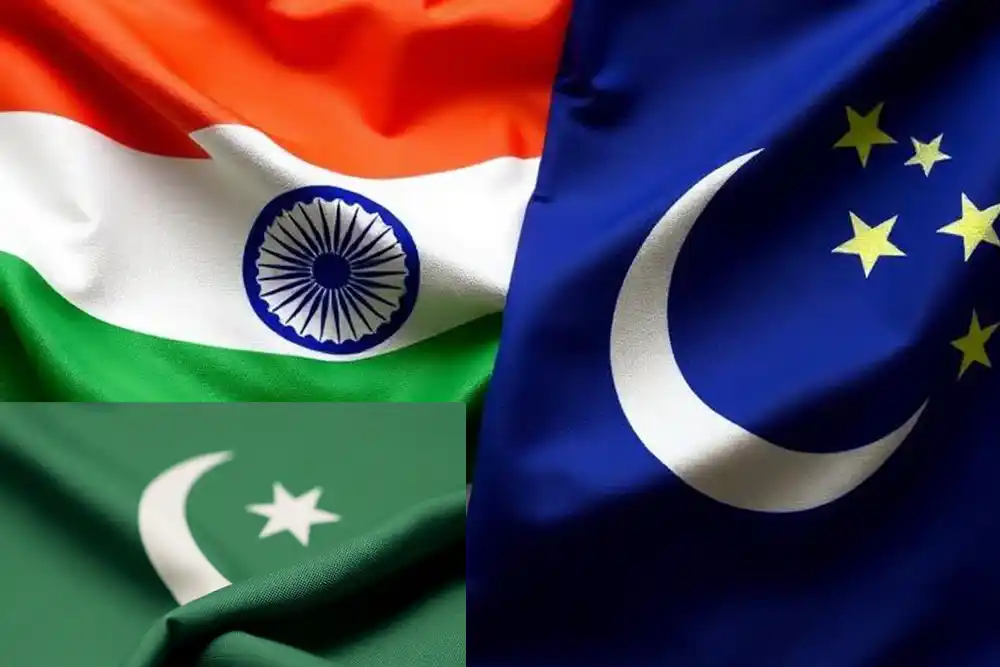
The newly signed Free Trade Agreement between the European Union and India is expected to intensify competitive pressure on Pakistan’s textile and apparel exports, particularly in the EU market that absorbs nearly a quarter of Pakistan’s total exports.
What changed
- The EU–India FTA, finalised on January 27, eliminates tariffs on 100% of Indian textile and apparel tariff lines.
- Previously, India faced 8–12% duties under the EU’s GSP scheme, while Pakistan enjoyed zero-duty access on most textile exports via GSP+.
Why it matters for Pakistan
- Nearly 39% of Pakistan’s textile exports (~$7bn) go to the EU.
- Under GSP+, Pakistan exports duty-free on 66% of EU tariff lines—well below India’s new 100% zero-duty coverage.
- Both countries export roughly $7bn each in textiles to the EU and compete head-to-head in garments, home textiles and cotton-based products.
Industry warnings
- The All Pakistan Textile Mills Association says India has now neutralised—and in some segments overtaken—Pakistan’s tariff advantage.
- Former commerce minister Gohar Ijaz warned Pakistan’s period of “exclusive” EU access is over and urged urgent reforms in energy pricing, taxation and financing to avoid job and export losses.
Bottom line
The EU–India FTA fundamentally reshapes competitive dynamics in Europe’s textile market. With India gaining full tariff parity—and stronger vertical integration—Pakistan’s reliance on GSP+ is no longer sufficient. Without rapid cost reforms, higher value addition, and market diversification, Pakistani exporters risk losing share in their most critical destination over the coming years.

