

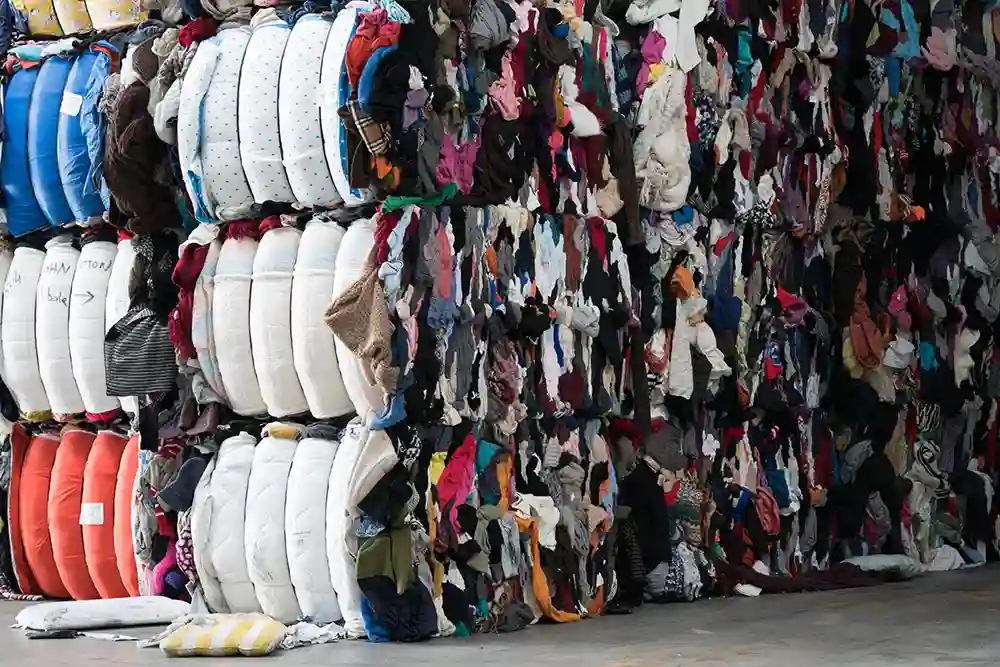
A surge in textile waste is exposing structural weaknesses in Korea’s recycling system and accelerating calls for regulatory overhaul.
Korea’s fast-fashion boom has outpaced its waste infrastructure, prompting lawmakers and analysts to demand new legislation that compels producers to manage the environmental fallout of their own products.
A National Assembly Research Service (NARS) report estimates that Korea’s textile industry generates 10 percent of industrial greenhouse gas emissions and roughly 400,000 tons of textile waste annually—yet less than 20 percent is recycled. The remainder is downcycled, exported or landfilled.
Rep. Kim So-hee, alongside the climate ministry and NARS, is now pushing for a legal definition of “textile waste” and for the phased introduction of extended producer responsibility (EPR). The proposal involves a two-year trial period, followed by mandatory producer-led waste treatment. Policymakers are also considering a state-run collection system and incentives for companies to invest in recycling technologies.
The gap between Korea’s fast-fashion consumption—nearly 900,000 tons of apparel produced annually—and its limited waste-processing capacity is becoming economically and environmentally untenable. Without EPR, Korean firms risk falling behind global ESG expectations and facing trade barriers as regions such as the EU enforce mandatory textile-waste collection and stricter circularity rules. Industry hesitation around recyclable-fiber quality and profitability further widens the technology gap.
With global markets tightening sustainability requirements, Korea’s textile sector is nearing a regulatory inflection point. Legislators argue that an EPR regime, backed by transparent collection systems and public awareness measures, could rapidly shift industry behaviour—echoing Korea’s successful food-waste legislation in 2005. The next steps hinge on producer alignment, state capacity to oversee waste flows, and the development of higher-value recycling pathways capable of absorbing fast-fashion’s mounting volume.

