

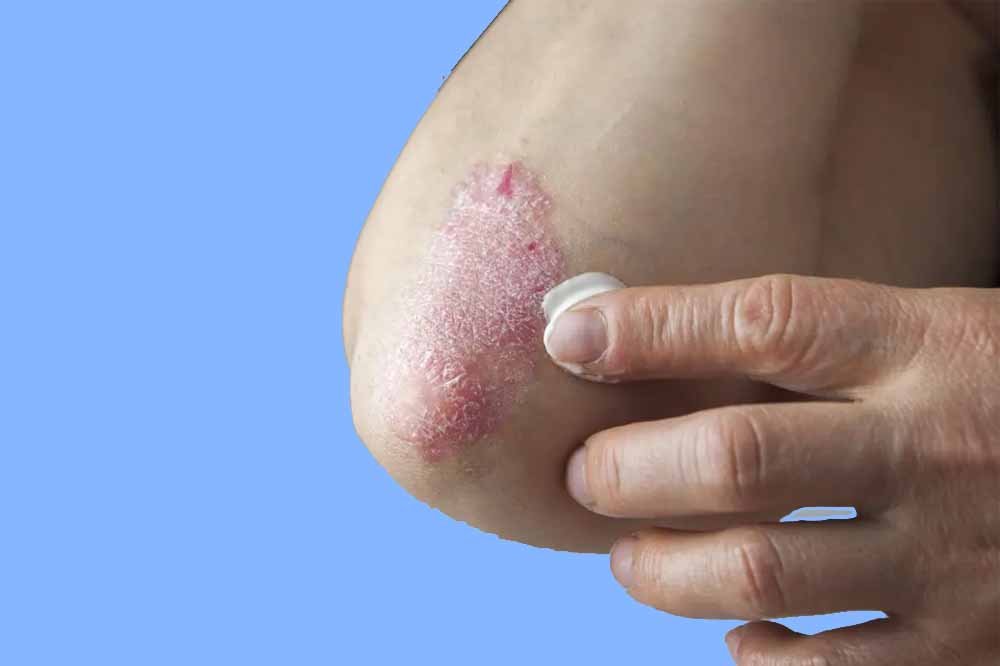
Researchers at the University of Copenhagen have unveiled an innovative nanofibre patch that promises to transform the way psoriasis is treated. Psoriasis, a chronic skin condition affecting up to 5% of the Danish population, causes red, scaly patches on the skin. Traditional treatments often involve creams, ointments, or medication, requiring frequent application, which can be inconvenient and uncomfortable.
The newly developed patch contains two active ingredients—salicylic acid and hydrocortisone—that are released onto the skin at different rates to target the symptoms of psoriasis effectively. Salicylic acid is released immediately to exfoliate the skin and remove dead cells, while hydrocortisone, which reduces inflammation, is gradually dispensed over time for longer-lasting relief.
Associate Professor Andrea Heinz, from the University’s Department of Pharmacy, explains that this innovation reduces treatment frequency to once per day, providing more convenience for patients with plaque psoriasis. “The patch has the potential to make treatment more comfortable for psoriasis patients,” she adds.
Early tests on both pig skin and human skin cells have shown that the nanofibre patch is as effective as current creams and ointments available in pharmacies.
While further research and clinical trials are needed, the patch could also have applications for other inflammatory skin conditions, such as atopic eczema, and even wound healing.
The breakthrough offers hope for better, more efficient treatment options for those suffering from chronic skin conditions, revolutionizing the way these diseases are managed.

