


Sateri is a global leader in viscose rayon. The natural and high-quality fibre produced by the company is made from trees grown on renewable plantations, and can be found in comfortable textiles and skin-friendly hygiene products.
As the largest maker of viscose fibre in the world – with five viscose mills in China and an annual capacity of 1.4 million metric tonnes – Sateri also operates Linz (Nanjing), a yarn spinning mill, and a 20,000 ton Lyocell facility.
Sateri is one of the business groups managed by Royal Golden Eagle (RGE), a group of resource-based manufacturing companies with operations around the world.
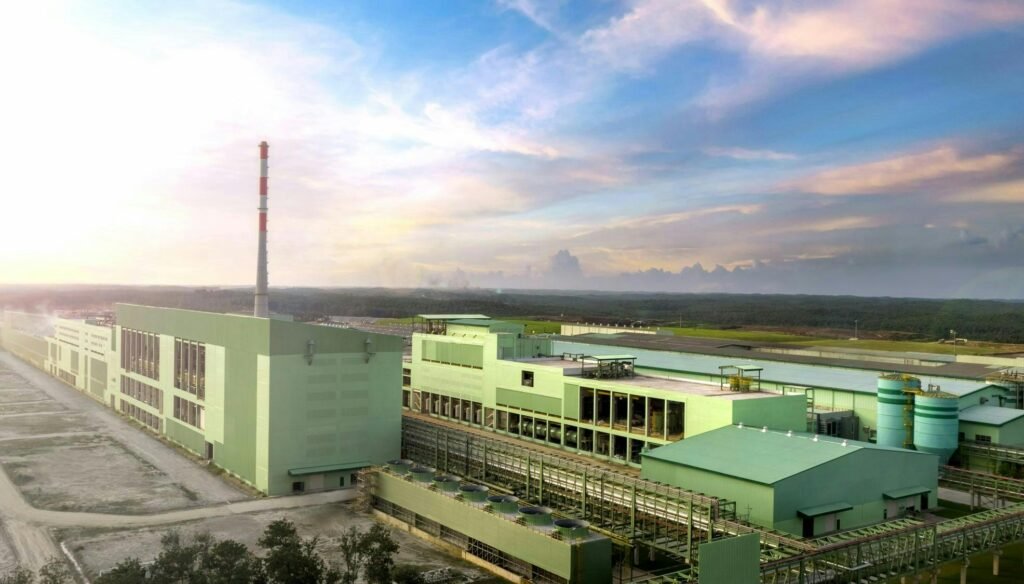
RGE’s work ranges from upstream, comprising sustainable resource development and harvesting operations, to downstream, where our companies create diverse value-added products for the global market. RGE also manages Asia Pacific Rayon (APR), the first fully integrated viscose rayon producer in Indonesia. APR has a production capacity of 240,000 tons per annum.
Why viscose as a textile fiber?
Natural and, comfortable: Made from wood cellulose, viscose rayon has a silky look and the feel of cotton with the same properties of comfort, breathability and absorbency. Easy to dye, viscose rayon is woven or knitted to make underwear, baby clothing, skirts, shirts and dresses that are soft on the skin. At home, it’s the ideal fabric for high-end bed sheets, towels, tablecloths, napkins, furniture covers, curtains and drapes.
Renewable and biodegradable: Viscose rayon is a fully biodegradable alternative to acrylic, polyester, nylon and other petroleum-based synthetic fabrics.
Cellulose pulp from sustainably managed plantations of fast-growing acacia and eucalyptus trees also makes viscose rayon a great alternative to cotton, which is grown on agricultural land using large amounts of water.
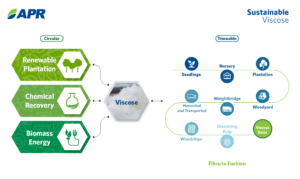
These trees are renewable resources that are harvested every five years for the next cycle of planting and harvesting, ensuring a constant supply of renewable raw materials.
Highly absorbent: The fiber possesses the highly absorbent nature of cellulose and the large surface area of the fibers enables it to absorb dyes exceptionally well, bringing about a more saturated, rich and radiant color without losing its natural luster.
Sateri and APR are committed to sustainable development.
We actively engage communities living around our mills, providing them with meaningful employment and social services that meet their needs. Our Sustainability Policy and Sustainable Pulp Sourcing Policy govern our operations, in compliance with national and international environment, health and safety standards.
Sateri in China and APR in Indonesia are strategically well positioned to serve the Asian, European and American markets.

