

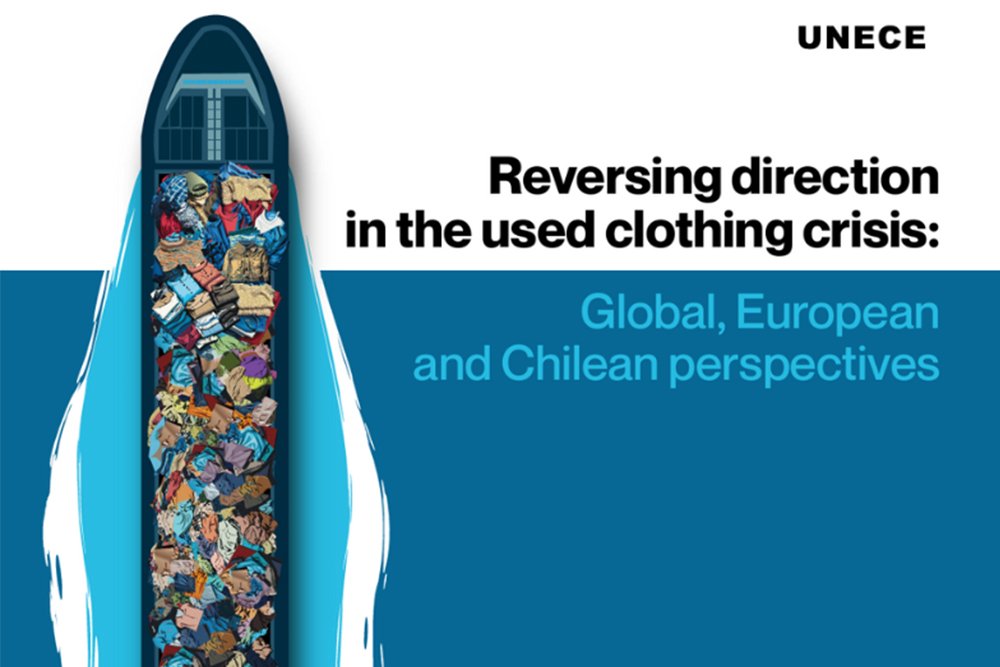
The United Nations Economic Commission for Europe (UNECE) and the United Nations Economic Commission for Latin America and the Caribbean (ECLAC) proposed measures to mitigate the negative impacts of secondhand clothing exports. The joint report highlights the environmental and social challenges posed by the trade in used textiles, especially the influx of poor-quality synthetic garments to developing countries, which often lack adequate recycling infrastructure.
The UNECE and ECLAC report underscores that 75% of imported used clothes are non-reusable, leading to significant waste accumulation and environmental hazards, as seen in the Atacama Desert where 30,000 tons of discarded clothing have created pollution and health risks.
Key recommendations include implementing Extended Producer Responsibility (EPR) systems to hold manufacturers accountable for the lifecycle of their products, developing sorting and recycling facilities, and establishing minimum export criteria through digital product passports.
The report also emphasizes the need for public-private partnerships, particularly in regions like Chile’s Tarapacá, to support recycling initiatives and job creation.
These proposals aim to foster a more sustainable and equitable global trade in secondhand clothing, aligning with broader goals of promoting circular economies and enhancing international cooperation on environmental standards.

