

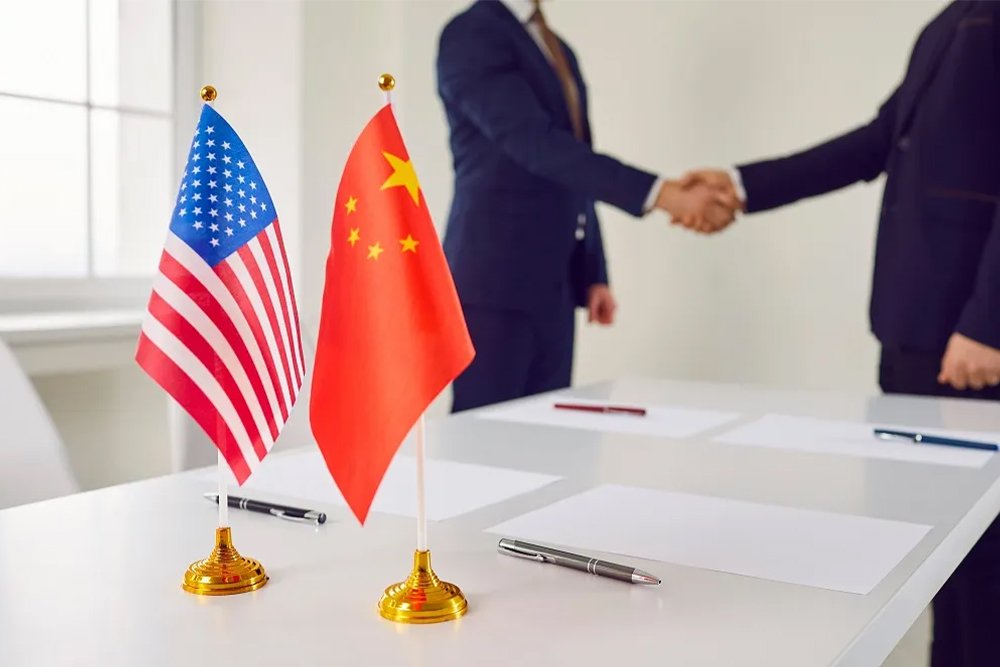
In a significant move toward easing long-standing trade tensions, the United States and China have agreed to temporarily reduce tariffs on each other’s goods, effective May 14, 2025. The agreement, seen as a step toward rebuilding economic cooperation between the world’s two largest economies, will be in place for 90 days as both countries work toward a broader trade accord.
Under the terms of the new deal, the United States has lowered tariffs on Chinese imports from a previous average of 145% to 30%. In return, China has reduced its tariffs on American goods from 125% to 10%. This sharp decrease marks a major de-escalation from the heavy duties that have burdened trade since the height of the U.S.–China trade war.
The immediate impact of the agreement has been a surge in trade volume. Shipping activity from China to the U.S. has increased dramatically—by nearly 300% in the days following the announcement. This has given a much-needed boost to global supply chains and logistics companies that had seen a decline in activity due to the high tariff regime. Companies such as Amazon and international freight carriers have reported renewed demand as importers rush to take advantage of the lower rates during the 90-day window.
One of the key provisions of the agreement involves the restoration of the “de minimis” exemption for low-value goods, a rule that allows certain inexpensive imports to enter with reduced tariffs. Tariffs on such items have been slashed from around 120% to a flat rate of 54%, plus a $100 fee per parcel. This is expected to benefit e-commerce retailers like Shein and Temu, and ultimately, consumers who shop for affordable products online.
However, the temporary nature of the agreement has left some businesses cautious. Fashion retailers and small importers, especially in cities like Houston, have raised concerns about supply chain uncertainty and potential policy reversals. While many welcome the short-term relief, they emphasize the need for a stable, long-term trade framework.
Overall, the May 14 tariff reduction signals a rare moment of economic cooperation between Washington and Beijing. As negotiations continue, businesses and consumers alike will be watching closely to see whether this temporary relief can evolve into a permanent solution to years of trade friction.

