

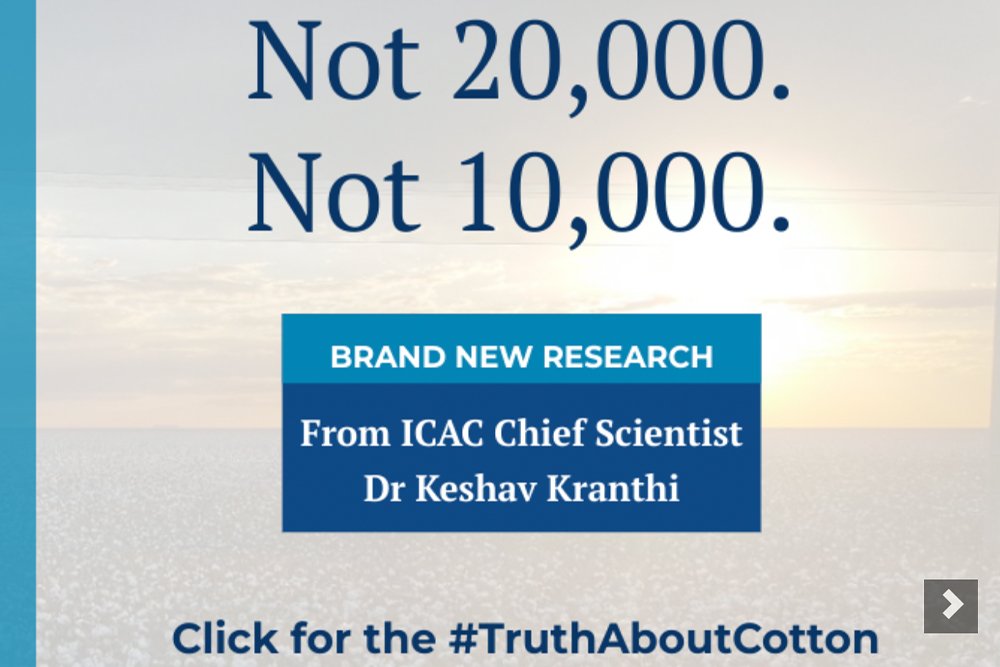
A recent study by the International Cotton Advisory Committee (ICAC) provides a detailed analysis of water usage in cotton cultivation, offering crucial insights for sustainable agricultural practices. The study, which covers data from 271 locations in 38 major cotton-producing countries between 2020 and 2024, underscores the significant role of water in cotton farming, especially in areas where irrigation is essential.
The report highlights that 44% of the world’s cotton area, or 31.2 million hectares, relies on irrigation. Despite cotton occupying only 2.92% of the global arable land, it uses about 2.76% of the total irrigation water used in agriculture. On average, 9,120 liters of water are required to produce one kilogram of cotton lint, with 6,785 liters coming from rainwater and 2,335 liters from irrigation. This data indicates the substantial water footprint of cotton production and raises concerns about the sustainability of water use, especially in regions facing water scarcity.
The study also draws attention to the challenges of over-irrigation, particularly in arid regions where water resources are already under stress. It calls for better water management practices, such as efficient irrigation systems, rainwater harvesting, and precision irrigation technologies, to help reduce water waste and optimize water usage. By adopting these methods, cotton farmers can improve yields while minimizing the environmental impact of their production processes. This study analyzed water usage data from 271 cotton-growing states or provinces across 38 major cotton-producing countries over the period 2020–2024. The analysis focused on key parameters, such as irrigated area, yield, effective precipitation (Pe), crop evapotranspiration (ETc), soil water balance (St), critical moisture threshold (Scrit), irrigation water requirements (IWR), irrigation water applied, excess irrigation, irrigation water footprint (WFirri), rainwater water footprint (WFrain) and the total water footprint (WFtotal).
In recent years, water-use efficiency has improved significantly, with traditional flood irrigation increasingly replaced by drip and sprinkler systems. Additionally, growing awareness of regenerative practices—such as no-till farming, cover cropping, mulching, and biochar application—is further enhancing soil moisture retention, reducing runoff, and promoting sustainability, strengthening efforts in water conservation. This study underscores the need to shift the debate on cotton’s water use from rainwater inclusion to irrigation optimization. By focusing on irrigation efficiency, stakeholders can achieve higher yields, increased profitability, and improved environmental sustainability, offering a balanced and practical approach to water use in cotton production.
Furthermore, the report emphasizes the need for policy interventions that promote sustainable water management practices in cotton farming. This includes supporting farmers with the tools and technologies needed to reduce water consumption while maintaining productivity. As global water resources continue to face increasing pressure, the cotton industry must play its part in ensuring more sustainable practices that benefit both the environment and the economy.
Read the full report at: https://www.icac.org/Content/CFCDocument/Pdf3b419b42_34c5_4bf0_a531_8072f120bfe0/SUMMARY%20NOTE%20on%20WATER-V1.pdf

