


Textile scientists have worked for decades to better simulate the feel or touch of fabrics.
David Julius and Ardem Patapoutian have won the 2021 Nobel Prize in physiology or medicine to discover the human receptors for temperature and touch.
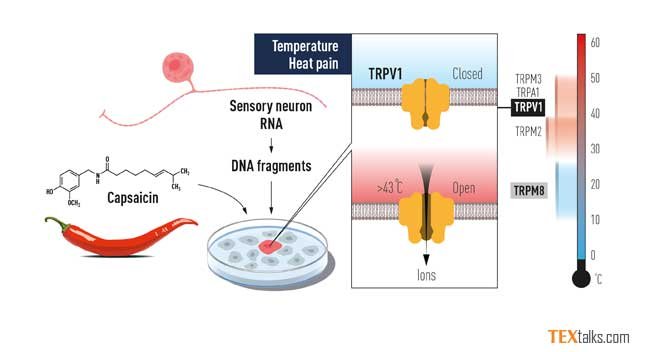
David Julius utilized capsaicin, a pungent compound from chili peppers that induces a burning sensation, to identify a sensor in the skin’s nerve endings that responds to heat.
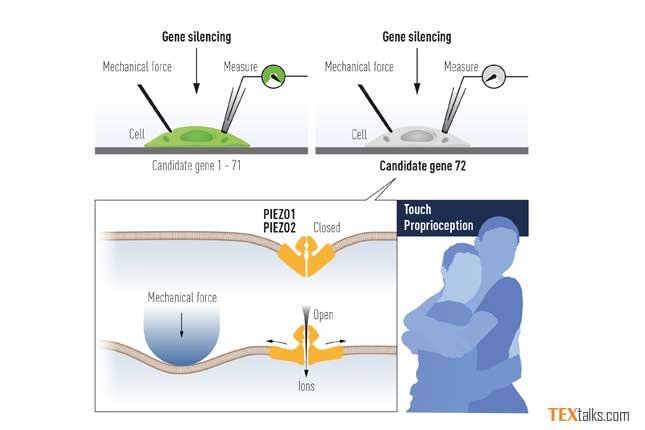 Ardem Patapoutian used pressure-sensitive cells to discover a novel sensor class that responds to mechanical stimuli in the skin and internal organs. Researchers had previously found mechanical sensors in bacteria, but the mechanisms underlying touch in vertebrates remained unknown. While the mechanisms for temperature sensation were unfolding, it remained unclear how mechanical stimuli could be converted into our senses of touch and pressure. Ardem Patapoutian, working at Scripps Research in La Jolla, California, USA, wished to identify the elusive receptors activated by mechanical stimuli.
Professor Seshadri Ramkumar, of the Nonwovens and Advanced Materials Laboratory at Texas Tech University, said, “Responses to stimuli such as warmth or cold, friction and outside pressure play an important role in the consumer acceptance of textiles and other products and the basic work undertaken by the Nobel laureates will give us a better understanding of sensory perception at the molecular level. Textile scientists have worked for decades to better simulate the feel or touch of fabrics. Cotton is pre-sold based on its comfort and its next-to-skin friendliness and wool is preferred for its thermal comfort, which depends on the neural responses based on external stimuli such as smooth or rough, hot or cold, etc.
”
This year’s Nobel recognition has a personal resonance for Ramkumar, who is heavily involved with the understanding of the touch of fabrics and undertook doctoral dissertation research on the hand of fabrics at the University of Leeds some years ago.
