

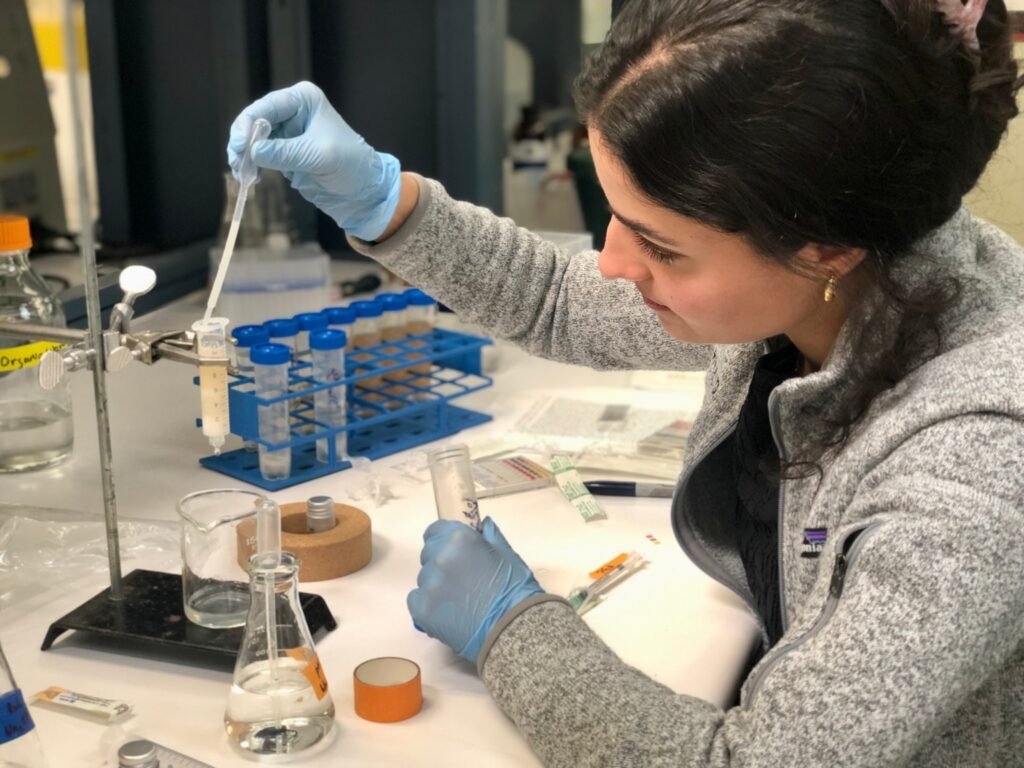
Founded in 2020 by Neeka and Leila Mashouf, Rubi Laboratories is pioneering the creation of carbon negative cellulosic textiles through its patent-pending, cell-free biocatalytic process, starting with viscose. To do this, Rubi captures CO2 from the waste streams of manufacturing facilities using its proprietary enzyme system which can capture and convert CO2 from a gas input at any concentration. The CO2 is then converted into cellulose, which can then be used to create viscose-based yarn. By utilizing enzymes as the catalyst, Rubi is able to turn 100% of CO2 inputted to the end product with zero waste.
Rubi’s first textile samples are expected to be available in March 2022. Rubi has validated its technology by creating a successful prototype and has currently agreed test plans with numerous tier-one global retail and fashion brands. Rubi is also in discussions with various multinational energy and manufacturing companies to provide CO2 to scale up production.
Rubi is providing a carbon negative, zero-water and zero-land alternative to the $15bn viscose industry, which typically relies on pulp derived from wood. Roughly 35% of major fashion brands’ SKUs are made from viscose, a statistic forecasted to grow 8% every year until 2025. Viscose is the third most used textile in the world, with key uses outside of fashion in the automotive industry for items like tyres.
While Rubi will initially focus on the fashion market, the company’s longer-term plans include applying the same technology to other industries such as food, packaging and building materials.
The company has raised funding at a critical moment in time for the fashion industry as major brands set ambitious targets to zero carbon, or carbon reduction goals, by 2030. Overall, the fashion industry is the third-most CO2-polluting supply chain in the world, with the majority of emissions coming from the textile supply chain.
Even though today’s viscose and cotton textiles come from plants, their processing and manufacturing contribute over 10kg of CO2 per kg of textile. Rubi’s technology enables its textiles to be net carbon-negative per kg of textile. There’s immense market pressure on fashion companies to become more sustainable: at least 60% of fashion customers are demanding sustainable choices, meaning that the industry could see a bn profit reduction by 2030 if no action is taken.
The most prevalent issue for these brands is sourcing carbon-free materials that can be scaled to meet production, and at price parity: 200 major fashion retailers are already paying a premium for organic cotton.
