

Waste from the seafood industry offers a safer, more sustainable route to distressed finishes once deemed too dangerous.
Researchers in Europe and the United States have developed a novel abrasive for denim finishing made from ground mussel shells, potentially reopening the door to sandblasting—an industrial technique largely abandoned over health concerns.
The study, published in the Journal of Cleaner Production, was carried out by scientists from the University of the Basque Country and Massachusetts Institute of Technology, and commissioned by a multinational textile manufacturer seeking a safer alternative to conventional denim distressing methods.
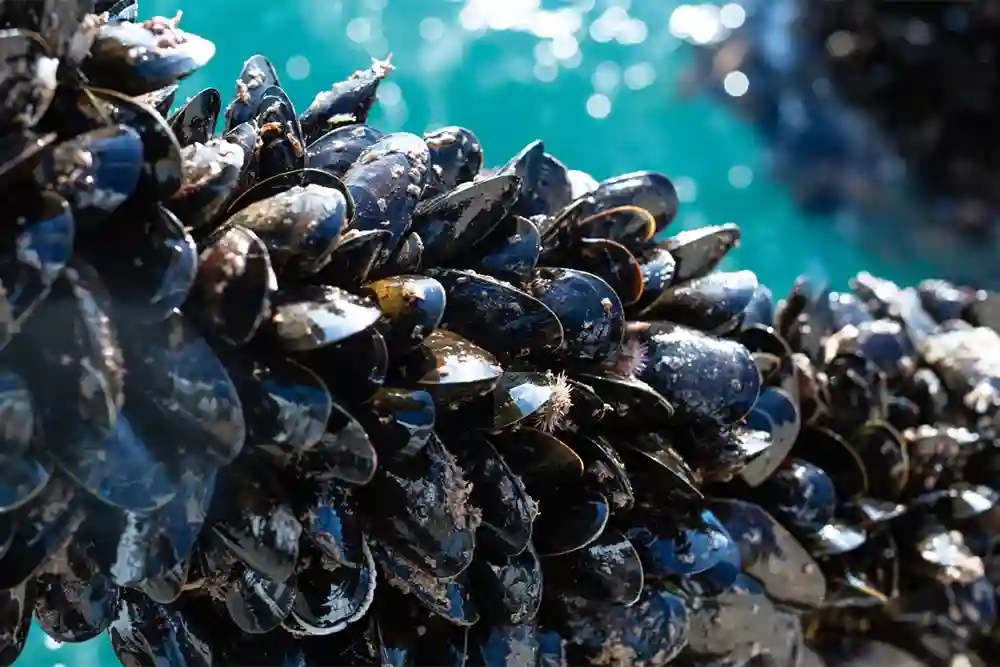
Traditional silica sandblasting was widely banned after being linked to silicosis, a fatal lung disease. Replacement techniques—such as oxidising chemicals or laser treatments—reduced worker risk but introduced new problems, including toxicity, high energy use or limited aesthetic results. The new approach uses discarded mussel shells, of which an estimated 1.5 million tonnes are sent to landfill each year.
The process is straightforward: shells from the food industry are washed, sterilised, milled and sieved into grit, which is then projected onto denim using standard sandblasting equipment. Tests show the shell-based abrasive outperforms garnet, a common alternative, delivering smoother finishes, higher durability and lower material consumption. Crucially, the grit fractures less easily, allowing repeated reuse and reducing overall waste.
According to the researchers, the method is not only less toxic but also materially efficient—requiring smaller quantities per garment—and compatible with existing industrial infrastructure.
The implications go beyond denim. The work illustrates how industrial by-products can substitute for virgin raw materials in high-volume manufacturing, aligning circular-economy goals with operational performance. If adopted at scale, mussel-shell abrasives could turn a problematic waste stream into a functional input—reviving a once-banned process without reviving its hazards.
