

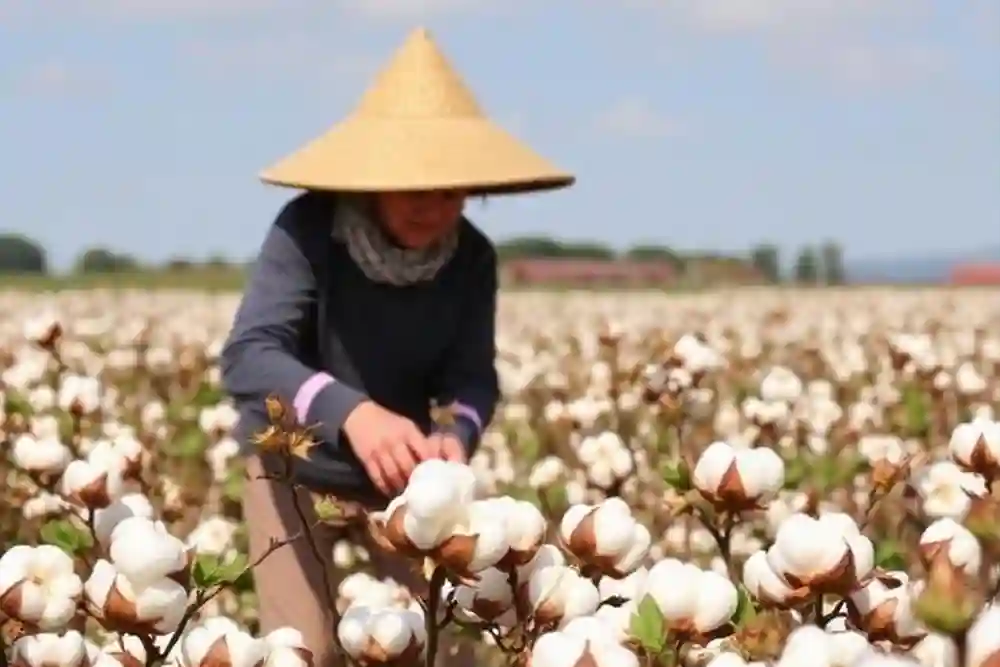
China is on course to produce its largest cotton crop in more than ten years, providing a stabilising anchor for global cotton markets at a time when production prospects elsewhere remain fragile.
China Drives the Upside
According to the latest estimates from the United States Department of Agriculture (USDA), China’s 2025/26 cotton crop is now pegged at 34.5 million bales, revised up by one million bales month-on-month. Yield levels are approaching nearly double those recorded in 2012/13, the last comparable peak year.
This strong performance positions China as the primary counterweight to tightening supply conditions emerging in other major cotton-producing regions.
Global Production Softens
Despite China’s upward revision, global cotton output has been trimmed slightly to 119.4 million bales. Production cuts in India, the United States, Argentina, and Turkey have more than offset China’s gains.
India continues to see declining production despite rising minimum support prices, underscoring structural issues in productivity and farm economics rather than price incentives alone.
Meanwhile, Pakistan, Australia, and Brazil face a mix of acreage constraints and weather-related risks, tilting 2026/27 global supply risks to the downside.
Demand Improves, Stocks Tighten
On the demand side, anticipated world mill use has been nudged up to 118.9 million bales, driven primarily by stronger Chinese textile consumption. As a result, projected 2025/26 ending stocks have fallen by 1.5 million bales to 74.5 million.
Data from Cotton Incorporated indicates that global cotton trade remains broadly flat at 43.8 million bales. However, if mill demand remains resilient while exportable surpluses shrink, the global stock cushion may prove thinner than headline numbers suggest.
Limited Buffer Ahead
Although accumulated inventories — including China’s reserve build during 2023/24 — currently provide some insulation, analysts caution that this buffer could erode quickly if weather disruptions or acreage declines materialise in key exporting countries.
What It Means for the Market
- China’s bumper crop is preventing sharper price volatility in the near term.
- Grower margins globally remain under pressure, particularly in South Asia.
- Medium-term supply risk is skewed downward, increasing sensitivity to weather
In short, China is buying the global cotton market time — but not eliminating the underlying structural risks facing producers worldwide.
