

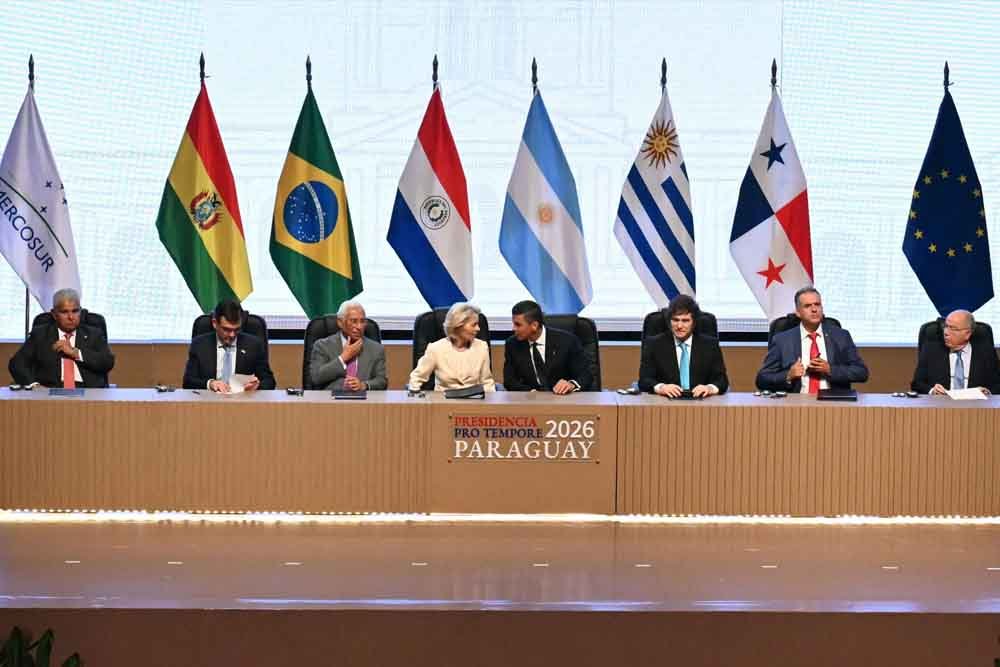
After more than two decades of negotiations, the European Union and Mercosur are on the verge of concluding one of the most consequential trade agreements of the decade. Covering Argentina, Brazil, Paraguay, and Uruguay, the pact will establish a free-trade zone spanning 700+ million consumers, with bilateral goods trade already exceeding €111 billion annually (2024).
Trade Liberalisation: Apparel and Textiles Among the Biggest Winners
Under the agreement, tariffs will be eliminated on over 90% of bilateral trade through phased implementation. Apparel and textiles stand out as early beneficiaries:
- >95% of apparel tariff lines will ultimately move to zero duty
- Cotton yarns, fabrics, and basic garments will see the fastest phase-outs
- Technical textiles, workwear, and value-added fabrics gain preferential access
For European exporters, early momentum is already visible. According to Euratex, in the first seven months of 2025:
- EU textile & clothing exports to Mercosur reached €299.5 million (+4.4% YoY)
- Clothing exports rose 9.2%
- Textile exports grew 2%
Euratex has described the deal as a “strategic diversification lever”, particularly for sustainable, circular, and industrial textiles.
A Strategic Buffer Against Global Trade Volatility
Beyond tariff cuts, the pact reflects Europe’s response to rising trade fragmentation driven by:
- Protectionist pressures
- Uncertain US trade policy
- Geopolitical and logistics disruptions in Asia
With the EU importing €170+ billion in apparel annually, diversification is no longer optional. Mercosur offers Europe:
- Proximity-neutral access to cotton and cellulose-based fibres
- Political and regulatory alignment on sustainability frameworks
- Reduced exposure to Asian shipping chokepoints
Brazil alone accounts for roughly 12% of global cotton output, ranking among the world’s top producers. Duty-free access to Mercosur cotton and yarn could moderately reduce input costs for EU manufacturers in cotton-intensive segments such as basics, denim, and workwear.
Competitive Pressure on Asian Apparel Exporters
The agreement subtly recalibrates competitive dynamics for Asian exporters, including Bangladesh, Pakistan, and Vietnam.
Cotton-based apparel represents over 35% of EU clothing imports by volume. Even marginal tariff advantages can influence sourcing decisions in price-sensitive categories. As Mercosur inputs gain preferential access, European buyers may:
- Adjust sourcing mixes for specific product categories
- Prioritise lead time, sustainability credentials, and geopolitical risk mitigation
- Use Mercosur as a secondary or balancing sourcing corridor, not a full substitute
Bangladesh retains strong advantages in scale, cost leadership, and buyer relationships, but the deal reinforces a broader reality: preferential market access is becoming as decisive as manufacturing efficiency.
Strategic Takeaway for the Apparel Industry
The EU–Mercosur deal is not about the immediate displacement of Asian suppliers. It is about structural rebalancing.
It signals a future in which:
- Trade diplomacy
- Regional integration
- Supply-chain agility
increasingly shape competitiveness alongside cost, capacity, and sustainability.
For exporters worldwide, the message is clear:
Market access is becoming as strategic as manufacturing efficiency.
