

By aligning metal-fibre crossings so forces add up—rather than cancel out—researchers push wearable robotics closer to clothing than machinery.
Wearable exosuits tend to look like exosuits: straps, hinges and compromises. EPFL’s Soft Transducers Lab is proposing something subtler—a fabric that behaves like a muscle, not a bracket. Its latest textile actuator can lift 1 kg with a sample weighing 4.5 g, after a 50% contraction.
The breakthrough is geometric. EPFL interlaces nickel–titanium shape-memory alloy (SMA) fibres in a periodic X-crossing pattern so each crossing is oriented along the intended contraction axis. Heat the SMA with an electrical current, and the fibres shorten and stiffen—now pulling together, not against each other. The fabric can also be passively stretched to ~160% of its original length, keeping it wearable.
Elastomer straps and rigid linkages deliver force, but they undermine comfort and acceptance. SMA fibres are powerful, yet traditional knits and knots waste that power because their loops pull in competing directions. EPFL’s aligned crossings convert more of the SMA contraction into usable work—effectively improving “power density” in textile form.
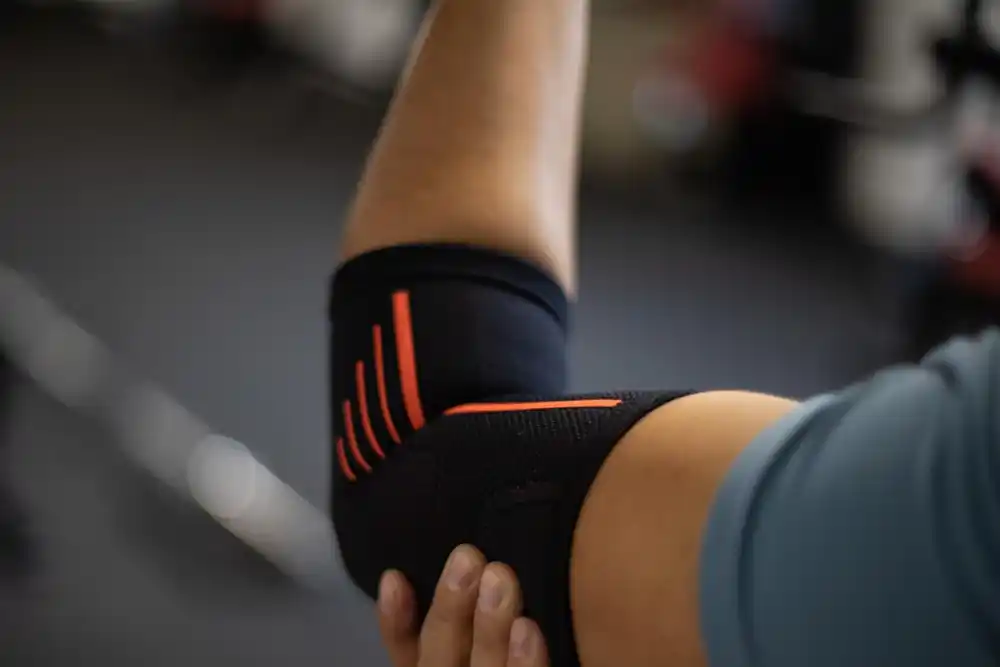
Two prototypes point to near-term uses: an elbow-assist sleeve that lifts a 1 kg load through about 30° of motion, and on-body compression for medical or sport sleeves. A new mechanics model also predicts performance under varying loads and temperatures—exactly what product engineers need to move from demos to specifications.
