

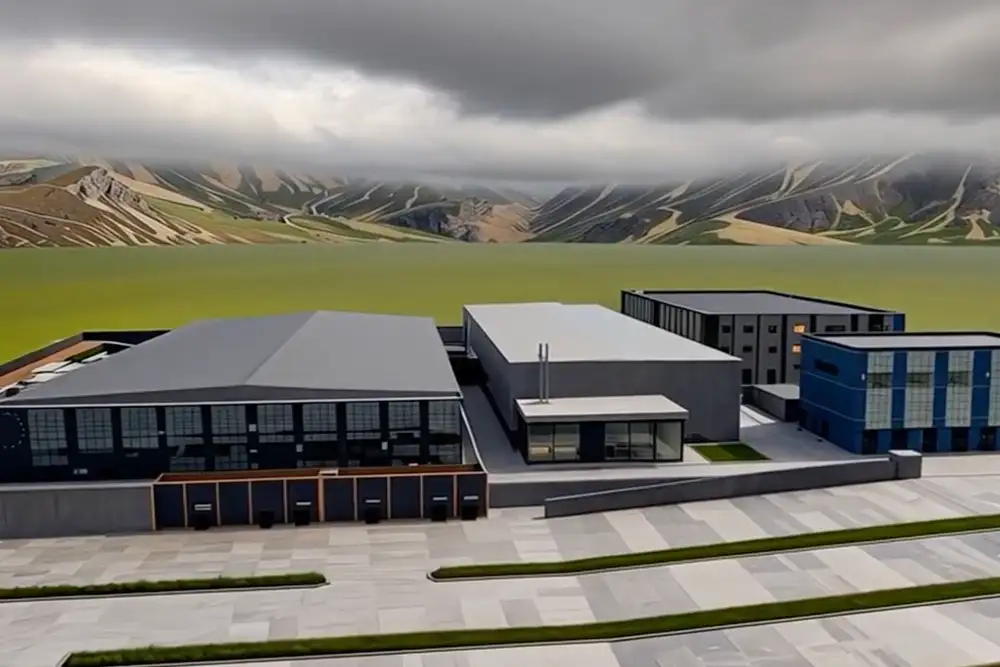
The Alexandria pilot gives Alpine Group a live industrial platform to test whether microfiber capture can move from a sustainability promise to mill-scale operating practice.
Paradise Textiles, the materials innovation arm of Alpine Group, has launched the pilot phase of its new $102 million integrated fabric manufacturing facility in Alexandria, Egypt, with microfiber control built into the plant’s operating model. The facility, located in the Amreya Public Free Zone, is expected to create about 1,200 jobs and produce high-performance polyester and synthetic fabrics, mainly for activewear and sportswear markets in the US and Europe.
Microfibers move into the factory agenda
The most important feature of the pilot is the first industrial deployment of Regen, a microfiber filtration system developed with UK climate-tech company Matter. The system is designed to capture microfibers directly from textile wastewater during manufacturing, rather than leaving the problem to downstream washing, consumer behaviour or municipal treatment systems.
That distinction matters. Synthetic textiles shed microscopic fibers during production, finishing and later use. Once discharged into water systems, these fibers are difficult to recover and can contribute to wider microplastic pollution. For activewear suppliers, microfiber leakage is becoming not only an environmental concern but a brand-risk and compliance issue.
A test of scale, not just technology
Paradise Textiles says the Alexandria plant will serve as a live industrial platform to validate Regen under real production conditions. Earlier descriptions of the technology position it as a self-cleaning, low-energy filtration system designed for textile manufacturing, with no disposable parts.
Initial projections suggest one installation could capture tens of tonnes of microfibers per year, while also reducing energy use and emissions associated with wastewater treatment. The wider commercial question is whether the system can operate reliably across different fabric types, production speeds, chemical recipes and wastewater loads.
Egypt’s vertical-integration play
The investment also strengthens Alpine Group’s regional manufacturing position. By placing fabric innovation closer to garment production, the facility is intended to improve speed, technical collaboration and supply-chain transparency for brand partners.
The next signal to watch is replication. If Regen performs consistently in Alexandria, the model could be retrofitted into other mills and adopted by suppliers facing tighter European scrutiny on microplastics, wastewater and production-stage environmental impacts. For textile manufacturers, the benchmark is shifting: sustainability will increasingly be judged not only by fiber choice, but by what factories prevent from leaving their gates.
