

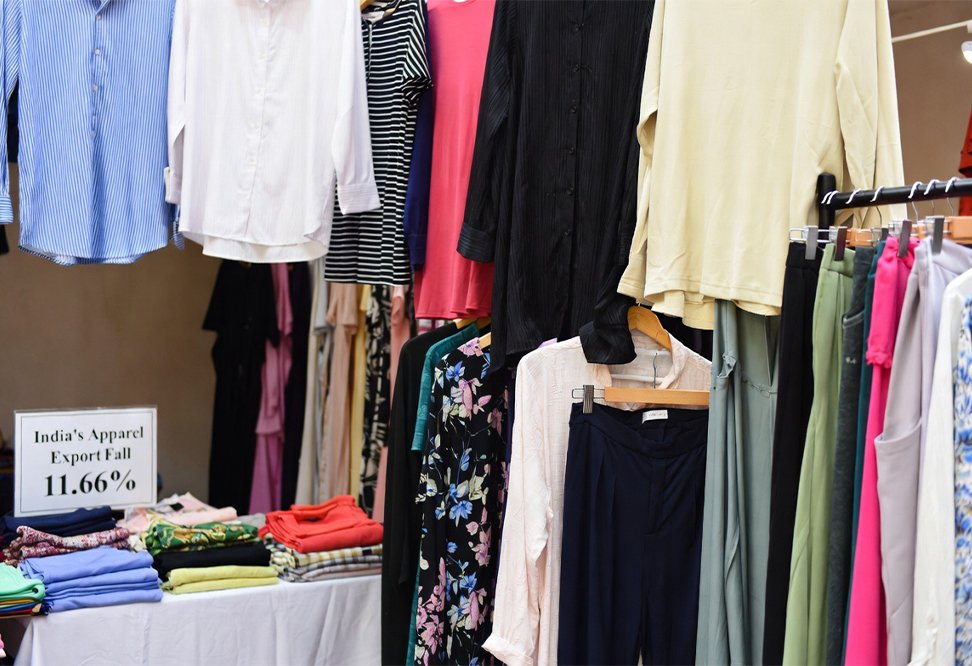
April’s data shows a split export picture: garments weakened sharply, while carpets, handicrafts and man-made textiles helped limit the fall in India’s wider textile trade.
India’s apparel exports declined 11.66% year-on-year to US$1.21 billion in April 2026, down from US$1.37 billion a year earlier, according to CITI analysis of trade data. The fall outweighed a modest recovery in textile exports, pulling combined textile and apparel shipments down 3.42% to US$2.88 billion from US$2.98 billion in April 2025.
Apparel weakness drags the basket
The decline in garments is commercially significant because apparel is generally more labour-intensive and value-added than several upstream textile categories. Its contraction came despite a stronger overall export environment: India’s total merchandise exports rose 13.78% year-on-year to US$43.56 billion in April 2026.
As a result, textiles and apparel lost share in India’s export basket. The sector accounted for 6.62% of total merchandise exports in April, compared with 7.79% in the same month last year.
Textiles show selective resilience
Textile exports rose 3.59% to US$1.67 billion, supported by stronger shipments of carpets, handicrafts and man-made textile products. Cotton yarn, fabrics, made-ups and handloom products were broadly flat, rising 0.57% to US$968.38 million. Man-made yarn and fabrics increased 2.34% to US$392.77 million.
The strongest gains came from smaller but faster-growing categories. Carpet exports increased 9.93% to US$126.28 million, while handicrafts excluding handmade carpets rose 26.22% to US$154.73 million. This suggests that India’s export performance is being supported more by niche and design-led categories than by broad-based garment growth.
Imports also soften
On the import side, raw cotton and cotton waste imports fell 6.10% to US$81.58 million, while imports of textile yarn, fabrics and made-ups declined 7.17% to US$179.27 million in April.
The next signal to watch is whether apparel exports recover in May and June. If garment weakness persists while overall merchandise exports continue rising, India’s textile sector could face a more serious competitiveness problem in labour-intensive manufacturing, not merely a one-month demand fluctuation.
