

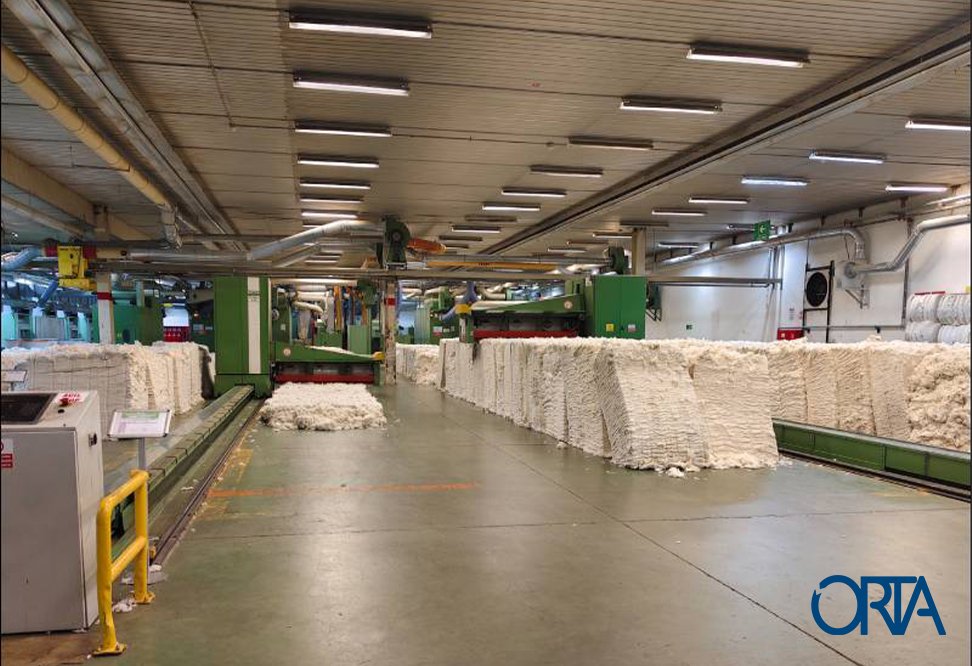
The Turkish denim producer’s use of FiberQ shows how raw-material intelligence is becoming central to recycled yarn quality, cost control and downstream fabric performance.
Uster Technologies is highlighting ORTA’s use of its FiberQ raw-material management system as evidence that recycled and blended denim yarns can be managed with greater consistency through data-led fibre control. The case will form part of Uster’s presentation at ITM 2026 in Istanbul, where the company will showcase its broader Uster 360Q quality-management platform.
Raw material control moves upstream
For denim mills, recycled fibre adoption creates a technical challenge: sustainability gains must not come at the cost of shade variation, yarn instability or fabric defects. ORTA, based in Kayseri, Türkiye, has adopted FiberQ to bring more measurable control to raw-material selection, bale laydown planning and blend consistency.
The system consolidates fibre data on one platform, allowing spinners to monitor warehouse inventories and plan balanced raw-material use. For ORTA, this has made decision-making more predictable from blend preparation through to monitoring of average blend quality values.
Orhan Herdem, Spinning Group Manager at ORTA, said the company needed “data-driven knowledge” to control raw-material utilisation and improve process efficiency, quality and productivity.
Reducing barré risk
The most important production gain is consistency between successive blends. FiberQ has helped ORTA control critical parameters such as micronaire and colour, reducing the risk of downstream shade variation, including barré. That is particularly important in denim and sensitive constructions such as gabardine, where minor fibre variation can become visible after dyeing, weaving or finishing.
By bringing its full cotton inventory into a systematic evaluation process, ORTA can plan blend transitions within defined quality limits. This improves stock utilisation while supporting process stability from warehouse to winding.
Business impact at spinning scale
The commercial value is direct. ORTA reports fewer unnecessary trial runs, lower waste and more stable process flow, particularly by preventing shade-variation problems that previously appeared in warping. The company currently operates 66,000 spindles at its Kayseri facility, with daily output of 55,000 kg.
At ITM 2026, Uster will present FiberQ at Hall 7, Booth 714B. The wider message is clear: as recycled fibres enter mainstream denim production, mills will need not only new materials, but better raw-material intelligence.
