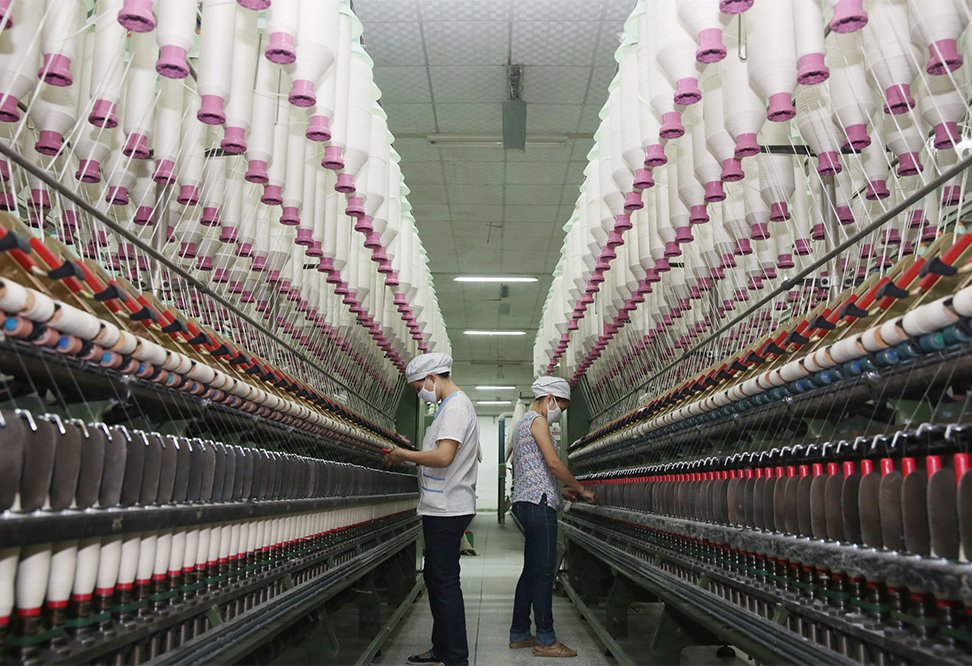
Vietnam’s garment sector is still growing on paper, but weakening buyer demand, cancelled orders and supply-chain delays are testing factory resilience.
Vietnam’s textile and garment exports reached US$14.53 billion in the first four months of 2026, up 4.3% year on year, but the industry now faces a sharp deterioration in order visibility. Manufacturers expect second-quarter order volumes to decline by 20–25% from the same period last year as global demand weakens and buyers turn more cautious.
Fibre exports lead, garments lag
The export mix reveals a more uneven recovery than the headline number suggests. Yarn and fibre exports rose 20.1% to US$2.62 billion during January–April, while garment exports grew only 1.3% to US$11.9 billion. Vietnam retained a 21.4% share of the US apparel market, but its large exposure to US demand leaves suppliers vulnerable to changes in consumer spending and retailer inventory decisions.
The gap between fibre and apparel growth matters. Strong upstream shipments can support export totals, but the lower growth in finished garments points to pressure in the industry’s largest employment and value-added segment.
Orders arrive later and with less certainty
Nguyễn Hùng Quý, general director of Vinatex Textile and Garment Southern Corporation, said new orders were arriving slowly, while some buyers had reduced or cancelled commitments. Imported raw-material shipments from China have also faced repeated delays, forcing manufacturers to increase overtime to meet tighter delivery schedules.
Vinatex chairman Lê Tiến Trường said even orders already secured through the third quarter remained uncertain. The operational problem is therefore no longer simply order acquisition; it is managing volatile demand, compressed lead times and changing customer commitments without allowing capacity utilisation or margins to collapse.
Restructuring becomes urgent
VITAS chairman Vũ Đức Giang has set an industry export target of around US$50 billion for 2026, but argues that the remaining months must be used for deeper restructuring in markets, products and technology rather than merely preserving existing orders.
For Vietnamese exporters, the near-term priorities are clear: protect productivity while raw-material costs remain relatively favourable, diversify customer and market exposure, and reduce dependence on short-cycle buying from a small number of major markets. Broader macro conditions add pressure: Vietnam reported a US$15 billion trade deficit in the first half of 2026 and May inflation of 5.6%, above the government’s 4.5% target.
The next indicator to watch is whether second-half apparel bookings stabilise. Without firmer demand, Vietnam’s first-quarter export growth may prove to be a lagging measure of a more difficult production cycle ahead.