


The 29-piece collaboration translates WARDROBE.NYC’s tightly edited, seasonless wardrobe concept into H&M-scale retail, highlighting growing demand for fewer but more versatile fashion essentials.
H&M has launched a 29-piece collaboration with New York-founded label WARDROBE.NYC, bringing the brand’s minimalist approach to tailoring, denim and jersey to a much wider consumer base. Released on August 6, 2026, the collection includes wool coats, structured blazers, washed denim, bodysuits, shirts, nylon trousers, knitwear and accessories.
A luxury concept moves downmarket
WARDROBE.NYC was founded in 2017 by stylist Christine Centenera and designer Josh Goot around an unusually disciplined proposition: build a wardrobe from a limited number of interchangeable, high-quality essentials rather than constant seasonal novelty. The H&M project draws directly from the label’s archive, with tailoring, layering and sculpted silhouettes providing the core design language.
Centenera and Goot said the collaboration allowed them to distil that philosophy for a broader audience. Key pieces include double-breasted blazers and coats, an hourglass denim jacket, pleated trousers, fitted tops and technical track pants that can be combined across casual and formal settings.
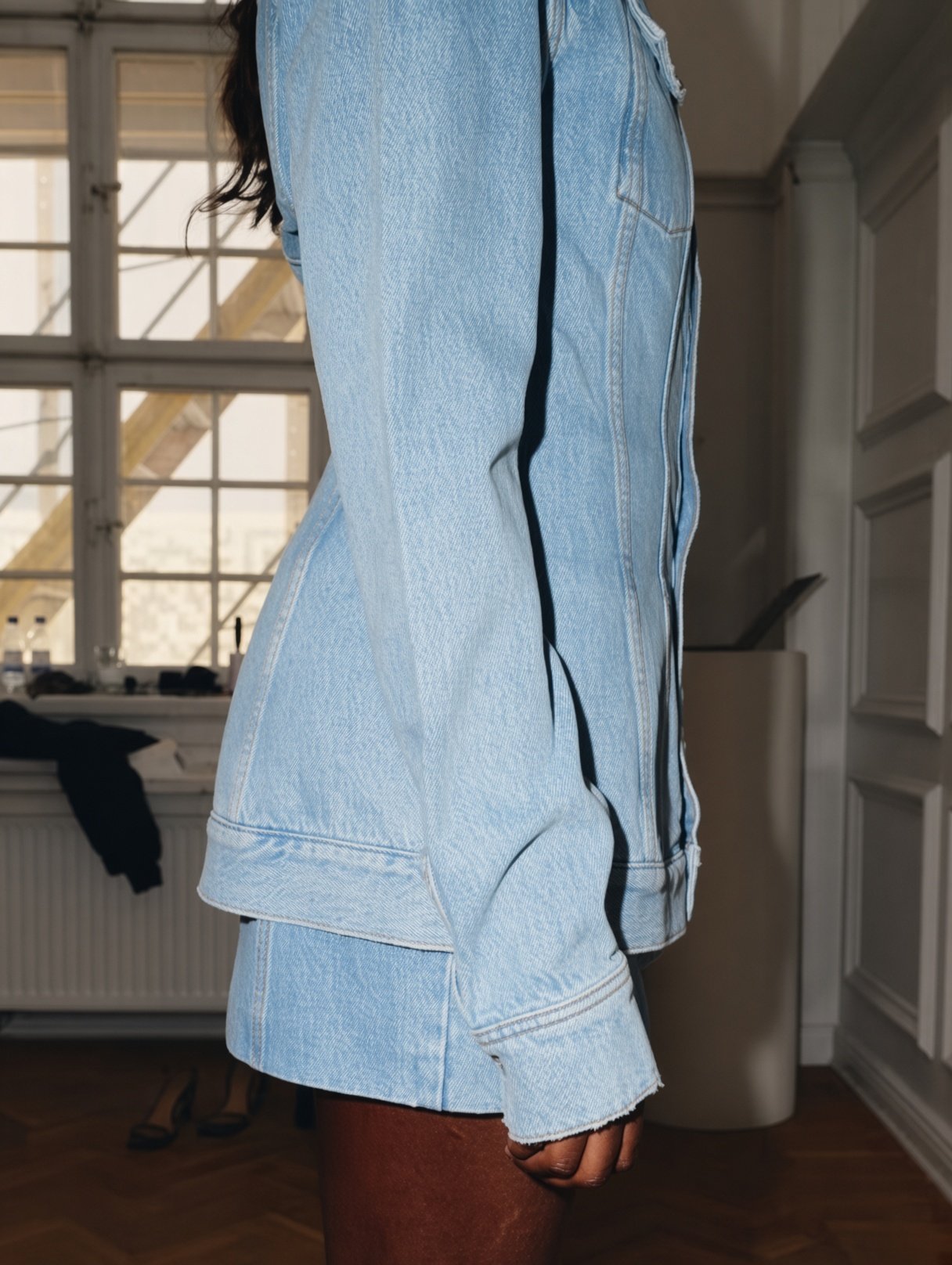
The project reportedly took about two years to develop, including detailed work on fabrics and construction. US prices range from roughly $30 to $429, placing the capsule well below WARDROBE.NYC’s main-line pricing while above much of H&M’s standard offer.
Premiumisation without complexity
The collaboration illustrates a broader retail opportunity: customers may still buy accessible fashion, but increasingly respond to products positioned around versatility, durability of style and perceived quality rather than rapid trend turnover.
For textile and garment suppliers, this shifts emphasis towards fabrics capable of supporting sharp tailoring, controlled drape, sculptural denim and reliable repeat wear. Quality consistency becomes particularly important when premium design concepts are scaled to mass-market volumes.
The commercial test
H&M’s designer collaborations traditionally create scarcity and attention, but the more important question is whether capsule dressing influences its core assortment. WARDROBE.NYC’s proposition—fewer pieces designed to work together—could support higher average selling prices and stronger full-price demand if consumers perceive genuine improvement in fabric, fit and longevity.
