

The luxury launch moves banana-plant fibre beyond accessories and prototypes, but its wider impact will depend on scale, cost and whole-garment circularity.
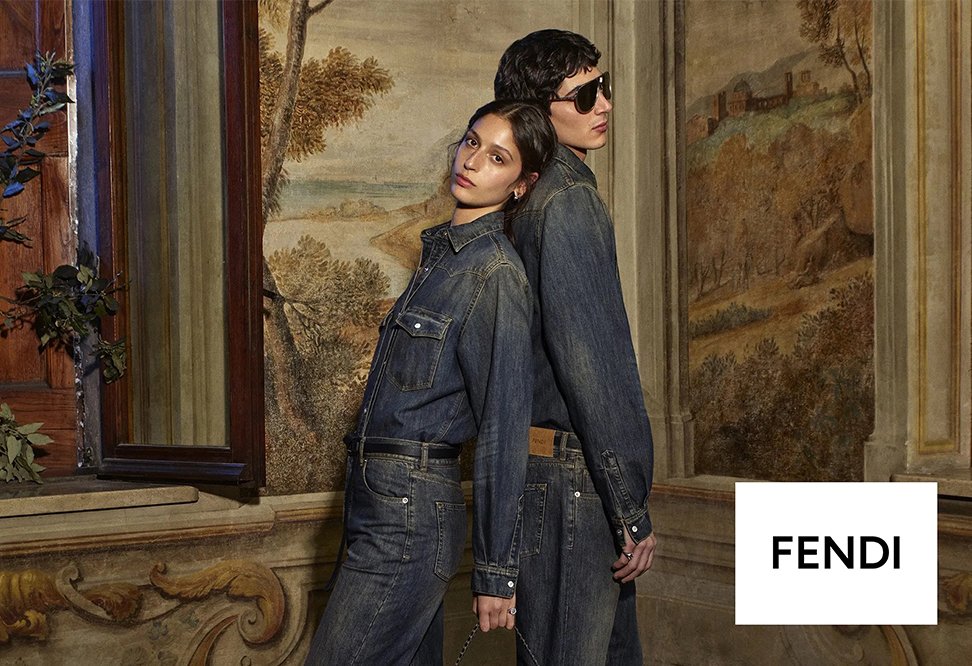
Fendi has introduced denim combining organic cotton with Bananatex abacá fibre in its Fall/Winter 2026–27 collection, the first collection created for the house by Maria Grazia Chiuri. Developed with Italian denim manufacturer Berto Industria Tessile, the material appears across women’s and men’s jeans, shirts and a dress.
A listed pair of mid-weight jeans uses a main fabric composed of 55% cotton and 45% abacá, also known as Manila hemp. Fendi describes the material as naturally resistant and connects its production with regenerative cultivation, responsible indigo dyeing and advanced weaving and finishing.
From abacá plant to denim loom
Berto’s wider MUSA development with Bananatex comprises six denim fabrics containing between 36% and 45% abacá alongside organic cotton. The fabrics are designed, indigo-dyed, woven, finished and developed in Italy.
Bananatex sources fibre from Musa textilis, a banana relative cultivated in Philippine agroforestry systems. The company says the crop grows with rainfall and without synthetic pesticides or fertilisers. Abacá is valued for high tensile and tear strength, breathability and durability.
The material should not, however, be described simply as food-industry banana waste. Abacá is a dedicated fibre crop, with material extracted primarily from its leaf sheaths.
Luxury provides a route to scale
Fendi’s adoption is commercially significant because premium pricing can absorb the development and processing costs associated with emerging natural fibres. It also demonstrates that abacá yarn can withstand indigo processing and deliver the appearance, handle and wash effects expected from luxury denim.
Yet the sustainability claim must be assessed at garment level. Although pure Bananatex fabric is marketed as plastic-free, biodegradable and compostable, Fendi’s product listing also identifies polyester-cotton components, while trims, sewing threads, dyes and finishes may affect end-of-life options.
The next test is whether mills can reproduce the fabric consistently at larger volumes and competitive prices. Fibre traceability, land-use impacts, wash durability, lifecycle assessment and end-of-life testing will determine whether abacá denim progresses from a luxury innovation into a meaningful alternative fibre category.
