

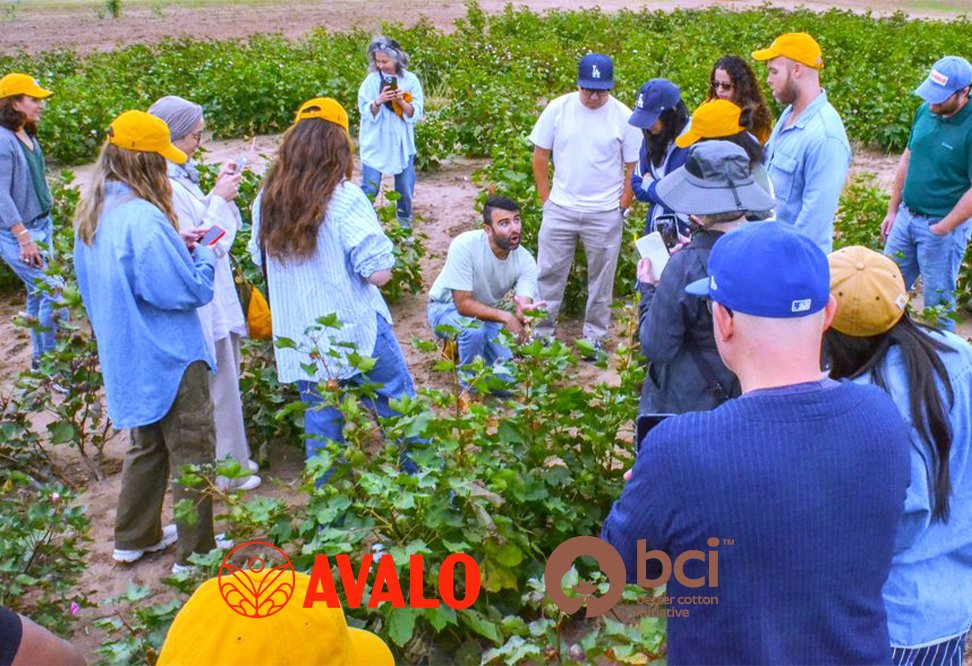
The partnership targets cotton varieties requiring less water and fertiliser, using whole-genome AI to accelerate conventional breeding as heat, water scarcity and rising input costs threaten producing regions.
The Better Cotton Initiative (BCI) has partnered with agricultural technology company Avalo to expand development and adoption of climate-resilient cotton varieties, bringing artificial intelligence into one of the earliest stages of the textile supply chain: seed breeding.
Avalo is already working with BCI-certified farms in the Texas High Plains, where declining water availability and more extreme heat are increasing pressure on cotton economics. BCI says its long-standing programme partner, Quarterway Cotton Growers, is participating in the initiative.
AI searches the cotton genome
Avalo’s Rapid Evolution Platform uses interpretable machine learning to analyse whole genomes and identify combinations of traits associated with characteristics such as drought resilience, nutrient efficiency and regional adaptation.
Instead of genetically engineering plants, the technology informs conventional, non-GMO breeding and selection, allowing breeders to search a wider genetic pool and select multiple desirable traits simultaneously. Avalo argues that this can shorten the time needed to develop locally adapted varieties.
The objective is cotton capable of maintaining fibre quality with fewer agricultural inputs—a particularly important equation when lower cotton prices coincide with rising fertiliser, irrigation and production costs.
Early data point to lower emissions
Avalo says its existing Texas cotton programme uses 70% less nitrogen fertiliser per acre and no irrigation, with a third-party lifecycle assessment of its 2025 harvest reporting a 47% reduction in carbon emissions compared with conventional cotton. These figures relate to Avalo’s current production conditions and should not yet be assumed for cotton grown in other regions.
BCI says roughly two-thirds of Avalo cotton sold has been driven by demand from brands committed to regenerative agriculture.
Seed innovation moves into Scope 3
For textile companies, the significance is upstream. Lower-input cotton can potentially reduce farm-level Scope 3 emissions, water exposure and input-cost volatility before fibre reaches the gin or spinning mill.
The crucial next evidence will be multi-season performance: yield per hectare, staple length, strength, uniformity, input savings and farmer profitability under different climates. If resilient genetics can deliver those outcomes consistently, AI-assisted breeding could become an important new lever for decarbonising cotton without asking farmers to absorb higher production costs.
