

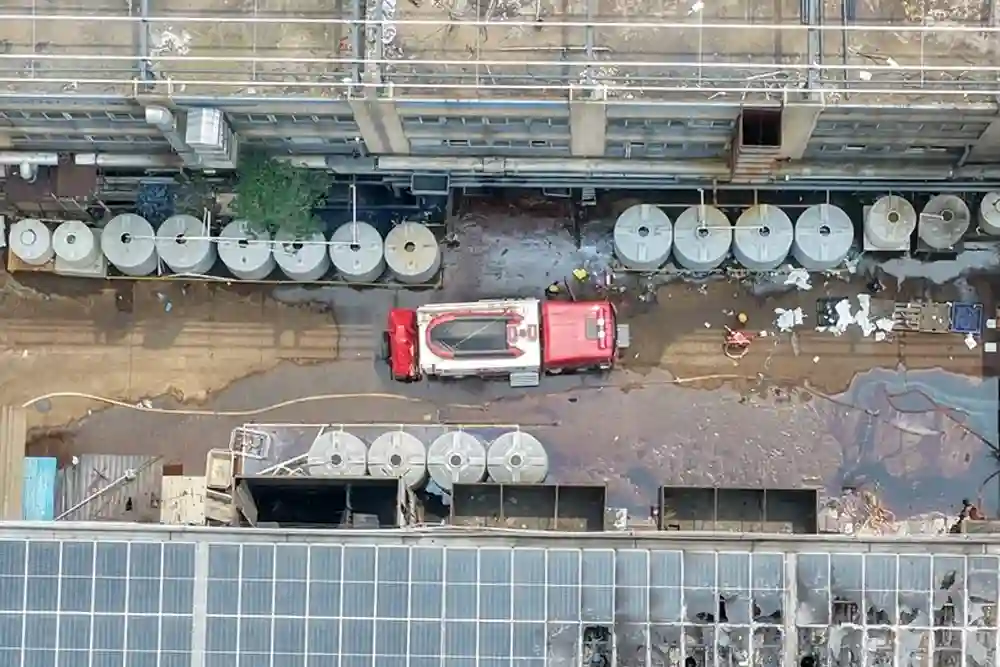
Eight deaths at a Chinese denim-processing facility underline a persistent sourcing risk: factory certification and social-compliance programmes do not necessarily provide comprehensive protection against fire, process and subcontracting hazards.
A fire at a textile factory in Foshan, Guangdong province, killed eight people and injured one on September 20, renewing scrutiny of workplace safety across major global apparel-sourcing markets. The blaze began at 3:12pm in a two-storey building within an industrial park and was extinguished roughly an hour later.
The facility was used for denim washing and related textile processing. Authorities said 63 people at or around the site were rescued or evacuated and that the fire did not spread to neighbouring buildings. The official investigation into its cause remains underway.
Certification does not equal complete risk control
Chinese authorities had not officially identified the factory operator when initial reports appeared. EcoTextile subsequently said public records linked the location with Foshan Shunde Xibulang Textile Industry and/or Foshan City Shunde Seborn Textile Industry, and with records associated with Better Cotton, ZDHC and OCS/GRS certification. Those links do not establish the cause of the fire or demonstrate that those schemes covered the relevant fire-safety risks.
That distinction matters for sourcing teams: sustainability, chemical-management and material certifications are not substitutes for dedicated fire, electrical, structural and process-safety systems.
Three incidents sharpen the warning
The Foshan disaster occurred on the same day as two serious incidents in Bangladesh. A gas-cylinder explosion and fire at Pretty Composite Textile killed at least nine workers and injured 35, while a separate fire at Fahami Group Industry triggered a stampede that killed one worker and injured more than 100.
The incidents came shortly after the International Accord for Health and Safety reached 300 brand and retailer signatories. Collectively, participating brands source from more than 2,000 factories employing over 3.4 million workers in Bangladesh and Pakistan.
Safety assurance must move deeper
The Accord currently operates country programmes in Bangladesh and Pakistan, covering independent inspections, remediation, worker training and complaints mechanisms. Its framework allows expansion into additional sourcing countries.
For fashion brands, the Foshan fire reinforces a practical requirement: supplier due diligence needs to extend beyond first-tier audits to actual production locations, subcontractors, boilers, fuel systems, chemical handling, emergency exits and process-specific hazards. The forthcoming investigation will be important in establishing which safeguards failed—and whether the weakness was technical, managerial or regulatory.
