

The denim producer is moving further downstream from fabric into finished garments, combining vertical integration, automation and sustainability infrastructure to compete for larger global brand programmes.
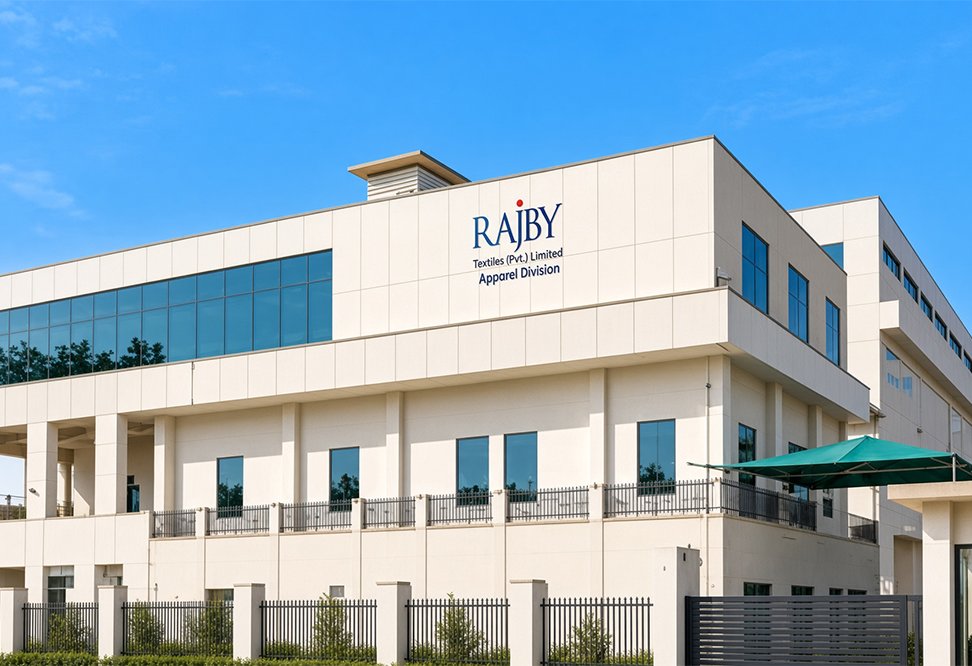
Pakistan’s Rajby Textiles has opened a new garment manufacturing facility in Karachi with initial capacity of 500,000 pieces per month, with a second phase planned to double output to 1 million pieces monthly.
The expansion connects directly with Rajby’s existing denim mill, which produces around 3.2 million metres of fabric per month, allowing the company to control more of the process from fabric development to finished apparel.
Automation moves downstream
The garment unit incorporates automatic fabric spreaders, pocket setters, hemming systems and loop attachers, targeting greater consistency, speed and lower dependence on manual operations.
The move reflects a wider sourcing shift towards vertically integrated suppliers able to combine material development, garment manufacturing, sustainability data and rapid execution within one organisation.
Pakistan’s readymade garment exports are already outperforming several traditional textile categories. Garment exports increased 13.59% year on year to $827 million during July–August FY2026/27, while overall textile and clothing exports grew 5.55% to $3.38 billion.
Water and carbon targets tighten
Rajby plans to upgrade its effluent-treatment system with MBBR biological and tertiary treatment, targeting 30% wastewater recycling by 2027 and 100% by 2030. The company also plans an 800-kWh solar installation and aims to cut garment-division greenhouse-gas emissions 50% by 2030, while achieving zero manufacturing waste to landfill.
Its existing fabric operation already uses biomass boilers, waste-heat recovery and solar energy, with the company reporting 95% renewable steam generation.
Pakistan competitiveness takeaway
Rajby’s expansion illustrates the direction Pakistan needs to scale: from selling fabric toward selling complete, higher-value apparel solutions.
The competitive gain comes from integrating denim development, automation, garment production and environmental performance. If replicated more widely, this model could help Pakistan capture greater value per metre of fabric while competing with vertically integrated suppliers in Bangladesh, Vietnam, Turkey and China.
The key indicator will be how quickly Rajby reaches its planned 1-million-piece monthly capacity and converts that scale into sustained global-brand orders.
