

The Chinese-owned manufacturer is turning Bangladesh from a garment-production base into an integrated knit-to-garment platform, raising the competitive bar for South Asian suppliers.
Handa Industries is expanding its Bangladesh manufacturing footprint through a three-phase programme that will add knitting and dyeing to garment production, deepening the country’s backward integration for higher-value apparel. Handa vice-president Jiang Yanhui told Softgoods Report that the programme represents approximately $250 million of investment.
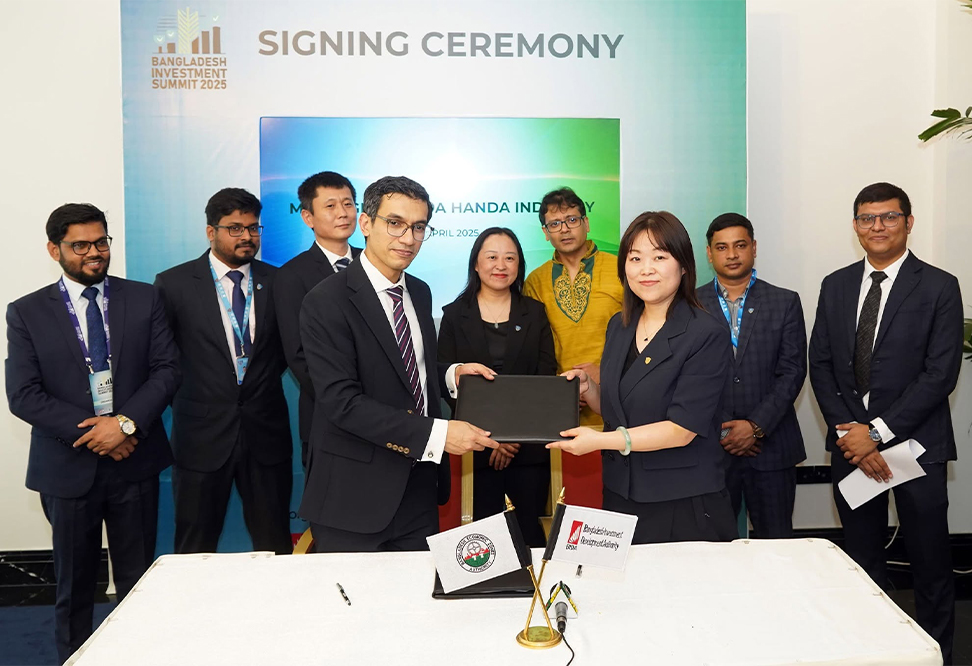
Bangladesh authorities have separately put Handa’s latest commitment at $300 million, up from an original $150 million agreement signed in April 2025. BIDA said in July that an $80 million sewing and apparel plant at the BEPZA Economic Zone in Mirsharai was under construction, with a further $220 million integrated complex planned at Keraniganj.
From sewing to full integration
According to Handa, phase one garment capacity is already operational, phase two is under construction and land preparation has begun for phase three, which will introduce knitting and dyeing. The completed platform is intended to combine textile development and garment manufacturing within Bangladesh.
Earlier government announcements said Handa planned two garment-processing factories and one knitting-and-dyeing unit, potentially creating around 25,000 jobs.
Buyers demand more than low cost
Handa says its investment reflects changing sourcing requirements: global brands increasingly evaluate suppliers on product development, speed, technical capability, compliance, sustainability and supply-chain resilience alongside price. The company is building a multi-country network spanning China, Bangladesh, Myanmar and other locations.
Pakistan competitiveness takeaway
The strategic implication for Pakistan is significant. Bangladesh is attracting foreign capital not merely into sewing but into vertically integrated knitting, dyeing and garment platforms backed by Chinese technology and management.
Pakistan already possesses strong vertical integration, but that advantage will erode unless mills improve automation, MMF capability, product development, lead times and environmental performance. Competition is shifting from national labour cost toward the capability of individual suppliers to deliver complete, fast and technically sophisticated solutions.
