

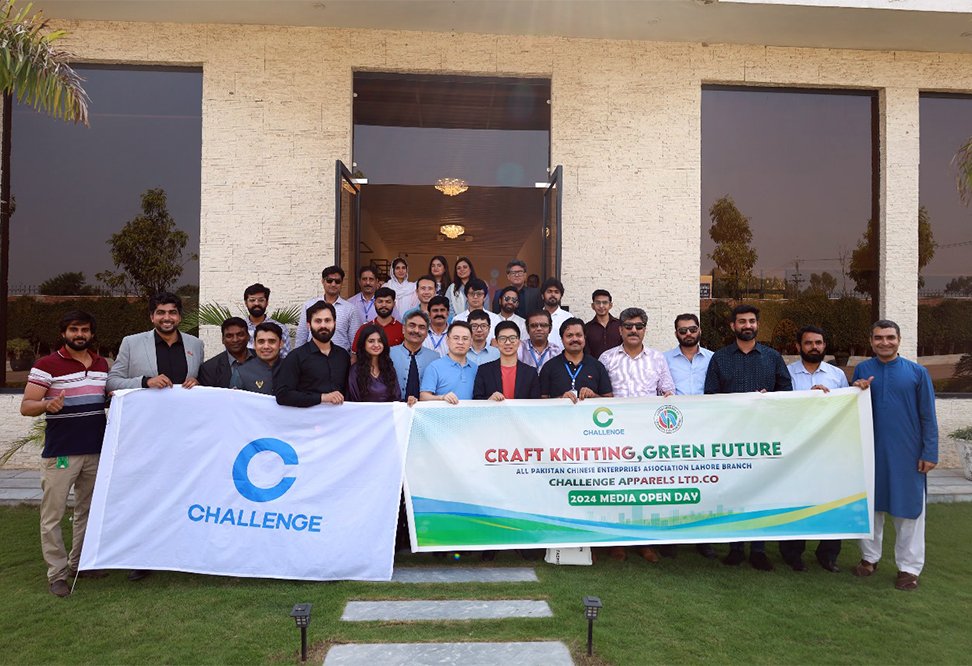
The Chinese manufacturer plans to build a large, technology-intensive fabric-to-garment platform in Lahore, potentially adding 25,000 jobs and strengthening Pakistan’s underdeveloped synthetic and performance-apparel value chain.
Chinese textile manufacturer Challenge Fashion plans to expand Pakistan into a major export production hub, targeting annual textile and garment exports exceeding $400 million and employment of more than 25,000 people. Chief executive Chen Yan said on October 1 that the company has already exported more than $300 million of textile products from Pakistan.
From garment plant to industrial platform
The announcement builds on the Challenge Special Economic Zone in Lahore. In August, Challenge Fashion and Bank of Punjab signed an agreement linked to $150 million of Chinese investment in a 100-acre project. The planned complex is designed to manufacture both fabrics and garments using advanced machinery.
Government disclosures put eventual garment capacity at 2–8 million pieces per month, supported by around 6 million metres of fabric production. Employment is projected to reach 18,000 in the initial build-out and approximately 25,000 over five years.
Financing arrangements for Phase I were completed in July, with the Special Investment Facilitation Council supporting the transaction.
Technology transfer matters more than capacity
Challenge has operated in Pakistan since 2014. Earlier government discussions indicated that its expanded facility could eventually generate $400–500 million of annual exports, while the company has sought facilitation for specialised construction materials, machinery and other inputs not currently manufactured locally.
The strategic value lies partly in product mix. Challenge has historically positioned Pakistan as a production base for polyester-based sportswear and higher-value garments, an area where Pakistan remains less developed than its cotton value chain.
A test for Pakistan’s FDI model
If delivered at scale, the project would demonstrate how Chinese investment can shift from simple garment assembly toward fabric production, technical textiles, automation and integrated export manufacturing.
The key metrics to watch are now execution rather than announcements: Phase-I commissioning, actual capital deployed, monthly fabric and garment output, local sourcing, workforce development and realised exports. Reaching $400 million-plus annually would make Challenge one of Pakistan’s more consequential export-oriented textile investments.
