

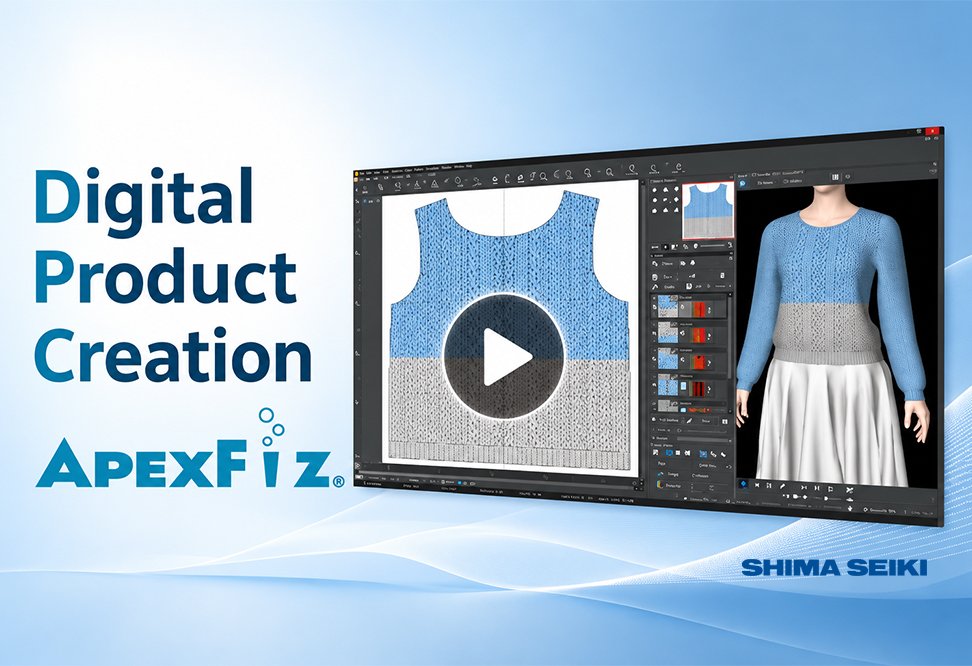
The Japanese machinery maker will combine computerized flat knitting with 3D product development, showing Pakistani manufacturers how design, sampling and production can become one connected digital workflow.
Japan’s SHIMA SEIKI will showcase computerized flat-knitting machinery and digital product-development systems at IGATEX Pakistan 2026, taking place at Expo Centre Lahore from October 15–18. The company will exhibit with its Pakistani representative Al-Murtaza Machinery.
IGATEX expects more than 500 exhibitors from 30-plus countries, over 20,000 visitors and 18,000 square metres of exhibition space, with technologies spanning spinning, weaving, knitting, apparel, printing, finishing, automation and sustainable manufacturing.
Flat knitting targets productivity
SHIMA SEIKI will demonstrate its N.SSR112 V14G computerized flat-knitting machine, equipped with the R2CARRIAGE system for faster carriage return, digital stitch control, movable sinkers, stitch presser and takedown comb.
Its N.SSR072 C16G is designed specifically for efficient production of shaped jacquard collars generated from digital designs—a relevant application for Pakistan’s large polo-shirt, knitwear and sportswear industry.
Sampling moves onto the screen
More strategically, SHIMA SEIKI will demonstrate the SDS-ONE APEX4 3D design system and APEXFiz Design software. These tools support product planning, realistic fabric simulation and virtual sampling before physical production begins.
Once a design is approved, digital knitting data can be converted into machine-ready information, tightening the link between designers and knitting factories. SHIMA SEIKI says this can reduce physical sampling, development time, material consumption and associated cost.
Its wider digital ecosystem also includes yarnbank, which provides digitised yarn data; SHIMA Datamall for design content; and KnitManager for monitoring machine status and production progress.
Competitiveness takeaway
For knit manufacturers, the opportunity extends beyond buying faster knitting machines. Global apparel sourcing is moving toward shorter development cycles, smaller production runs, digital samples and rapid replenishment.
Connecting digital yarn → virtual garment → automated knitting → production monitoring could help manufacturers reduce sampling iterations, accelerate buyer approvals and compete more effectively in higher-value knitwear.
The bigger productivity gain may therefore come from digitising the entire design-to-production workflow, rather than automating individual machines in isolation.
