

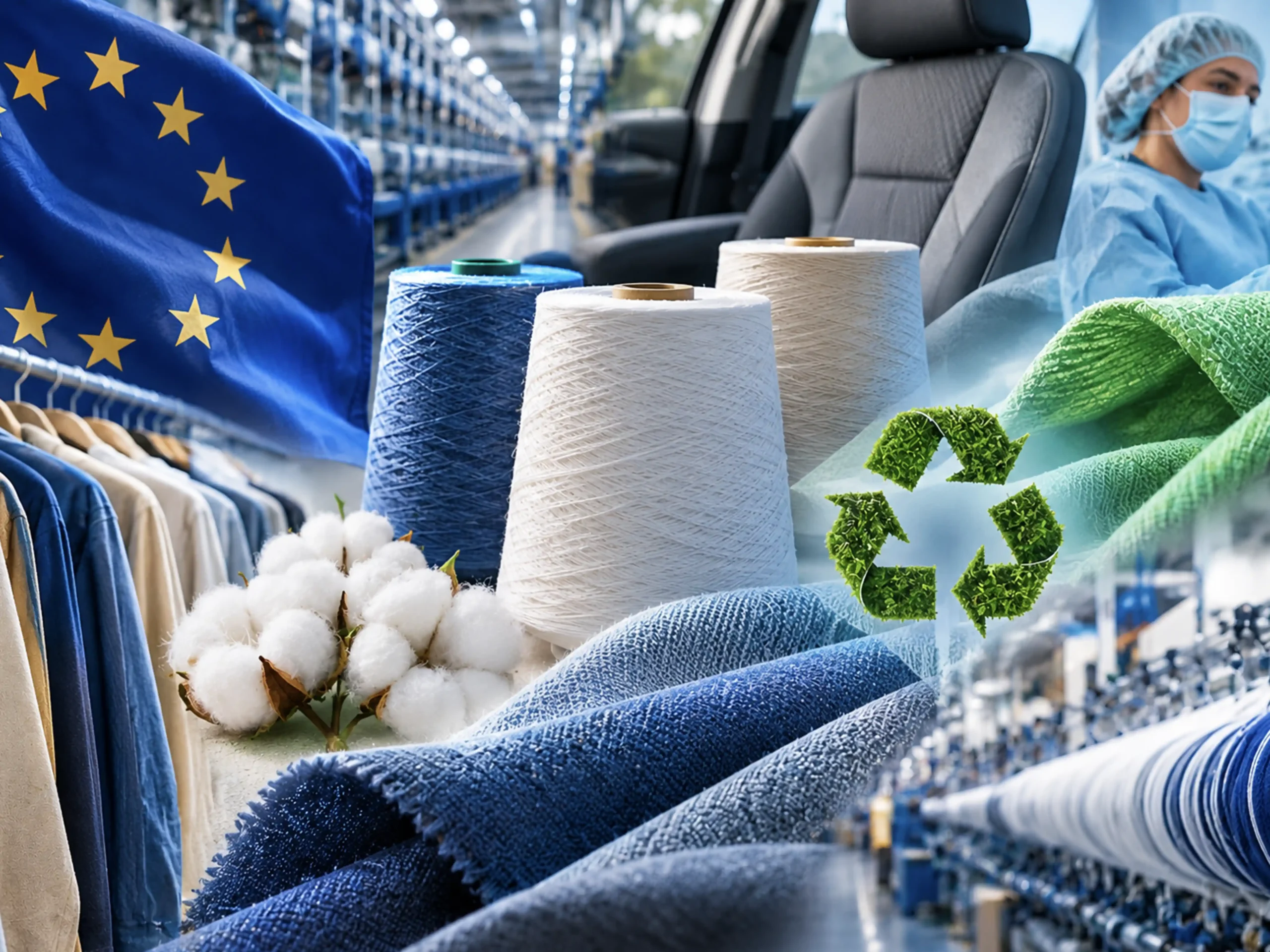
IMARC Group projects 4.69% annual market growth, with Germany leading regional demand and technical textiles, advanced synthetic fibres and circular materials offering significant opportunities for manufacturers and exporters.
Europe’s textile market is projected to expand from $273.7 billion in 2025 to $413.5 billion by 2034, according to the latest research by IMARC Group.
The market research company estimates the market will reach $286.6 billion in 2026, followed by a compound annual growth rate (CAGR) of 4.69% through 2034.
The forecast covers textiles used in apparel, household furnishings, automotive applications, healthcare and industrial products across Europe, including the United Kingdom.
Germany Leads, Cotton Dominates
Germany accounted for 20.7% of European textile market value in 2025, followed by Italy at 18.6%, France at 16.4%, the United Kingdom at 15.2% and Spain at 12.1%.
By raw material, cotton held the largest share at 39.8%, followed by chemical fibres at 27.6%.
Natural fibres represented 36.4% of the market by product category, while polyester accounted for 31.7% and nylon 18.5%.
IMARC expects nylon to grow approximately 5.8% annually through 2034, ahead of polyester at 5.5%, supported by performance apparel and technical textile applications.
Sustainability and Technical Textiles Drive Investment
Demand for specialised materials in automotive interiors, medical products, filtration, protective clothing and smart textiles is expected to support market expansion.
EU sustainability policies are also encouraging investment in fibre recycling, chemical management, traceability and resource-efficient production.
Textile Digital Product Passport requirements remain under development, with the European Commission targeting adoption of textile-specific rules in 2027.
European Manufacturing Faces Competitive Pressure
The growth forecast contrasts with current manufacturing conditions.
According to EURATEX, the EU textile and clothing industry generates approximately €166 billion in annual turnover, employs 1.2 million people and comprises nearly 200,000 companies.
EU textile and clothing imports total €122 billion, compared with exports of €61 billion.
These industrial turnover figures are not directly comparable with IMARC’s broader European market estimates.
For exporters in Pakistan, Bangladesh and other Asian manufacturing economies, opportunities lie in higher-value fabrics, technical textiles and verified sustainable materials.
The decisive market signals will be actual demand growth, European manufacturing investment and the ability of suppliers to meet increasingly demanding product and environmental specifications.
IMARC’s projections are commercial market estimates, not independently verified future outcomes.
