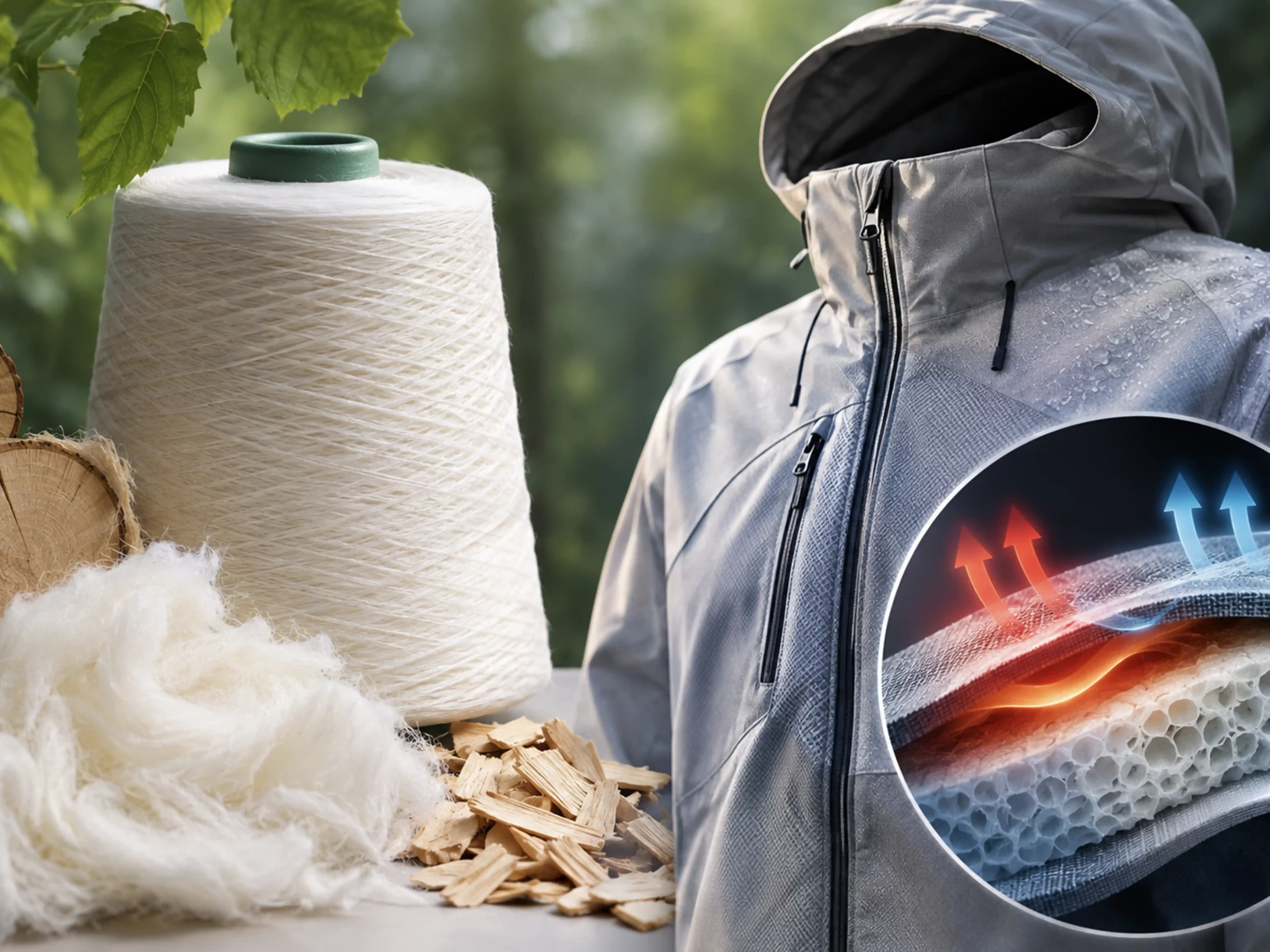
The Finnish fibre innovator is exploring the integration of mechanically produced cellulosic fibres with phase-change materials and aerogel insulation, targeting higher-value performance apparel and technical textiles.
Finnish textile technology company Spinnova has signed a non-binding letter of intent with Germany’s Outlast Technologies to develop functional textiles combining renewable cellulosic fibres with advanced temperature-regulation and insulation technologies.
Announced on November 5, 2026, the collaboration aims to expand SPINNOVA fibre applications beyond conventional clothing into performance apparel, outdoor textiles and insulation materials.
Mechanical Fibre Production Meets Thermal Technology
Spinnova produces cellulosic textile fibres from wood pulp and agricultural, textile and other waste streams through a patented mechanical process.
Unlike conventional regenerated cellulosic fibre production, the technology does not dissolve cellulose or require harmful dissolving chemicals.
The company is positioning its fibre as an alternative to conventional textile materials while exploring applications that command higher commercial value.
Phase-Change Materials and Aerogel Insulation
Outlast contributes two established functional technologies.
Outlast Temperature Regulation uses phase-change materials (PCMs) that absorb, store and release thermal energy as temperatures change, helping regulate heat exchange between the body and its surroundings.
AERSULATE incorporates aerogel-based insulation into thin, flexible textile structures, providing thermal resistance without the bulk associated with conventional insulation.
Outlast’s technologies are protected by more than 50 patents and have applications in apparel, footwear, bedding, workwear and protective textiles.
The proposed collaboration will investigate how these functionalities can be integrated with SPINNOVA fibres.
Commercial Development Remains Exploratory
The partnership supports Spinnova’s strategy of expanding its addressable markets while improving the economics of fibre commercialisation.
In April 2026, the company began trial runs at its Woodspin demonstration facility to improve production efficiency and fibre quality before restarting larger-scale operations.
However, no commercial product, investment commitment, production volume or launch timetable has been announced under the Outlast agreement.
For textile mills and technical fabric manufacturers, potential opportunities include lightweight insulation, thermal-comfort apparel and renewable-content functional fabrics.
The next milestone will be prototype development and validation of thermal performance, laundering durability, manufacturing compatibility and production costs, determining whether the partnership can progress towards commercial-scale manufacturing.