

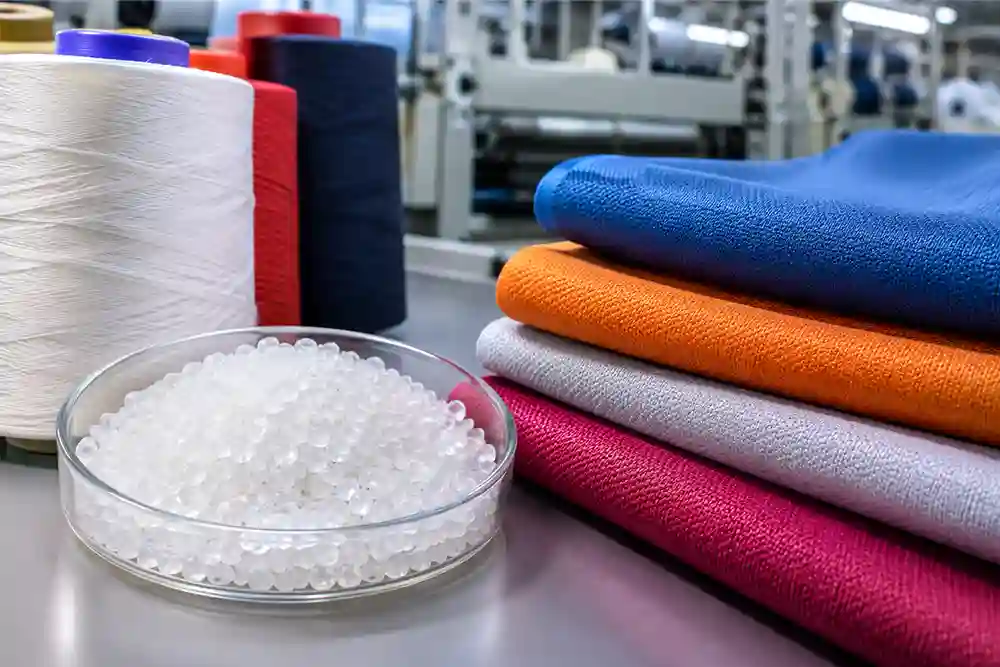
The US–Japan collaboration combines methane-derived biopolymer technology with polypropylene to overcome a major dyeing limitation, potentially opening new markets in performance apparel, footwear and technical textiles.
US biomaterials company Newlight Technologies and Japan’s Prime Polymer have developed a polypropylene-based textile material that can be dyed using conventional polyester dyeing systems, addressing a longstanding barrier to polypropylene’s wider adoption in clothing.
Announced on November 2, 2026, the innovation combines Prime Polymer’s polymer compounding expertise with Newlight’s Aircarbon polyhydroxybutyrate (PHB), a biomaterial produced by microorganisms using methane as a feedstock.
Overcoming Polypropylene’s Dyeing Limitations
Polypropylene offers several advantages over polyester, including lower density, moisture resistance and lightweight performance. However, its non-polar molecular structure and limited dye affinity make conventional textile dyeing difficult.
The companies have developed a polypropylene–PHB alloy with dyeability comparable to polyethylene terephthalate (PET) using conventional disperse dye systems.
They have successfully converted compound pellets into yarns and subsequently produced knitted and woven fabrics.
The approach could enable polypropylene-based textiles to enter established polyester dyeing supply chains without requiring entirely new dye classes.
Methane-Derived Polymer Adds New Functionality
Newlight’s Aircarbon technology uses microorganisms to convert methane into PHB, a naturally occurring polymer that microorganisms produce as an energy-storage material.
Incorporating PHB into polypropylene combines biological and conventional polymer technologies.
The companies report lower weight than polyester and mechanical performance suitable for apparel applications.
However, the PHB proportion, quantitative dyeing performance, processing temperatures and product-level carbon footprint have not been disclosed.
The environmental benefits of the finished blend therefore remain to be independently established.
Global Brands Begin Material Evaluation
Multiple international brands are evaluating the material for footwear, performance apparel, socks, outdoor products and technical textiles.
For fibre manufacturers and textile mills, potential benefits include lighter fabric constructions and greater colour-design flexibility.
However, commercial viability will depend on dye fastness, processing compatibility, production costs and recycling behaviour.
The next milestone is industrial-scale validation, including comparative dyeing trials, durability testing, commercial production capacity and independently verified environmental performance. No commercial launch date has been announced.
