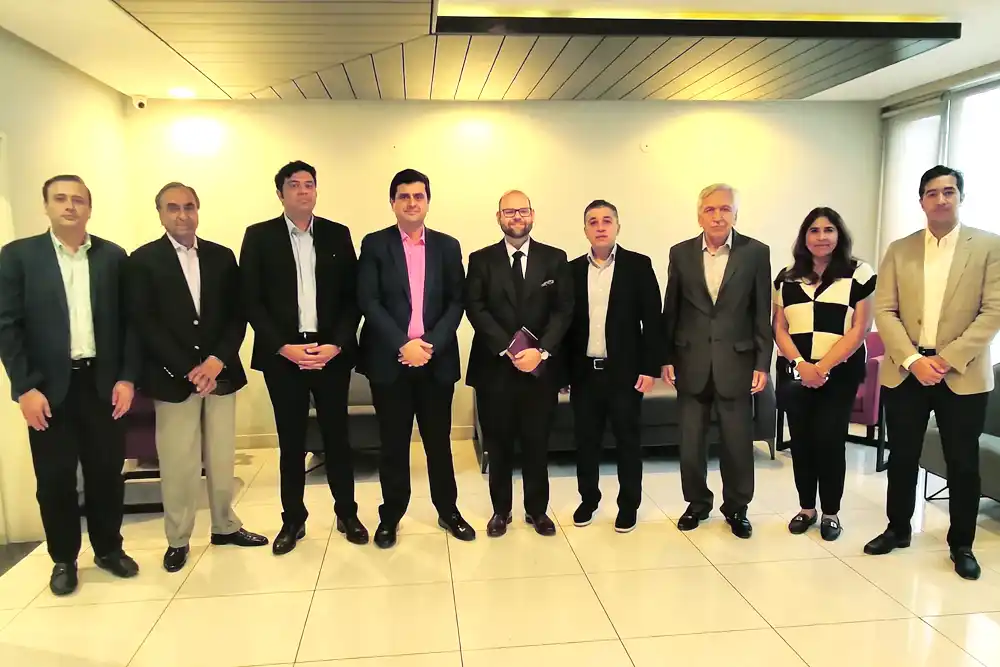
Pakistan’s textile industry is seeking stronger US partnerships in cotton sourcing, high-yield seed technology, contract manufacturing and supply-chain traceability as declining domestic cotton production increases import dependence.
The All Pakistan Textile Mills Association (APTMA) and the US Consulate General in Lahore have discussed expanding bilateral textile trade, investment and technology cooperation, with particular emphasis on cotton supply security and higher-value manufacturing.
During a meeting at APTMA House on November 23, 2026, APTMA Chairman Asad Shafi hosted Dillon Clancy, Political and Economic Chief at the US Consulate, accompanied by Economic Specialist Amna Anis.
Cotton Supply and Technology Transfer
APTMA highlighted Pakistan’s declining cotton production and growing dependence on imported raw materials.
The association proposed closer cooperation with American cotton research institutions, particularly in developing high-yield cotton seeds, improving fibre quality and strengthening agricultural research capabilities.
Technology transfer for cotton traceability was also discussed, reflecting growing international demand for verifiable raw-material origins.
Shafi emphasised the importance of US cotton supplies in sustaining Pakistan’s spinning and textile manufacturing operations.
Trade and Investment Opportunities
The United States remains Pakistan’s largest single-country export market. According to the US Trade Representative, bilateral merchandise trade reached $8.5 billion in 2025, comprising $5.4 billion in US imports from Pakistan and $3.1 billion in American exports.
APTMA identified textile toll manufacturing as another opportunity, potentially allowing US companies to contract production to Pakistani mills. The discussions also covered diversification of bilateral trade and greater value addition in Pakistan’s textile and apparel exports.
Sustainability and Compliance Gain Importance
APTMA outlined industry initiatives involving renewable energy, organic cotton, recycled polyester, wastewater treatment and international compliance. The association also highlighted its participation in developing a legal framework for Pakistan’s proposed National Compliance Entity. For manufacturers, stronger traceability and environmental documentation could support buyer confidence and international market access.
The next step will be translating these discussions into concrete research partnerships, technology-transfer arrangements, investment commitments and commercial manufacturing agreements. No binding investment or trade agreement was announced following the meeting.