Germany’s DITF has established a research centre combining mechanical and solvent-based recycling, demonstrating 100% recycled cotton garments and new processes for recovering polymers from complex textile waste. The German Institutes of Textile and Fiber Research Denkendorf (DITF) has established CYCLOTEXUM, a textile recycling research centre designed to accelerate the industrial adoption of high-quality recycled fibres, yarns and fabrics.
Announced on November 24, 2026, the centre brings together mechanical recycling, solvent-based processing and techno-economic assessment to develop commercially viable recycling technologies. The initiative is funded by the German state of Baden-Württemberg and builds on a seven-and-a-half-month research programme conducted in collaboration with industry.
Mechanical Recycling Delivers 100% Recycled Cotton Fabric
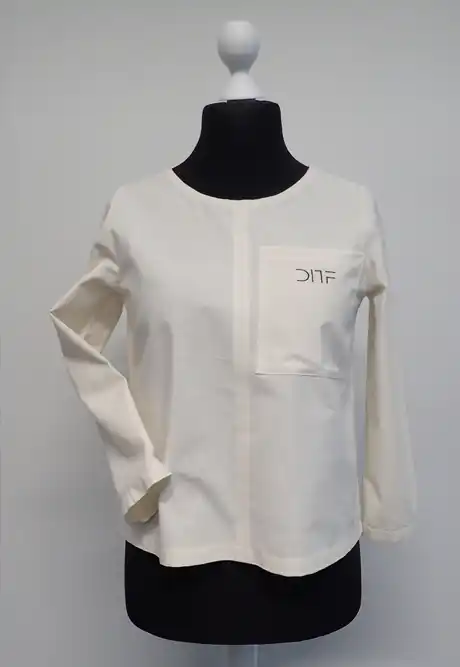
The centre’s first research module focuses on mechanically recovered fibres and their conversion into industrial-quality yarns. Researchers successfully produced a woven blouse using 100% recycled cotton fibres, with yarn count Nm 50 and fabric weight 140 g/m². DITF developed fibre-quality assessment methods and material-flow and cost-accounting models to evaluate recycling performance.
Its research found that high-quality recycled fibres can produce yarns at costs comparable to virgin materials while reducing carbon emissions. However, inferior recycled fibres increased waste, processing interruptions, labour requirements and production costs.
Solvent Recycling Targets Complex Textile Waste
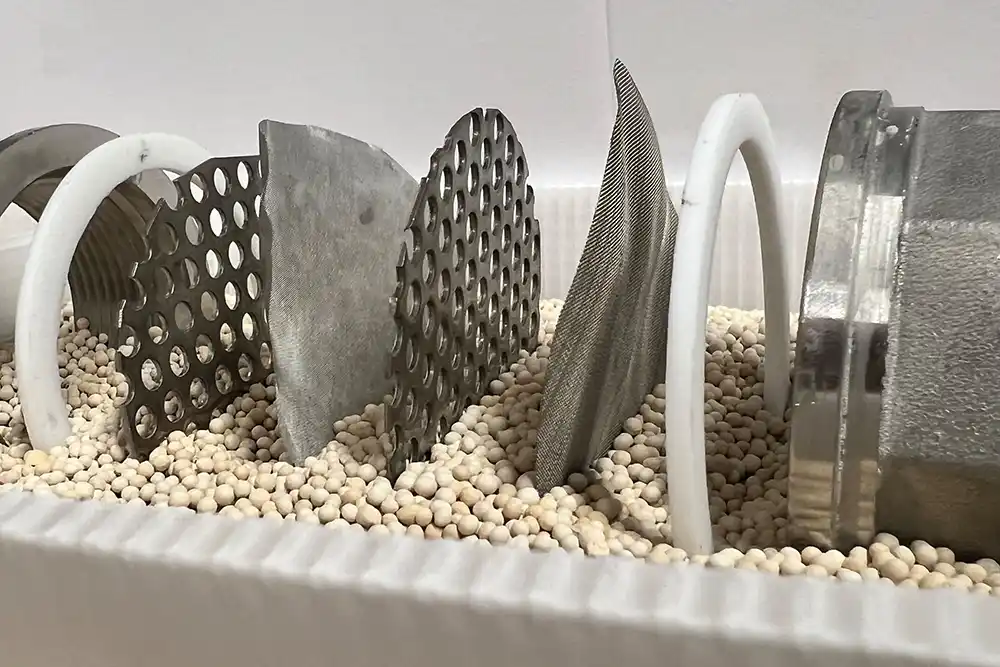
The second module investigates solvent-based recycling of flame-retardant polyester. Researchers tested sulfolane and gamma-valerolactone (GVL), successfully separating flame-retardant additives from PET polymers. Filtration systems were developed at laboratory and pilot scales, including successful processing of post-consumer waste using a five-litre reactor. The technology could eventually support polyester–cotton separation, elastane removal and recovery of valuable polymers from blended textile waste. These additional applications require further development and validation.
Industrial Partnerships Drive Commercialisation
CYCLOTEXUM will support manufacturers across apparel, home textiles, nonwovens and technical textiles. Its research infrastructure enables industrial partners to assess fibre quality, processing costs and environmental performance before investing in commercial recycling facilities. For textile recyclers and spinning mills, the findings reinforce the importance of feedstock sorting and fibre-quality control.
The next challenge is scaling laboratory and pilot-scale successes into commercially competitive recycling processes capable of producing consistent, high-quality textile materials.