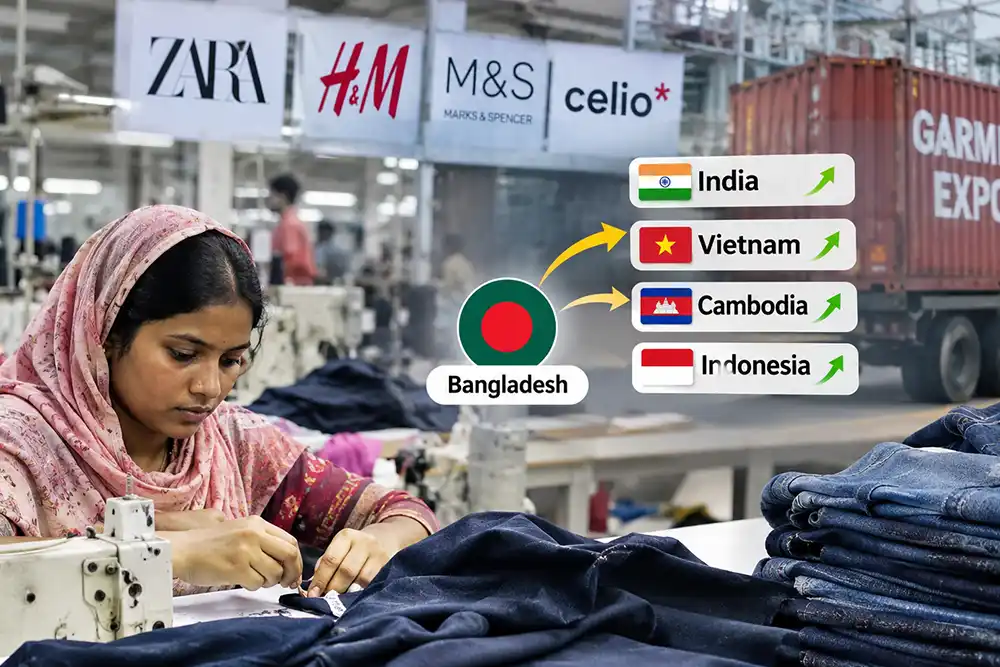
India emerges as the biggest beneficiary of Bangladesh’s factory disruptions, while Vietnam, Cambodia and Indonesia gain sourcing opportunities as global retailers prioritise delivery reliability over low production costs. Global fashion retailers have reportedly diverted $254 million in garment orders from Bangladesh to competing Asian manufacturing countries, primarily India, as prolonged labour unrest, factory closures and rising operating costs disrupt apparel production.
According to Reuters, citing three Bangladeshi factory owners, nearly 10% of monthly garment orders were redirected during November 1–18, 2026. Brands identified by the manufacturers include Zara, H&M, Marks & Spencer and Celio. However, the companies have not independently confirmed the reported transfers.
Production Losses Exceed $400 Million
The Bangladesh Garment Manufacturers and Exporters Association (BGMEA) estimates that labour unrest caused more than $400 million in production losses, with manufacturers around Dhaka losing approximately 20–25 production days. Bangladesh approved a 36% minimum wage increase to Tk17,000 on November 25, but the settlement failed to end protests. Higher wages, electricity shortages, rising raw-material costs and political uncertainty are compounding manufacturers’ difficulties.
India Gains as Buyers Prioritise Speed
India has emerged as the principal destination for redirected orders, while Vietnam, Cambodia and Indonesia are also attracting buyers. Bangladeshi industry representatives estimate that competing manufacturing hubs can complete production and delivery within 60–90 days, compared with approximately 120 days in Bangladesh.
India reportedly offers a delivery advantage of around seven days, while Vietnam and Cambodia can shorten lead times by approximately 15 days. The sourcing developments lifted Indian textile stocks, with Gokaldas Exports rising as much as 11% and Trident approximately 5% following the Reuters report.
Temporary Diversion or Permanent Sourcing Shift?
Bangladesh remains the world’s second-largest apparel exporter after China, with garments generating more than 80% of national export earnings. However, prolonged instability could encourage buyers to establish longer-term sourcing relationships elsewhere.
For Pakistani apparel exporters, the disruption also creates potential opportunities, provided manufacturers can demonstrate competitive prices, reliable delivery and sufficient production capacity.
The critical test will be whether Bangladesh restores factory operations and buyer confidence before temporary order diversions become permanent sourcing decisions.