

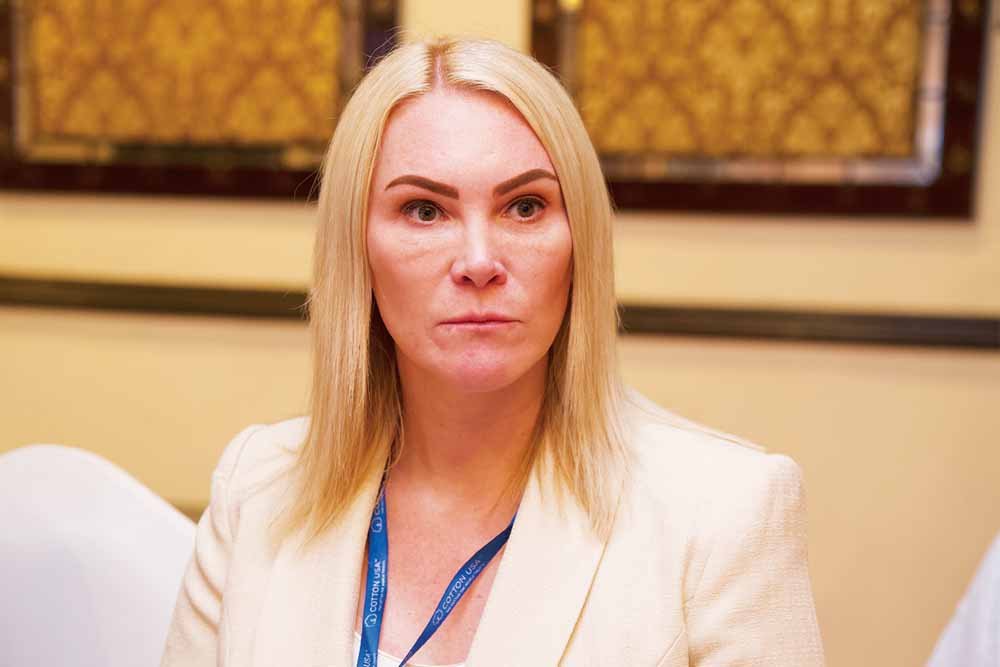
In an exclusive interview with TEXtalks, Zoe Keay, Vice President of Sales EMEA at Oritain, the global leader in product origin verification, shared groundbreaking insights into how it is reshaping the cotton supply chain. As the textile world demands greater transparency, Oritain stands at the forefront, using science to verify origin and eliminate uncertainty. From smallholder farms to major brands, the company’s mission is clear: protect integrity, ensure accountability, and set new industry standards for trust and traceability.
TEXtalks: What role does Oritain play in improving transparency in the global cotton supply chain?
Zoe Keay: In an era where supply chain integrity is under intense scrutiny, Oritain brings a revolutionary approach to verifying the origin of cotton – by analyzing the cotton itself. Unlike traditional traceability systems that rely on supply chain documentation or self-reported data, Oritain addresses a critical flaw in current transparency models: they can only verify what they are told.
This opens the door for inaccuracies to be unknowingly carried forward through the supply chain. Oritain’s solution is fundamentally different. Using forensic science, the company analyzes the natural chemical fingerprint embedded in cotton fibers – one that is unique to the environment where the cotton was grown. This fingerprint, shaped by soil composition, climate, and other environmental factors, is impossible to replicate and cannot be altered or faked.
As a result, Oritain can scientifically verify the true origin of cotton at any point in the supply chain – from raw fiber to finished garment.
TEXtalks: How do you see forensic origin verification reshaping the cotton industry in the next years?
Zoe Keay: What we’re seeing now is a turning point. More and more brands and manufacturers are approaching Oritain, insisting on raw material verification. There’s an undeniable influx of companies seeking certainty in uncertain times. Everyone wants to know where their cotton truly comes from – and not just through a label or a claim, but through science. That’s where forensic origin verification steps in. I see it becoming a standard – full stop. All over the world, from premium brands to mass producers, people are recognizing that this level of verification isn’t a luxury anymore – it’s a necessity. In 5 to 10 years, this won’t be a bonus feature; it will be the foundation of any credible supply chain. This is about building trust that’s bulletproof. And that level of certainty? That’s what the future demands.
TEXtalks: Despite the U.S. ban on Xinjiang cotton, there are reports that it’s still being used in manufacturing hubs. How does Oritain plan to address this issue and help global brands ensure that cotton from restricted regions isn’t entering their supply chains indirectly?
Zoe Keay: This isn’t a challenge faced by one brand – this is an industry-wide issue. At Oritain, we don’t rely on assumptions or paperwork. We base our forensic testing on the regions brands are sourcing from, and we follow the cotton scientifically through the entire supply chain. If restricted or banned cotton is entering a system, our methods will uncover it. Our labs are world-class, and our teams work collaboratively to identify exactly where the contamination is happening – and how to stop it. We don’t just give results; we give protection. In a world where sourcing decisions change daily, and supply chains are constantly evolving, we provide ongoing, consistent testing to keep the cotton – and brands reputations – clean.
TEXtalks: What are the biggest challenges you face when pitching forensic traceability to cotton brands or manufacturers?
Zoe Keay: The first challenge we see is that many brands don’t even realize how prevalent the issue truly is. There’s a false sense of security, a belief that what’s on paper reflects what’s in reality. We see countless cases where a brand’s claimed origin doesn’t match where it’s actually from.
The second barrier is fear – fear of what happens if unwanted or banned materials are actually found in their supply chain.
What will it mean for their reputation, their compliance, their bottom line? And this is exactly where Oritain steps in.
We bring clarity to chaos. Through forensic science, we can test at every stage of the supply chain, pinpointing where the issues are occurring, and more importantly, enabling brands to make informed decisions so they can address it. We don’t just expose problems; we partner in solving them. Our goal is to support brands in building stronger, cleaner, and more trustworthy supply chains. And once that system is secure, we ensure it stays that way.
TEXtalks: How does Oritain tailor its approach for smallholder farmers versus global fashion brands?
Zoe Keay: At Oritain we work with our clients to support their unique needs. Supply chains are complex and there are many variables to take into account. Our team of experts partner with customers of all sizes to build programs that address their unique challenges. No matter the size, we believe every stakeholder should have the tools to protect their integrity and prove the authenticity of their cotton.

