

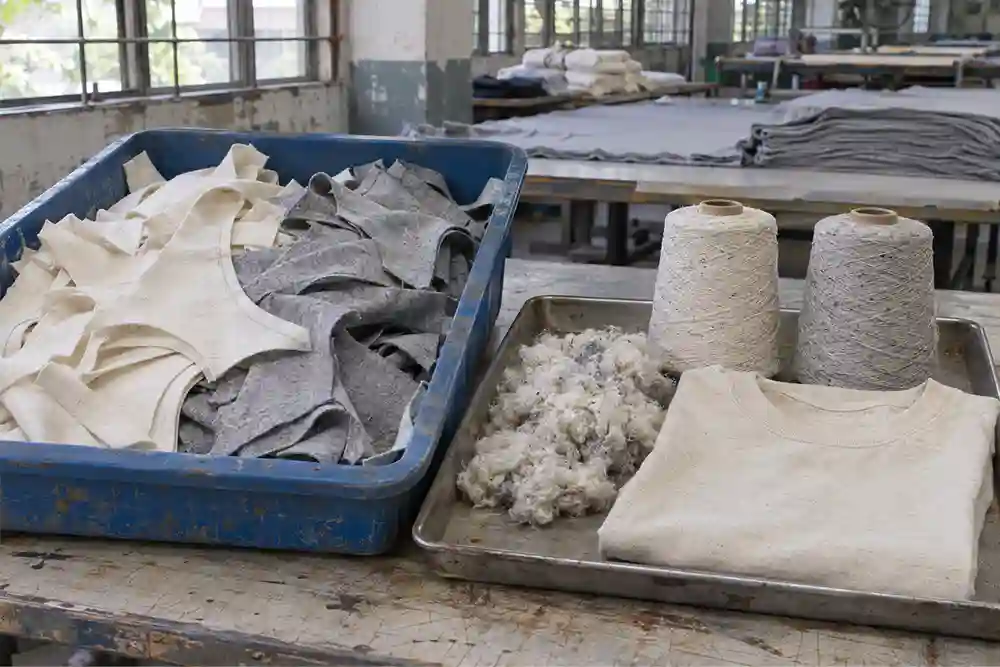
The Dutch-backed initiative brings together cotton growers, garment factories, recyclers and European brands to demonstrate a traceable cotton supply chain capable of completing two recycling cycles.
Bangladesh has launched the Cotton Loop Bangladesh Impact Cluster, a three-year initiative designed to transform garment manufacturing waste into recycled cotton yarn and new clothing while strengthening domestic textile circularity.
Officially launched in Dhaka on November 4, 2026, the project is supported by the Netherlands Enterprise Agency (RVO) and led by Raddis Cotton.
Its central objective is to demonstrate commercially viable cotton recycling across two successive product lifecycles by 2029.
Four Factories Join Initial Recycling Pilot
The initiative brings together Dutch retailers Zeeman, Company Fits and Common Era, alongside Avans University of Applied Sciences, Reverse Resources, Advance Consulting and Clean & Unique.
Four Bangladeshi garment factories have joined the initial programme.
Participating factories will segregate cotton cutting waste and record quantities approximately every two weeks, establishing a traceable feedstock stream for recycling.
Reverse Resources will coordinate waste collection, recycling partnerships and digital chain-of-custody records, initially focusing on manufacturing clusters around Gazipur and Narayanganj.
From Cotton Farming to Recycled Garments
The project links regenerative cotton cultivation with textile waste recovery.
Cotton cutting waste will be collected, sorted, mechanically processed and blended with newly grown cotton to manufacture yarn and garments.
The programme then aims to recover used garments and recycle their fibres again, testing whether material quality and commercial value can be maintained through multiple cycles.
Reducing Dependence on Imported Cotton
Bangladesh’s substantial garment manufacturing industry generates large quantities of textile waste while relying heavily on imported cotton.
A previous SWITCH2CE study estimated 312,043 tonnes of garment manufacturing waste in 2023, highlighting the potential feedstock available for circular production.
Greater domestic recycling could reduce raw-material import dependence, create value for waste processors and support demand for traceable recycled yarns.
However, mechanical recycling typically shortens cotton fibres, making fibre quality, blending ratios and yarn performance critical.
The next test will demonstrate commercially acceptable yarn quality, reliable traceability and competitive processing costs across both recycling cycles. Successful results could provide a replicable model for circular cotton manufacturing in Bangladesh.
