

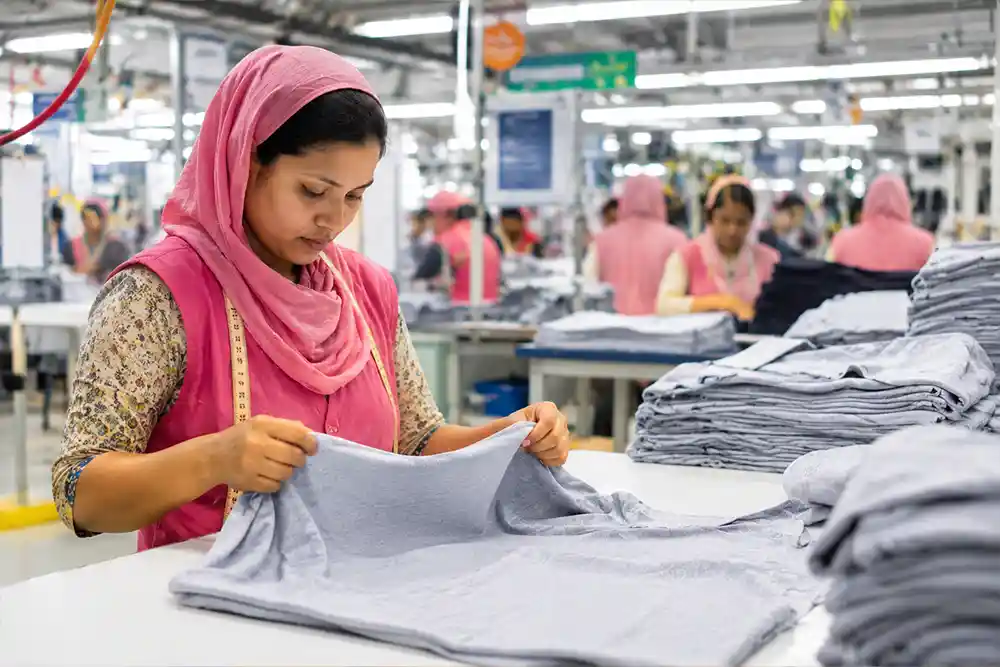
Bangladesh’s apparel industry is preparing to expand exports to Japan through preferential market access, simplified rules of origin and stronger industrial partnerships under a bilateral trade agreement signed in February 2026.
The Bangladesh Garment Manufacturers and Exporters Association (BGMEA) has called for improved product quality, productivity, supply-chain traceability and reliable delivery to capture opportunities under the Bangladesh–Japan Economic Partnership Agreement (EPA).
Speaking at a trade seminar held in Dhaka on November 15, 2026, BGMEA Director Mohammed Sohel highlighted technology transfer, Japanese investment, skills development and export diversification as priorities for strengthening bilateral apparel trade.
The discussion brought together government representatives, Japanese partners and industry stakeholders.
Trade Agreement Offers Preferential Access
Signed on February 6, 2026, the EPA provides for duty-free access to approximately 7,379 Bangladeshi products, including ready-made garments.
A significant provision allows qualifying apparel to benefit from single-stage transformation rules of origin, enabling manufacturers to use imported fabrics while meeting applicable origin requirements.
However, the agreement has not yet entered into force. Both governments must complete their domestic legal procedures before its preferential provisions become operational.
Japan Offers Significant Export Potential
Japan imports approximately $25 billion worth of apparel annually, making it an important diversification market for Bangladeshi manufacturers.
According to BGMEA data, Bangladesh exported $1.135 billion in garments to Japan during FY2025–26, down 4.28% from $1.185 billion in FY2024–25.
The figures highlight opportunities for market-share expansion, but also indicate that improved market access alone may not guarantee export growth.
Japanese Partnerships Gain Momentum
BGMEA established a dedicated Japan Desk in September 2026 to connect manufacturers with Japanese buyers and investors.
The initiative complements engagement with companies including Marubeni, ITOCHU, Toyota Tsusho and Teijin Frontier.
For manufacturers, Japanese sourcing requirements place particular emphasis on consistent quality, timely delivery, traceability and dependable production systems.
The immediate priorities are completing EPA ratification, establishing operational origin-certification procedures and translating buyer engagement into orders.
The decisive test will be whether Bangladeshi exporters can combine tariff preferences with the quality, speed and reliability required to expand their position in Japan’s apparel market.
