

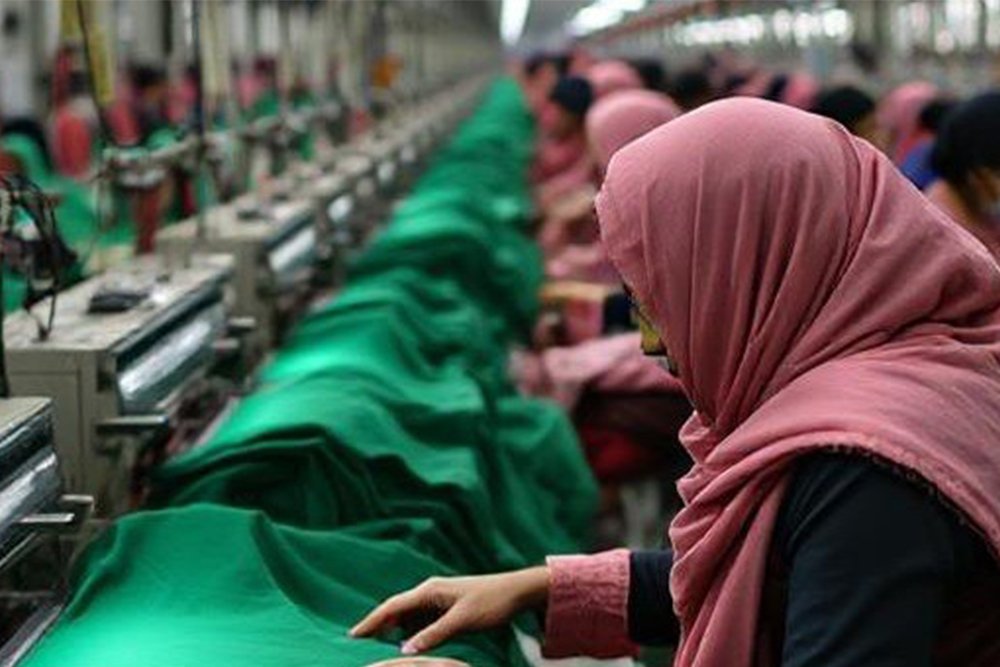
The Bangladesh Textile Mills Association (BTMA) has warned that a growing number of textile mills are on the verge of closure due to what it describes as faulty policies and an ongoing economic meltdown.
At a press conference held in Dhaka on Sunday, current and former BTMA leaders said the US$22 billion textile sector has moved beyond the stage of needing short-term relief and now requires deep structural intervention. They described the industry as being in the “Intensive Care Unit (ICU),” calling for immediate, large-scale government action to prevent widespread collapse.
Former BTMA president Mohammad Ali Khokon said sharply rising operating costs, combined with a sudden tax increase, have pushed mill owners to the brink. He highlighted that effective tax rates on the textile sector have jumped from 12.5–15% in the previous budget to around 27%, calling the move a “death blow” for an already struggling industry.
According to Khokon, yarn sales are currently only sufficient to cover wages and gas bills, leaving no margin for profits or loan repayments—forcing mills to shut down operations.
BTMA President Showkat Aziz Russell warned that at least 50 textile mills have already closed, and urged the government to take a policy decision within 72 hours. He also called for restrictions on yarn imports from neighboring countries to protect domestic producers.
To stabilize the sector, BTMA proposed several emergency measures:
- Creation of a dedicated banking window at Bangladesh Bank with sector-specific interest rates
- Immediate reduction in gas and electricity prices
- Lower commercial lending rates for spinning and textile mills
BTMA leaders cautioned that failure of the domestic spinning and weaving sector would severely weaken Bangladesh’s readymade garment (RMG) industry by eroding backward linkages and increasing reliance on imported cotton, yarn, and fabric—particularly from India.
“If local production collapses and external supplies are disrupted, the backbone of our garment industry will break,” Khokon warned.
Despite the grim outlook, BTMA expressed hope that future political leadership would recognize the strategic importance of textiles to employment, exports, and economic stability, and move swiftly to rescue the sector.

