

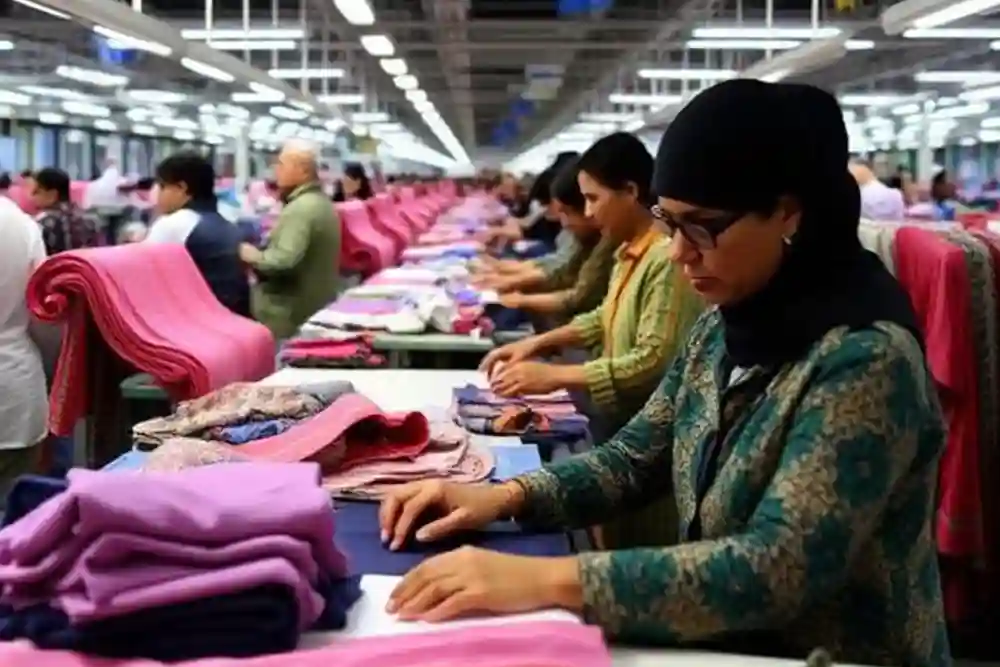
Bangladesh’s readymade garment (RMG) exports have slipped into negative territory, underscoring the growing strain on one of the world’s most important apparel manufacturing hubs. According to data from the Export Promotion Bureau, overseas shipments of garments fell by 2.63% in the first half of fiscal year 2025–26 (July–December), with a sharp 14.23% year-on-year drop in December alone.
Exports in December reached $3.23bn, down from $3.77bn a year earlier. Cumulatively, apparel exports for the first six months of the fiscal year stood at $19.36bn, compared with $19.89bn in the same period of the previous year—a decline of 2.36%.
A cyclical dip, or something more?
Month-to-month volatility is not unusual in global apparel trade, particularly as brands adjust inventories and sourcing calendars. But the scale of December’s contraction suggests more than a seasonal pause. Weak demand in key Western markets, persistent price pressure from buyers, and rising compliance and production costs at home are converging at an awkward moment for Bangladeshi suppliers
The slowdown comes despite Bangladesh’s entrenched position as the world’s second-largest garment exporter, behind China. Apparel remains the backbone of the economy, accounting for around 81.5% of total export earnings in FY2024–25 and underpinning employment, growth and foreign-exchange inflows.
Labour pressure and a forced rethink
What makes the current downturn more consequential is its timing. The industry is entering a phase of greater unionisation and labour scrutiny, driven by domestic social pressure and international expectations on workers’ rights. While long overdue, this transition raises costs and operational complexity in the short run—especially for factories already operating on thin margins.
At the same time, policymakers and industry leaders are pushing for a shift towards higher value-added products. Bangladesh’s vast capacity has historically been optimised for large volumes of basic garments. Moving up the value chain—into more complex products, man-made fibres, and design-intensive categories—requires investment, skills upgrading and closer integration with buyers.
The strategic implication
The latest export figures should be read less as an isolated setback and more as a signal. Bangladesh’s low-cost, high-volume model is under pressure from all sides: softer global demand, intensifying competition from peers, higher social and compliance expectations, and buyers unwilling to absorb cost increases.
Whether the country can convert this moment into a managed transition—balancing labour reform with productivity gains, and volume with value—will determine if the current dip proves temporary or marks the start of a more structural slowdown. For a sector that still anchors the national economy, the stakes could hardly be higher.

