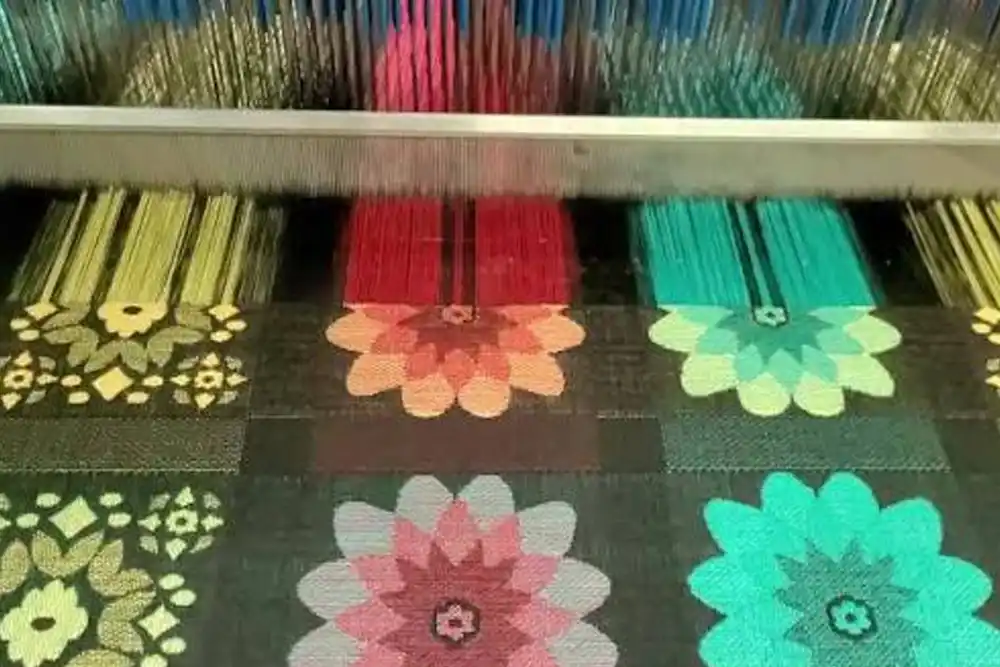
Francis Moore Specialist Weavers has developed a wool-based fabric that achieves stretch and recovery through engineered weave construction, potentially offering apparel manufacturers an alternative to conventional elastane blends.
British textile manufacturer Francis Moore Specialist Weavers has developed a woven wool fabric that delivers natural stretch and recovery without elastane or other synthetic stretch fibres. Announced on November 25, 2026, the innovation uses a specially engineered twill construction whose elastic behaviour is activated through a simple washing process.
Developed in Halifax, West Yorkshire, the technology demonstrates how conventional natural fibres can deliver additional functionality through fabric engineering rather than chemical modification or synthetic fibre blending.
Conventional Wool, Unconventional Performance
The fabric uses a standard 72s worsted wool yarn and a modified twill construction. According to company director Peter T. Moore, the discovery emerged while redesigning and scaling up the firm’s established Tower fabric. The construction exploits wool’s inherent elasticity and the mechanical behaviour of interlaced yarns.
Washing activates the structure’s stretch characteristics, allowing the finished fabric to offer flexibility and recovery without conventional elastic yarns. The company has also successfully incorporated silk and cotton yarns while retaining the fabric’s stretch properties.
Compatible with Existing Weaving Technology
The development was produced using an Itema loom and Vandewiele jacquard, with digital design instructions transferred through a Bonas 500 controller. The technology supports different woven designs, from traditional houndstooth patterns to complex two-sided colour effects. Silk yarns can be incorporated in either the warp or weft while maintaining elasticity.
Opportunities for Premium and Circular Textiles
For wool mills and premium apparel manufacturers, the development offers possibilities in tailored clothing, dresses and other garments requiring moderate stretch and comfort. Eliminating elastane could simplify certain fibre-recycling processes, although recyclability depends on the complete material composition and finishing treatments. The company is seeking development partners to advance commercialisation.
However, quantitative stretch, recovery, washing durability and industrial production-cost data have not been disclosed. The next priority is independent performance testing and demonstration of consistent results at commercial weaving scale.