

After Renewcell’s collapse, “next-gen” textile-to-textile is returning—this time tied to demand and offtake commitments, not hype.
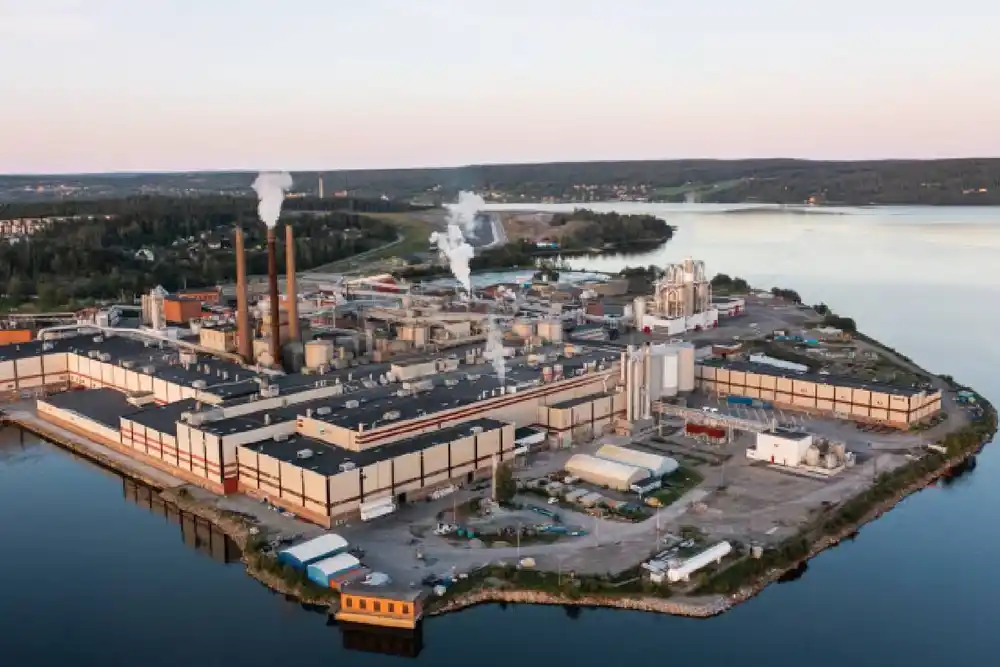
Circulose says it will restart its commercial-scale plant at Ortviken (Sundsvall, Sweden), with production of CIRCULOSE®—recycled pulp made from discarded cotton textiles—scheduled to resume in Q4 2026. Until then, orders will be filled from legacy inventory produced before Renewcell’s bankruptcy.
Under new ownership by private equity firm Altor in 2024, Circulose has shifted strategy: restart only after securing demand. The company says it now has commitments from 11 brands, and has signed partnerships with fibre producers Tangshan Sanyou, Aditya Birla, and Jilin Chemicals. The goal is to restore the industrial supply of recycled dissolving pulp that can be fed into existing man-made cellulosic fibre value chains.
Ortviken’s significance is symbolic and commercial. It was billed as the first commercial-scale chemical textile recycling facility—proof that fibre-to-fibre could move beyond pilots. Renewcell’s failure showed the missing link: not technology alone, but bankable offtake, consistent pricing, and integration into mills’ risk calculus. Circulose is now trying to solve that by anchoring the restart to volume commitments and downstream partners.
For brands facing tighter waste, circularity and substantiation pressures, dependable feedstock at scale matters more than perfect narratives. For recyclers, the lesson is harsher: industrial chemistry is a cash-flow business.
Watch three variables: (1) whether the 11-brand commitments translate into multi-year offtake, (2) how quickly fibre producers scale blends using CIRCULOSE®, and (3) whether pricing can compete with virgin pulp during demand downturns. If those hold, Ortviken could become less a monument—and more a market.

