

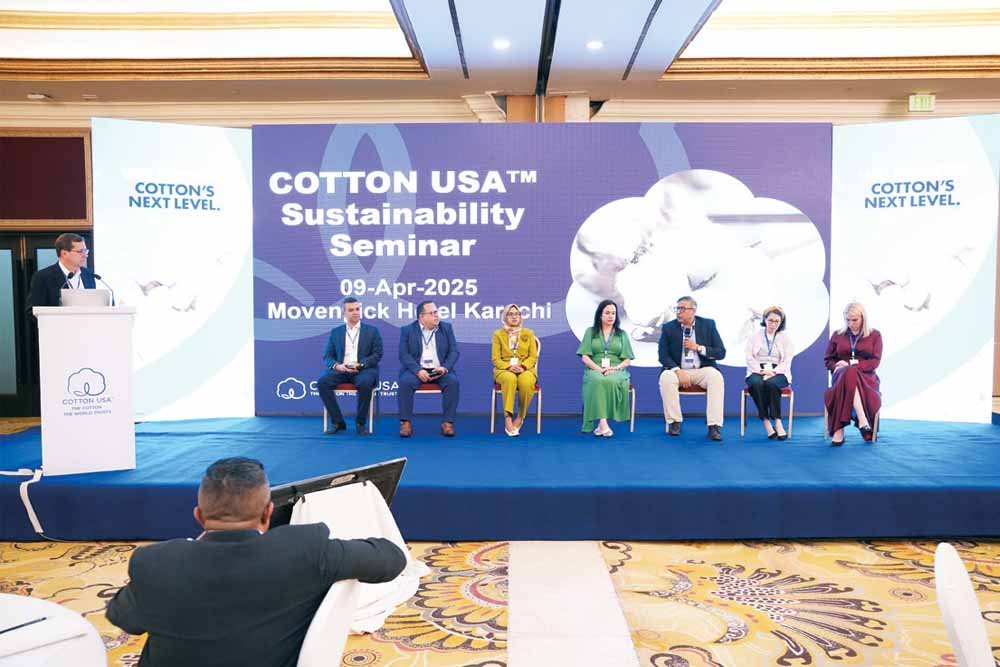
The COTTON USA™ Sustainability Seminar, hosted by Cotton Council International (CCI), gathered key industry stakeholders, and textile professionals in Karachi & Lahore to explore new opportunities, technologies, and sustainability strategies in the cotton supply chain. The seminar served as a platform to share vital updates on the U.S. Cotton Trust Protocol, traceability tools, and the evolving dynamics of global sourcing. The emphasis remained firmly on building resilient, transparent, and sustainable textile ecosystems, especially in the context of Pakistan’s growing significance in the global market.
Mazhar Mirza, CCI’s representative in Pakistan, kicked off the seminar by highlighting Cotton Council International’s vision and its continued support for sustainable cotton trade. Emphasizing the importance of U.S. cotton in the global textile supply chain, Mirza noted the growing demand for transparency and traceability in fiber sourcing. He reiterated the pivotal role that Pakistani textile manufacturers play in advancing global sustainability targets.
William Bettendorf, Director of South Asia and Supply Chain Marketing at CCI, provided an insightful update on CCI’s latest initiatives. He touched on key developments in supply chain marketing and stressed how CCI is leveraging its global network to strengthen the market presence of U.S. cotton. His presentation highlighted CCI’s commitment to supporting regional textile sectors and enhancing brand-retailer-manufacturer collaboration. Taking advantage of the recent tariffs announced by the Trump Administration in the US, Mr. Bettendorf provided a comparison of tariffs before and after April 10, 2025, as well as an example of a tariff schedule with and without the 20% US content.
Stephanie Thiers-Ratcliffe, Director of European Brands and Retailers at CCI, delivered a brand-focused perspective on the U.S. Cotton Trust Protocol. She showcased how the protocol is gaining traction among European retailers and explained how it offers verified data to brands looking to ensure sustainable cotton sourcing.
Gerson Fajardo, Supply Chain Director of the U.S. Cotton Trust Protocol, presented comprehensive updates on the program’s traceability features. His segment underscored the importance of data transparency in enabling brands and retailers to track cotton from field to shelf. He illustrated how traceability is no longer a premium add-on but a prerequisite for brand integrity and consumer trust.
Zoe Keay, Vice President of Sales at Oritain, discussed how scientific traceability-built trust in uncertain markets. She highlighted Oritain’s forensic methods for verifying product origin across global supply chains.The session focused on the benefits of traceability for Pakistan’s textile industry.
Jane Singer, Editor of Inside Fashion (Hong Kong), followed with a compelling presentation titled “Why Pakistani Manufacturers Could Be One of the Big Winners in the Shift of Global Sourcing.” She cited global sourcing realignments driven by cost optimization, climate concerns, and geopolitical uncertainties. Singer explained how Pakistan stands at the intersection of affordability, capability, and credibility, making it an ideal destination for buyers looking for responsible sourcing alternatives.
Abdul Jabbar from US Group shared on-ground insights from the manufacturing perspective. Their discussion revolved around building sustainable supply chains and meeting evolving buyer expectations. They emphasized the importance of ESG compliance, waste reduction strategies, and the economic viability of shifting towards certified raw materials like U.S. cotton.
Shahana Akter Kiron, Regional Lead at TextileGenesis, introduced the platform’s capabilities in tracing fiber origin through blockchain-backed solutions. Her session focused on digital product passports, supplier mapping, and real-time data sharing as essential components of the future textile ecosystem. She emphasized how TextileGenesis is helping brands and suppliers comply with upcoming legislation, such as the EU Digital Product Passport (DPP), and meet broader environmental disclosure requirements. With TextileGenesis already collaborating with multiple global apparel brands, Kiron encouraged Pakistani companies to proactively digitize their cotton supply chains for long-term competitiveness. The evenings wrapped up with a panel discussion with all participants sharing their important insights, followed by a networking dinner, allowing attendees to forge connections and discuss potential collaborations. Conversations reflected optimism about Pakistan’s role in global cotton sourcing and a shared sense of responsibility toward building a more transparent and sustainable textile industry.
 “In South Asia, especially in countries like Pakistan, we see immense potential for collaboration. Through the U.S. Cotton Trust Protocol, we offer verified sustainability, measurable impact data, and full traceability – qualities that global brands demand today. Promoting U.S. cotton isn’t just about fiber quality; it’s about supplying responsibly, ethically, and with integrity. That’s the future of sourcing, and we’re proud to partner with forward-thinking manufacturers in this region to make that future a reality.” William Bettendorf. Director South Asia and Supply Chain. Cotton Council International
 “Pakistan’s textile industry is at a critical juncture. Global brands are looking not only for quality but also for transparency and accountability. COTTON USA™ and the U.S. Cotton Trust Protocol offer powerful tools to help Pakistani manufacturers meet those expectations while remaining globally competitive. Today’s seminar reflects our shared commitment to building a more sustainable and traceable cotton supply chain.” Mazhar Hussain Mirza. Pakistan Representative. Cotton Council International
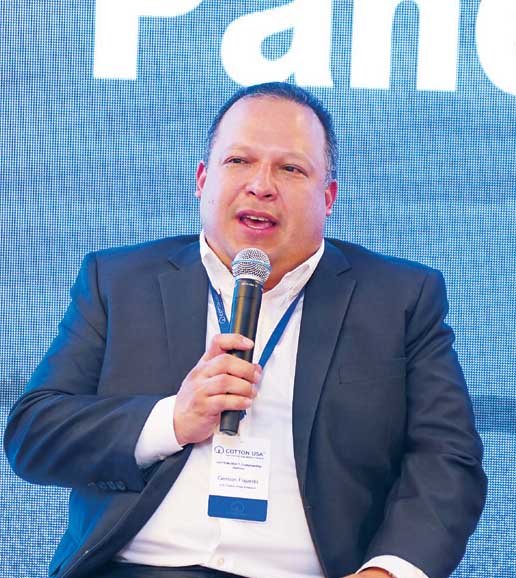 “In today’s global textile landscape, supply chain traceability is no longer a ‘nice to have’- it’s a market expectation. Brands and retailers want to know where their cotton comes from, how it was grown, and whether it meets measurable sustainability standards. The U.S. Cotton Trust Protocol is answering that call by providing verified data from farm to finished product. This level of traceability builds confidence with brands and creates real value for manufacturers. For countries like Pakistan, integrating with systems like ours positions their textile sector as transparent, responsible, and ready to lead in sustainable sourcing.” Gerson Fajardo. Supply Chain Director. U.S. Cotton Trust Protocol
 “European brands are under increasing pressure to prove that their sourcing is sustainable, ethical, and traceable. The U.S. Cotton Trust Protocol provides verified data that gives retailers the confidence they need. Our goal is to build bridges between trusted fiber sources and brand expectations, and Pakistani manufacturers are a key part of this value chain.”Stephanie Thiers-Ratcliffe. Director. European Brands & Retailers. Cotton Council International
 “Larger adoption of U.S. trust protocol by all brands in the world and sourcing companies is a responsibility on all and in today’s evolving global landscape, we as a nation are not merely producing textiles; we are shaping the future of a robust Pakistan–U.S. textile trade. With growing emphasis on sustainable cotton such as U.S. cotton and platforms like TextileGenesis are now at the forefront of buyer priorities. To stay ahead, our industry must lead with innovation – scaling green energy adoption, leveraging Cotton Council International’s technical expertise and programs for technical learning and experience enhancement, and actively expanding participation in global initiatives like the U.S. Cotton Trust Protocol.”Haroon Shahzada Ellahi Shaikh. Managing Director. Nagina Group (Pakistan)
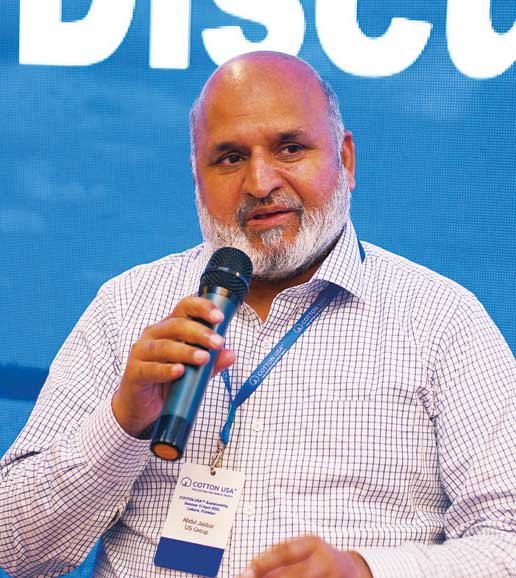 “These are undoubtedly challenging times for the textile industry, both globally and locally. But difficult times are when resilience is tested – and built. At US Group, we believe that embracing sustainability isn’t just a strategic choice, it’s a necessary one. Sustainable supply chains offer a roadmap to long-term stability, transparency, and trust. By aligning with global standards like the U.S. Cotton Trust Protocol and investing in traceability, we’re not just surviving – we’re preparing to thrive in a more responsible and competitive global marketplace.”Abdul Jabbar. Executive. US Group (Pakistan)

