


Page 29 - April-May 2021
P. 29
28 29
Cover Story Cover Story
Customized polyester thanks to
viscosity build-up in the VacuFil
recycling line and the careful utilization of resources – increasingly fibers, nonwovens and BCF endless filaments. Today,
in the textile sector as well. Leading fashion
the technology is so refined that the products
companies, sports apparel and furniture
achieve a quality standard that corresponds to virgin
manufacturers and the automobile industry, i.e. for
car seats and interior cladding components, are material in many applications. B
The BB Engineering VacuFil process increasingly focusing on sustainable products and However, there are also many cases in which the t
material quality and/or property achieved does not
products made from recycled materials. Today, they
p
are already telling suppliers of filaments, fibers and
c
comply with the market requirements. For numerous
enables the reutilization of polyester nonwovens that they will be switching from textile applications, parameters such as viscosity and B
a
homogeneity are crucial and must be subject to
exclusively virgin polyester to recycled polyester – in
i
some cases up to 100 percent – for the manufacture
virtually no fluctuations. In other words, to enable
waste into high-end textile filament and of their textile products in the near future. recycled polyester to be used here in the first r
place necessitates its pre-treatment. And this is
r
Consumers’ social awareness has been the trigger
carried out by the VacuFil recycling process, a
p
for this development.
fiber products The original idea – namely to manufacture BB Engineering GmbH development. The In the downstream processes, the melt can either be Siegsdorf/Germany, and Oerlikon Textile GmbH & Co. P
VacuFil enables the manufacture of extremely
c
sub-premium goods using recycled polyester raw homogeneous, viscosity-stable rPET melt and first granulated or fed directly into the end product’s KG, one of the leading provider for systems for the r
+
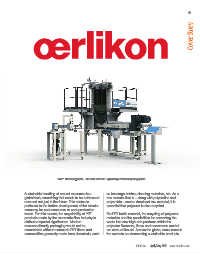
Visco filter components – the heart of the BB Engineering’s VacuFil recycling system material, i.e. for use in insulating materials – is hence a precisely definable and reproducible manufacturing process. Recycled polyester, manmade fiber industry and headquartered in
short-sighted from today’s perspective. Recycled raw material for downstream processes (i.e. produced using the BBE VacuFil process, can even Remscheid/Germany. BBE is a pioneer in the B
polyester has long been prevalent within the high-end spinning plant). As a manufacturer of be used for more challenging downstream development of processes for using recycled materials, O
Sustainable handling of natural resources is a as beverage bottles, cleaning materials, etc. As a textile segment. Viewing polyester as a valuable components and systems for producing processes, including the manufacture of FDY particularly polyester flakes, and converting them into p
contemporary, market-appropriate products for
filaments, for example. Here the material is subjected
global task, something that needs to be addressed raw material that is – along with polyolefins and resource rather than as waste is an important and manmade fibers, BB Engineering (BBE) is to extreme loads throughout the entire manufacturing filaments, fibers and nonwovens for manmade fiber b
now and not just in the future. This relates in polyamide – such a dominant raw material, it is proper development. familiar with the dire impact that even the process. In the FDY single-stage process, the industry consumers. “Our decades of competence f
particular to the further development of the circular essential that polyester is also recycled. smallest viscosity deviation has on the spinning filaments are drawn and taken up at speeds of up to kicked in while we were developing the VacuFil. What t
economy for post-consumer or post-production Manmade fibers and filaments made from recycled plant process. With the VacuFil, the company 4,500 m/min. Oerlikon Barmag brings to the table as a technological B
waste. For this reason, the recyclability of PET For PET bottle material, the recycling of polyester bottle flake material require corresponding has succeeded, depending on the intended end leader in the field of filament yarn spinning systems, c
products made by the manmade fiber industry is materials and the possibilities for converting the single-variety collection or pre-sorting of the bottle application, in aligning the melt with the process in BBE is headquartered in Remscheid/Germany and is BBE complements with considerable know-how in the i
attributed special significance. Modern waste into new high-end products within the material being recycled and comprehensive cleaning a targeted manner. Macro- and microscopic melt a joint venture between Brückner Group GmbH, the area of extrusion and filtration and in systems f
resource-friendly packaging would not be polyester filaments, fibers and nonwovens market before they are shredded into polyester flakes. It is homogeneity is achieved by means of world market leader for machines for the polyester construction and engineering!”, states Dr. Klaus f
conceivable without manmade PET fibers and are state-of-the-art. Across the globe, consumers in then possible to spin these flakes directly into POY homogenization drying, controlled plasticizing, gentle foil industry and headquartered in Schäfer, CEO of BBE. a
commodities generally made from chemicals, such the markets are demanding sustainable products filaments (DTY in the downstream process), staple filtration and controlled vacuum degassing. P
April/May 2021 April/May 2021

