


Page 74 - TEXtalks May-June 2021
P. 74
74                                                                                                                                                                                                                             75


                                                                                                                                                                BioTX: A metal-free


                                                                                                                                                                antimicrobial technology


                                                                                                                                     IFTNA introduces metal-free antimicrobial technology BioTX using microencapsulation features. BioTX is a
                                                                                                                                    revolutionary, durable anti-stink solution without the use of traditional heavy metals. BioTX uses a proprietary
                                                                                                                                      microencapsulation process that stores the active ingredient in a coated shell embedded into the fabric,
                                                                                                                                   allowing for sustained only when needed sustained release. It destroys microorganisms that try to penetrate the
                                                                                                                                     fabric, a process that cannot be found on regular fabrics. This process kills harmful organisms that create
                                                                                                                                                         unpleasant odors, creating a long-lasting fresher experience.
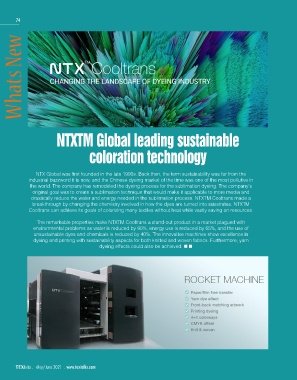
                        NTXTM Global leading sustainable                                                                           protects these agents from being degraded. This process protects the technology from external environments
                                                                                                                                    Usually, the sensitive active agents could not last long. The microencapsulation increases their shelf-life and

                                                                                                                                    until required facilitating its release at the right time. This process also results in a soft finish on treated fabric. The
                                     coloration technology                                                                            treated fabrics remain antimicrobial even after several home launderings giving the wearer utmost protection.


               NTX Global was first founded in the late 1990s. Back then, the term sustainability was far from the
             industrial buzzword it is now, and the Chinese dyeing market of the time was one of the most pollutive in
             the world. The company has remodeled the dyeing process for the sublimation dyeing. The company’s                                                                              Lee introduces a
              original goal was to create a sublimation technique that would make it applicable to more media and
             drastically reduce the water and energy needed in the sublimation process. NTXTM Cooltrans made a                                                                              new water-saving
              breakthrough by changing the chemistry involved in how the dyes are turned into substrates. NTXTM
            Cooltrans can achieve its goals of colorizing many textiles without heat while vastly saving on resources.
                The remarkable properties make NTXTM Cooltrans a stand-out product in a market plagued with                                                                                 dyeing technique
              environmental problems as water is reduced by 90%, energy use is reduced by 65%, and the use of
              unsustainable dyes and chemicals is reduced by 40%. The innovative machines show excellence in                                                                                for denim
              dyeing and printing with sustainability aspects for both knitted and woven fabrics. Furthermore, yarn
                                         dyeing effects could also be achieved.
                                                                                                                                   Lee has introduced a new water-saving dyeing     The result is less waste, less water used, and a lower
                                                                                                                                   technology for denim fabrics and termed it “Crystal   impact on the environment. Moreover, the sustainable
                                                                                                                                   Clear.”  Lee is an American brand of denim jeans, first   method uses less energy, further shrinking the
                                                                                                                                   produced in 1889 in Salina, Kansas. Kontoor Brands   company’s environmental impact. The brand’s
                                                                                                                                   own the company, a spin-off of VF Corporation’s   Indigood initiative was first announced in November
                                                                                                                                   Jeanswear Division. Unline its conventional dyeing   2020 when Lee Jeans partnered up with luxury
                                                                                                                                   technique, which utilizes chemicals and salts; the   department store Selfridges on a pop-up store
                                                                                                                                   Crystal Clear uses “an organic way” to do the    presenting Lee’s For a World That Works (FWTW)
                                                                                                                                   needful.                                         sustainability platform.

                                                                                                                                   Crystal Clear represents a significant step forward in   The brand also gives back as part of For A World
                                                                                                                                   the history of denim production at Lee Jeans. Dyeing   That Works by utilizing recycled and organic fibers
                                                                                                                                   with this new technology means no leftover salt in the   and designing clothing with biodegradable back
                                                                                                                                   dye bath, which can be safely and effectively reused.   patches and repurposed hardware.


               May/June 2021                                                                                                                                                                                    May/June 2021

