


Page 37 - September-October-2020
P. 37
36                                                                                                             37
             sustainability programs and is designed from the   ambitious national goals for 2025. By this date, the
             ground up to fit the unique cotton mass-growing   Trust Protocol aims to have more than half of all U.S.
             environment of the United States. “We are engaged   cotton production included in the program.
             in an open dialogue with existing Pakistan
 Brands and retailers can   Perspective In April, the Trust Protocol was added to   “Achieving a transition towards agricultural
                                                              sustainability requires broad public and private
             Textile Exchange’s list of 36 preferred fibers and
             materials that more than 170 participating brands
                                                              partnerships and a vital part of my work at The
 now source U.S. Cotton with   and retailers can select from as part of Textile   Nature Conservancy includes looking at ways to
                                                              collaborate with key agricultural stakeholders,”
             Exchange’s Material Change Index program.
                                                              said Dr. Kris Johnson, Deputy Director of
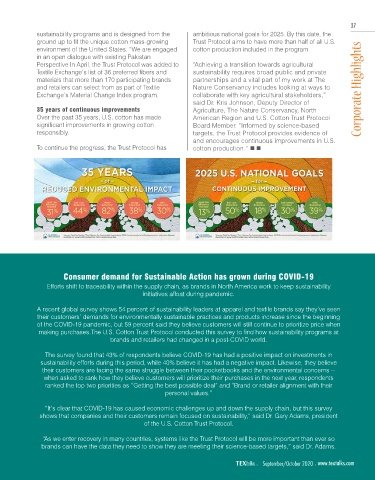
 more confidence  35 years of continuous improvements         Agriculture, The Nature Conservancy, North
             Over the past 35 years, U.S. cotton has made
                                                              American Region and U.S. Cotton Trust Protocol
             significant improvements in growing cotton
             responsibly.                                     Board Member. “Informed by science-based
                                                              targets, the Trust Protocol provides evidence of
                                                              and encourages continuous improvements in U.S.
             To continue the progress, the Trust Protocol has   cotton production.”


 The Trust Protocol brings

 quantifiable and verifiable goals

 and measurements to
 responsible cotton production


 Brands and retailers can now join the U.S. Cotton   Union Certifications North America, the Trust
 Trust Protocol, a new system for responsibly   Protocol enables brands and retailers to better   Consumer demand for Sustainable Action has grown during COVID-19
 grown cotton that will provide annual data for six   track the cotton entering their supply chain.   Efforts shift to traceability within the supply chain, as brands in North America work to keep sustainability
 areas of sustainability in line with the U.N.   Brands who become members of the Trust   initiatives afloat during pandemic.
 Sustainability Goals. This year-over-year data,   Protocol will have access to aggregate
 available for the first time, will allow brands and   year-over-year data on water use, greenhouse   A recent global survey shows 54 percent of sustainability leaders at apparel and textile brands say they’ve seen
 retailers to better measure progress towards   gas emissions, energy use, soil carbon and land   their customers’ demands for environmentally sustainable practices and products increase since the beginning
 meeting sustainability commitments.   use efficiency.  of the COVID-19 pandemic, but 59 percent said they believe customers will still continue to prioritize price when
             making purchases.The U.S. Cotton Trust Protocol conducted this survey to find how sustainability programs at
 “One of our goals in developing the Trust   “At Levi Strauss & Co., the quality and   brands and retailers had changed in a post-COVID world.
 Protocol is to give brands and retailers greater   sustainability of the cotton we use is critical to our
 confidence when including U.S. cotton in their   business and important to our customers. We are   The survey found that 43% of respondents believe COVID-19 has had a positive impact on investments in
 sourcing mix,” said Ken Burton, Executive   deeply committed to sourcing sustainable cotton   sustainability efforts during this period, while 40% believe it has had a negative impact. Likewise, they believe
 Director of the U.S. Cotton Trust Protocol.   and reducing water usage, carbon emissions,   their customers are facing the same struggle between their pocketbooks and the environmental concerns --
 “Participating brands and retailers will now be   and chemical usage,” said Liza Schillo, Senior   when asked to rank how they believe customers will prioritize their purchases in the next year, respondents
 able to demonstrate measurable progress in   Manager, Global Sustainability Integration, Levi   ranked the top two priorities as “Getting the best possible deal” and “Brand or retailer alignment with their
 reducing their environmental footprint and in   Strauss & Co. and Trust Protocol Board Member.   personal values.”
 achieving sustainability targets.”   “We are therefore in strong support of the
 introduction of standards – including the U.S.   “It’s clear that COVID-19 has caused economic challenges up and down the supply chain, but this survey
 The Trust Protocol underpins and verifies   Cotton Trust Protocol – that champion sustainably   shows that companies and their customers remain focused on sustainability,” said Dr. Gary Adams, president
 sustainability progress through sophisticated   grown cotton and drive wider adoption over the   of the U.S. Cotton Trust Protocol.
 data collection and independent third-party   long-term of sustainable cultivation practices.”
 verification. By working with Field to Market: The   “As we enter recovery in many countries, systems like the Trust Protocol will be more important than ever so
 Alliance for Sustainable Agriculture and Control   The Trust Protocol is a complement to existing   brands can have the data they need to show they are meeting their science-based targets,” said Dr. Adams.

 September/October 2020                                                             September/October 2020

